
The shift may be subtle, but the transformation is already undeniable. Whether you’re chronically or sporadically online, and whether you’re on the brand, creator, or consumer end of the equation, the playbook today could not be more different from how it was in the advent of social media marketing. In the early days, creators could not fathom making bank (aside from YouTube ad revenue), and were running on passion—and sometimes, privilege—alone. Since there was very little incentive there, viewers could almost always count on an honest opinion whenever they tuned in, with no #ad in sight. Brands, on the other hand, paid little to no mind to creators, focusing solely on speaking directly to customers.
All of the above are markers of an age that we no longer live in. The creator economy has definitively reshaped modern marketing, with businesses building influencers into their plans, not as an afterthought, but as one of their primary strategies. However, know that these two parties are in a constant financial tango, negotiating for deals that each wants to benefit themselves the most. No matter how you slice it, the audience has become commodified. If you’re lucky, you would be informed of the sponsored content—albeit in sneaky and obscure ways, on some occasions—and if you’re not, you just won’t know that you’re being targeted.
It’s not all dire, though. A huge chunk of consumers have woken up from the fantasy of the parasocial relationship they had with their favourite influencers and are facing reality: every video is filmed, and every link is placed with the goal of converting your money from yours to theirs. Of course, creators should always (and we mean always) be compensated for the work they put out. It only becomes unethical when they take advantage of the faith and relationship they’ve built with their followers, in hopes of ensnaring consumers in their misrepresentation. This is where stricter regulations would benefit the audience, but the work can be Sisyphean.
Unbeknownst to them, brands and businesses also end up with a raw deal. Because of the echo chamber of their own making, they themselves fall into the trap of believing that a particular category, let’s say, lip oils, for instance, is the one that people can’t seem to have enough of. So they go to their drawing boards, and manufacturers, pumping out products that may have the metrics to back it up, but, truly, no one is actually asking for, while also underserving (and under-earning from) other segments.
And at the end of the day, it can seem that no one is winning.
So what’s the way for everyone to come out on top in this situation? We need to land in a place where consumers are being informed instead of tricked, where creators are allowed to use their authentic voices without fear of malicious repercussions, all while brands get to make their gains, and also get insights that inform them of their next business decision. We spoke to local leaders in both the brand and creator spheres to get direct insight on how they’re making all the right moves in times such as these. Turns out, they share similar views on how to make it work.
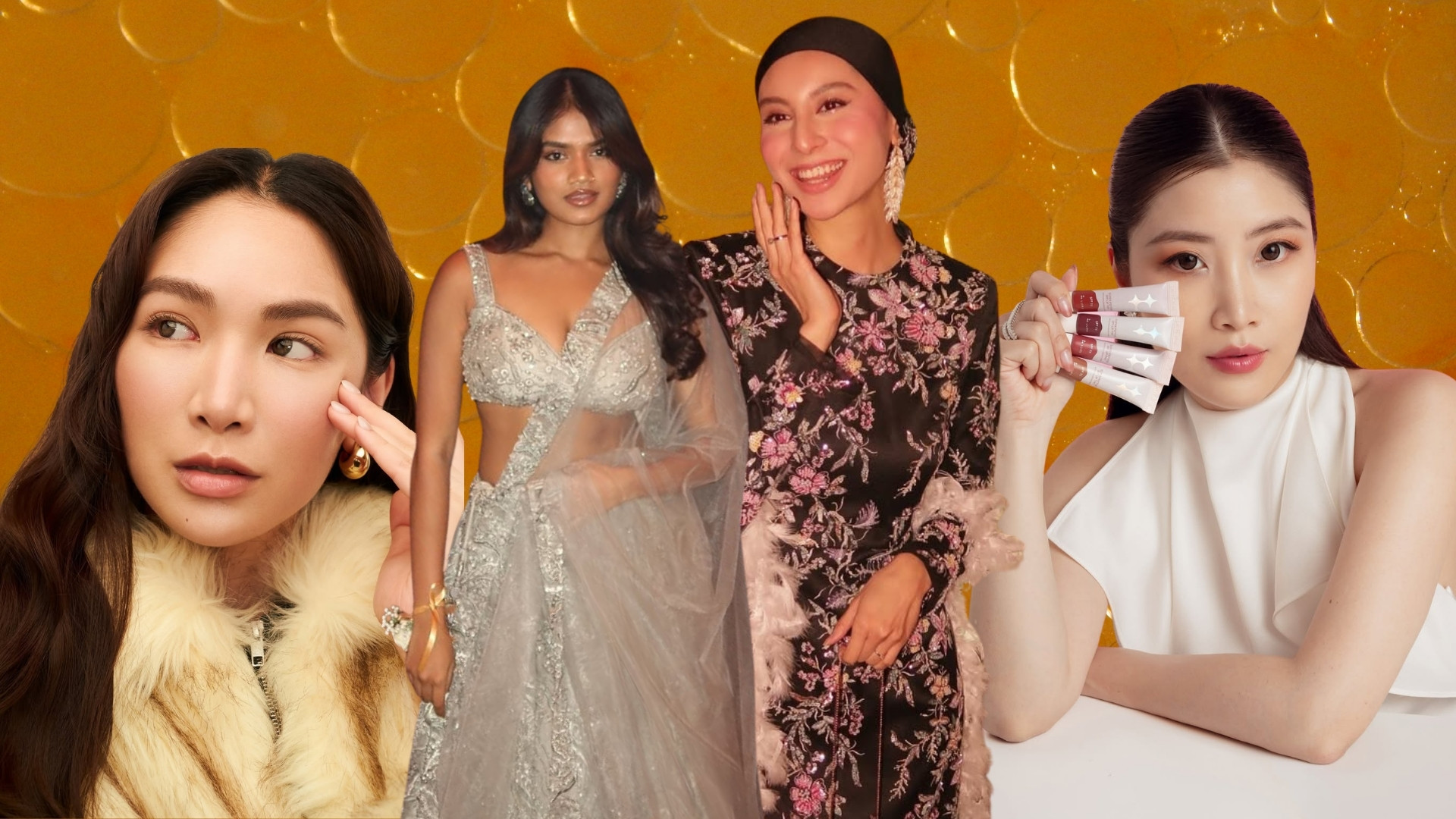
For creators and influencers, both Sarah Hazley (@sarahhio on Instagram) and Divya Sashendran (@divyasashendran on Instagram) unequivocally agree that authenticity is the path forward. “In a rapidly evolving environment, the ability to remain grounded in one’s values plays a significant role in determining long-term direction,” Sarah notes. This is no easy feat, especially in an industry where it pays to maintain a certain glamour. It may seem counterintuitive to lean into the more personal and sometimes unpretty parts of one’s story, but oddly enough, it’s the very thing that captures an audience. “When someone shows up authentically, people stay, not because they are persuaded, but because they feel understood. That genuine connection is what makes an influencer successful,” she adds.
Divya dittoes that: “People today are very perceptive. They can tell when someone is forcing a persona or chasing trends that don’t truly align with who they are. Finding your own style and voice allows you to show up consistently—and consistency is also a big factor here—without burning out.” From both Sarah’s and Divya’s perspectives, nobody loses when a creator gets to put out material (both paid ones and not) that allows them to fully express themselves. What many marketers remark as “polishing” can actually, when they go in heavy-handed, flatten the facets that are dazzling and retaining the viewer’s interest. After all, no one is going to tune in to someone who has neither an edge nor dimension to their personality.
Funnily enough, local brands that have been on a hot streak of success echo the same value of authenticity. Chuck’s and Lumi Beauty have been the talk of the town for as long as they have been around, and by no happy accident. Founders Jane Chuck and Chryseis Tan both attribute their success to having developed an authentic sense of the brand, as well as an engaged community that continuously invests in their respective brands. Add to the mix intentionality, and you’ve got a solid recipe to make it in the Malaysian beauty scene.
“To me, succeeding isn’t about being the loudest or the fastest-growing brand,” Jane starts. “Success looks like having customers who genuinely trust us, come back repeatedly, and recommend us without being asked.” Chryseis shares the same sentiment, quantifying success as “when a brand becomes a part of a customer’s daily routine.”
No one brand just stumbles upon a formula that works—it takes back-breaking work and astute discernment to narrow down a path that would eventually lead to success. At Chuck’s, honest storytelling takes precedence. “We’re conversing with our community instead of pitching at them. With transparency, trust naturally follows, and that is far more powerful than any short-term campaign,” Jane notes.
There’s also immense value in recognising this fact: today’s customers are smarter than ever. They research products, dissect ingredient lists, discuss with their peers, and tabulate information before hitting checkout. Marketing alone would not convert a customer—performance does. And Chryseis knows this better than most. “They’re incredibly informed. Marketing can no longer be purely aspirational—it has to be honest and useful,” she confirms. “Their trust becomes our strongest form of marketing.”
When all is said and done, it’s clear that reality is what sells. Sure, we can all fake the funk, but that has proven—in many cases—to be an unsustainable course of action. Good creators may have pull, but it’s the great ones that have real sway. To be able to do that, they need to bond with their audience at practically all levels (within reason, of course). A little earnestness can go a long way in this arena. Brands, on the other hand, need to come to terms with this: the best campaigns or the most popular brand ambassadors can never top sincere word-of-mouth, and that can only be gained through effective products, and not just recreating ones that have gone viral online. Jane says it well when she lauds Hailey Bieber’s Rhode, a brand valued at over US$1 billion: “What stands out is their restraint; they don’t try to do everything all at once.” A brand is a machine that delivers solutions to real-life issues, and when a certain solution has hit the saturation point, well, then there’s just no point in going into dense waters. It’s hard to be heard when you’re in a crowd, after all.
This story first appeared in GRAZIA Malaysia March 2026 issue.
READ MORE