
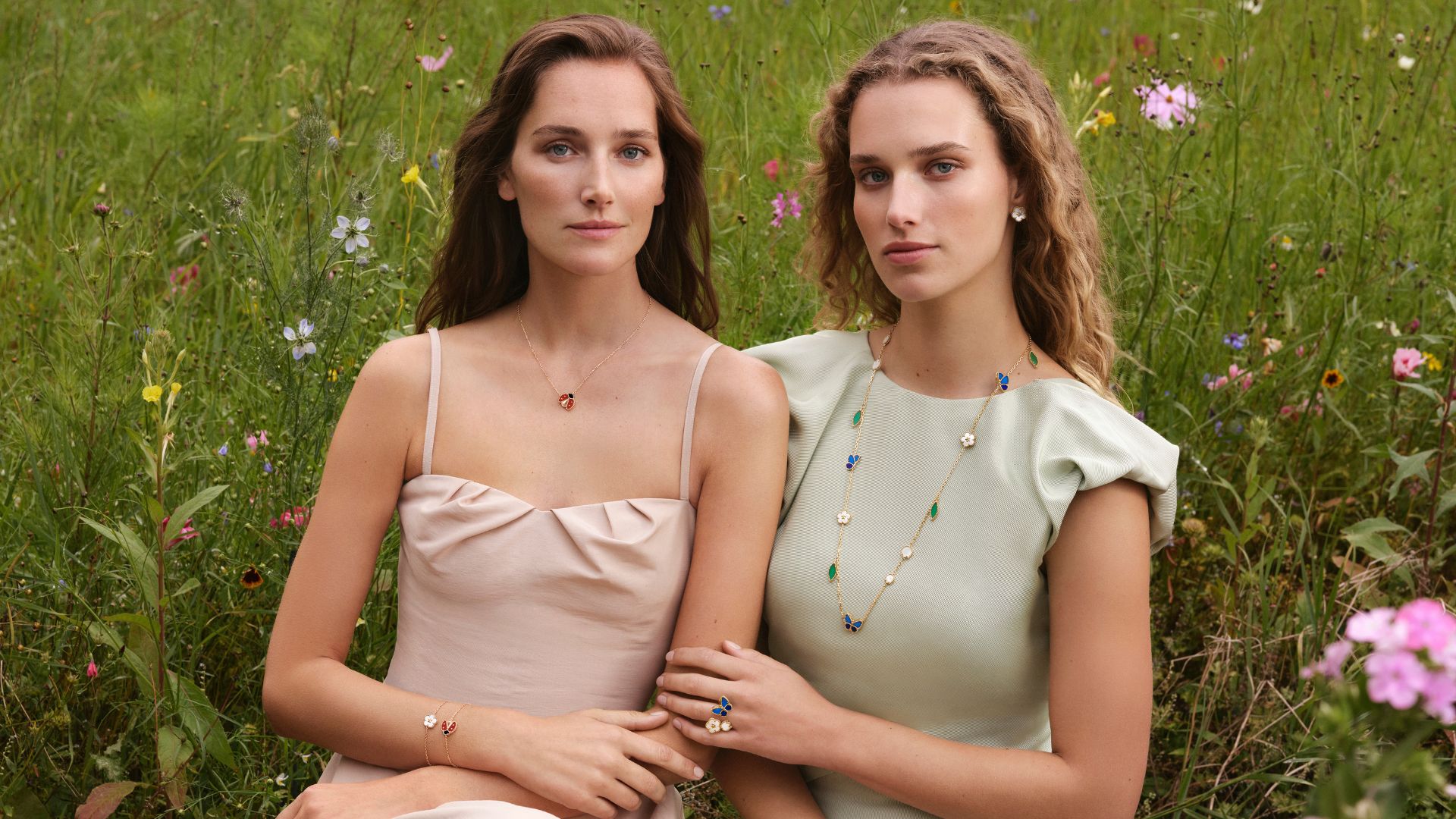
Spring is in full bloom, and the beauty of the season—seen in the awakening of flora and fauna—comes alive in Van Cleef & Arpels’ Lucky Spring collection, drawing on its renewed energy and sense of joy. This year introduces a fresh take on the butterfly, a motif that has long held a place in the Maison’s story. Archival records trace it back to 1906, when it appeared in a piece set with pearl, ruby, and emerald. Since then, the butterfly has come to symbolise grace and lightness, capturing its instinct to take flight. It also reflects the House’s enduring character, shaped by a spirit of positivity and optimism.
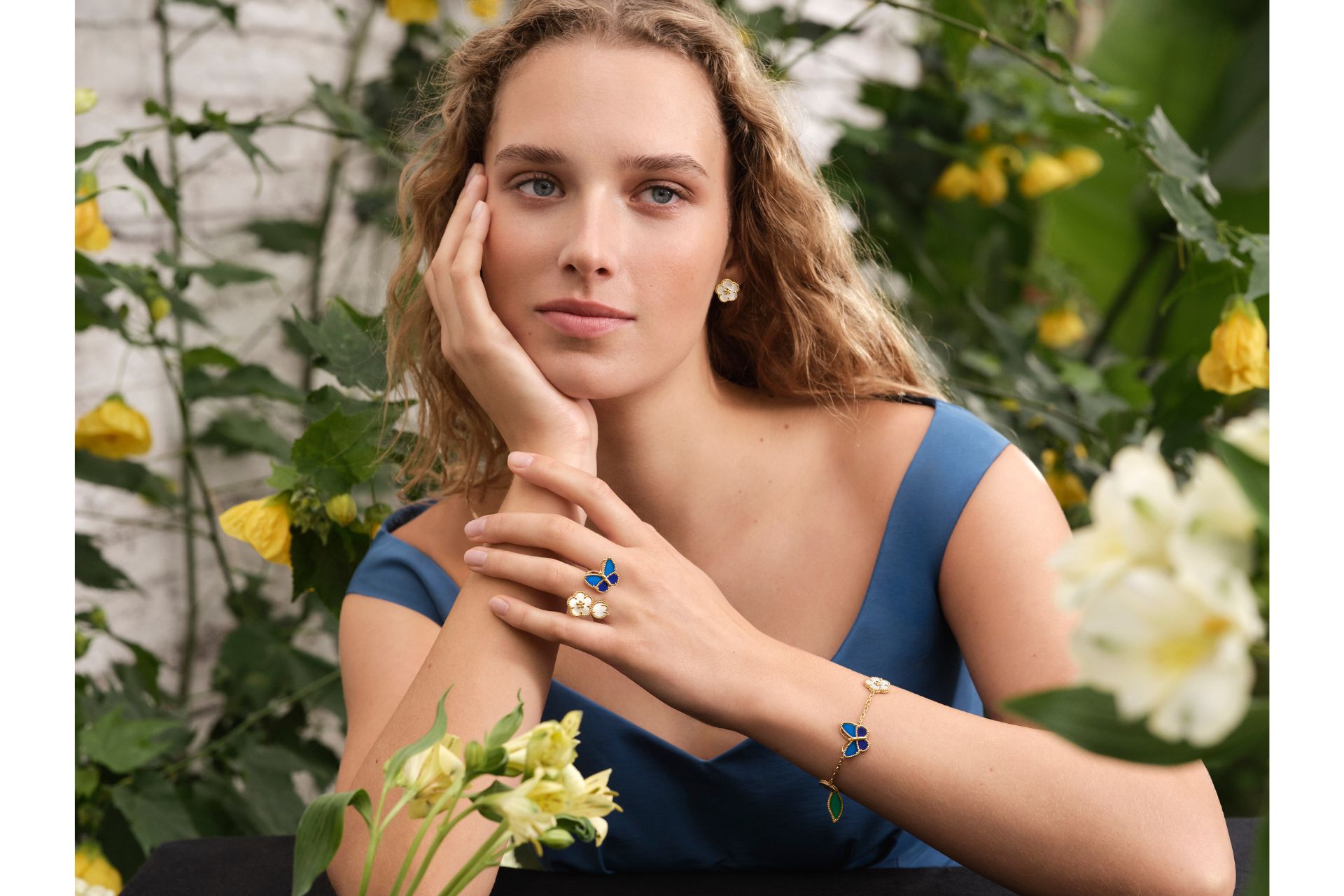
For the new pieces, the butterfly appears in five finely crafted pieces: a long necklace, a five-motif bracelet, a clip, a Between the Finger ring, and earrings. Colour plays a leading role here. Blue agate forms the upper wings, lapis lazuli deepens the lower half, while green agate shapes the surrounding foliage. Only stones with the most even, consistent colour make the cut, spanning soft to saturated shades of blue and green. Mother-of-pearl adds a gentle glow with a soft, iridescent sheen, while each selected gem contributes to an overall sense of balance. On the necklace, three butterflies take flight, brought to life through blue agate and lapis lazuli. Their rich tones are framed by the Maison’s signature double beaded edges, giving each motif a crisp, luminous outline. The latest additions to the Lucky Spring line introduce yellow gold in place of rose gold, bringing a warmer, sunlit finish that complements the blue stones.
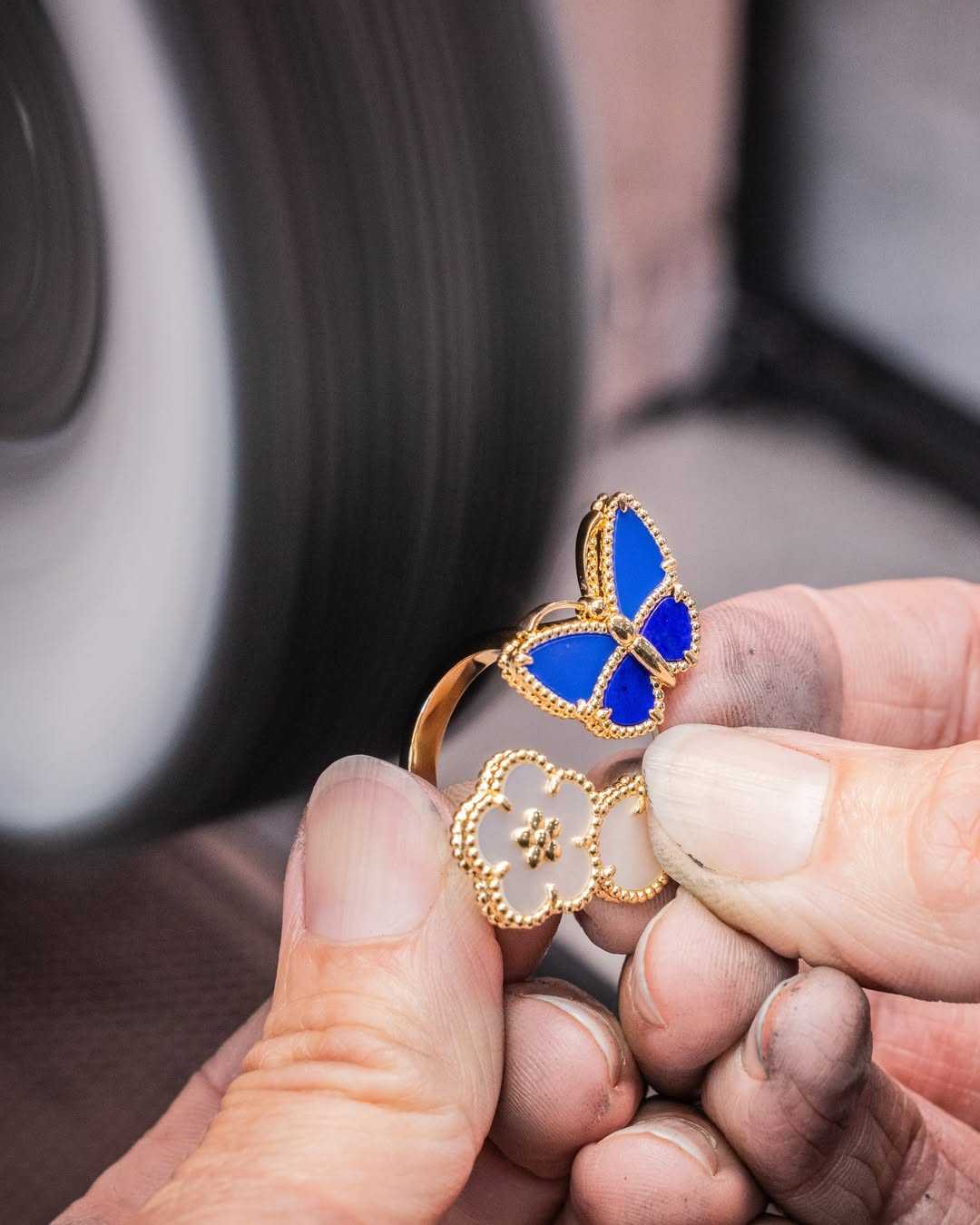
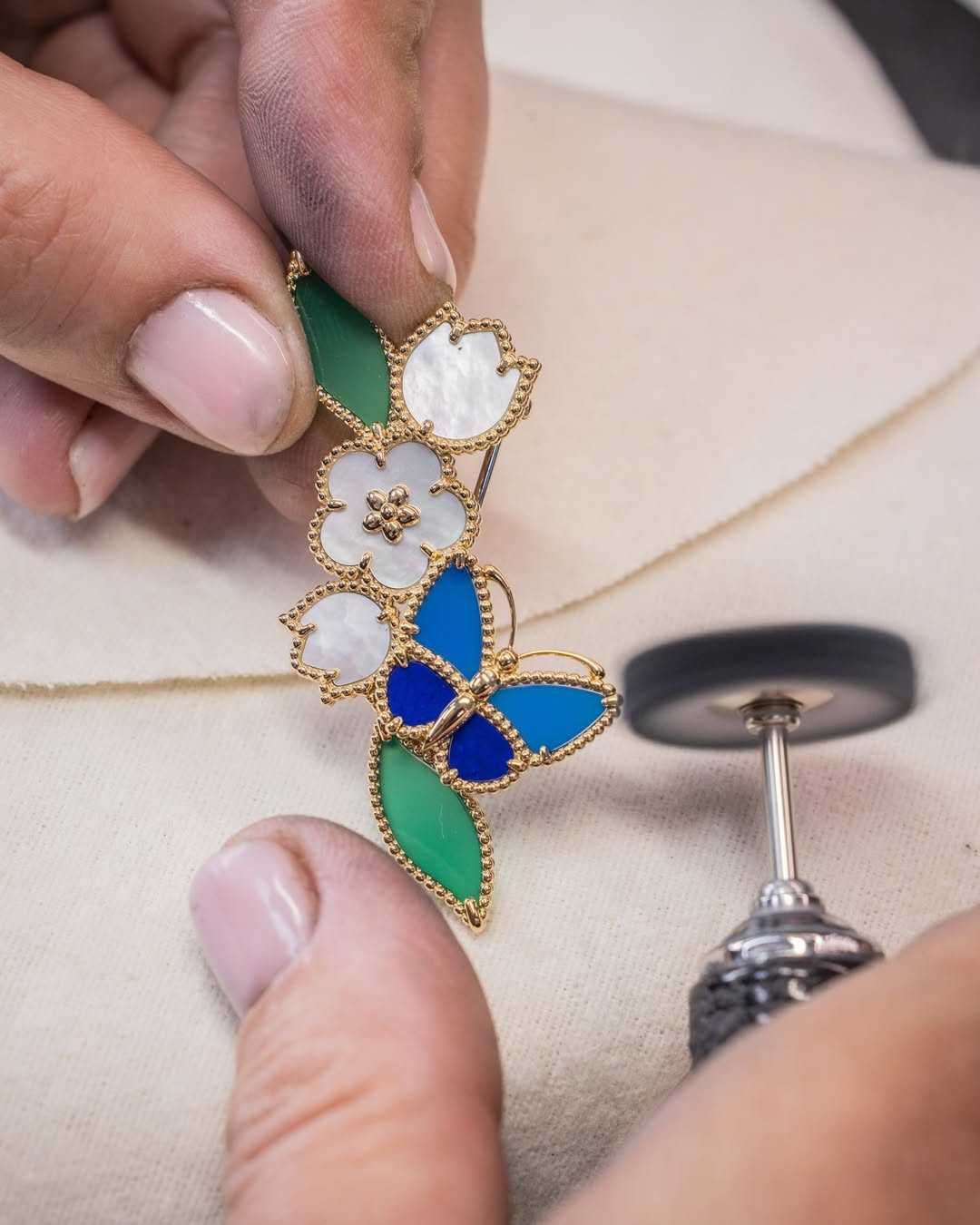
Over the years, the butterfly has taken on many forms at Van Cleef & Arpels, reflecting nature’s variety through materials such as diamonds, sapphires, coral, malachite, wood, and enamel. Sometimes rendered with lifelike detail, complete with delicate gold bodies and antennae, at others more stylised, the motif has evolved alongside changing tastes. The long necklace, with its pared-back motifs, nods to the free-spirited style of the 1970s.
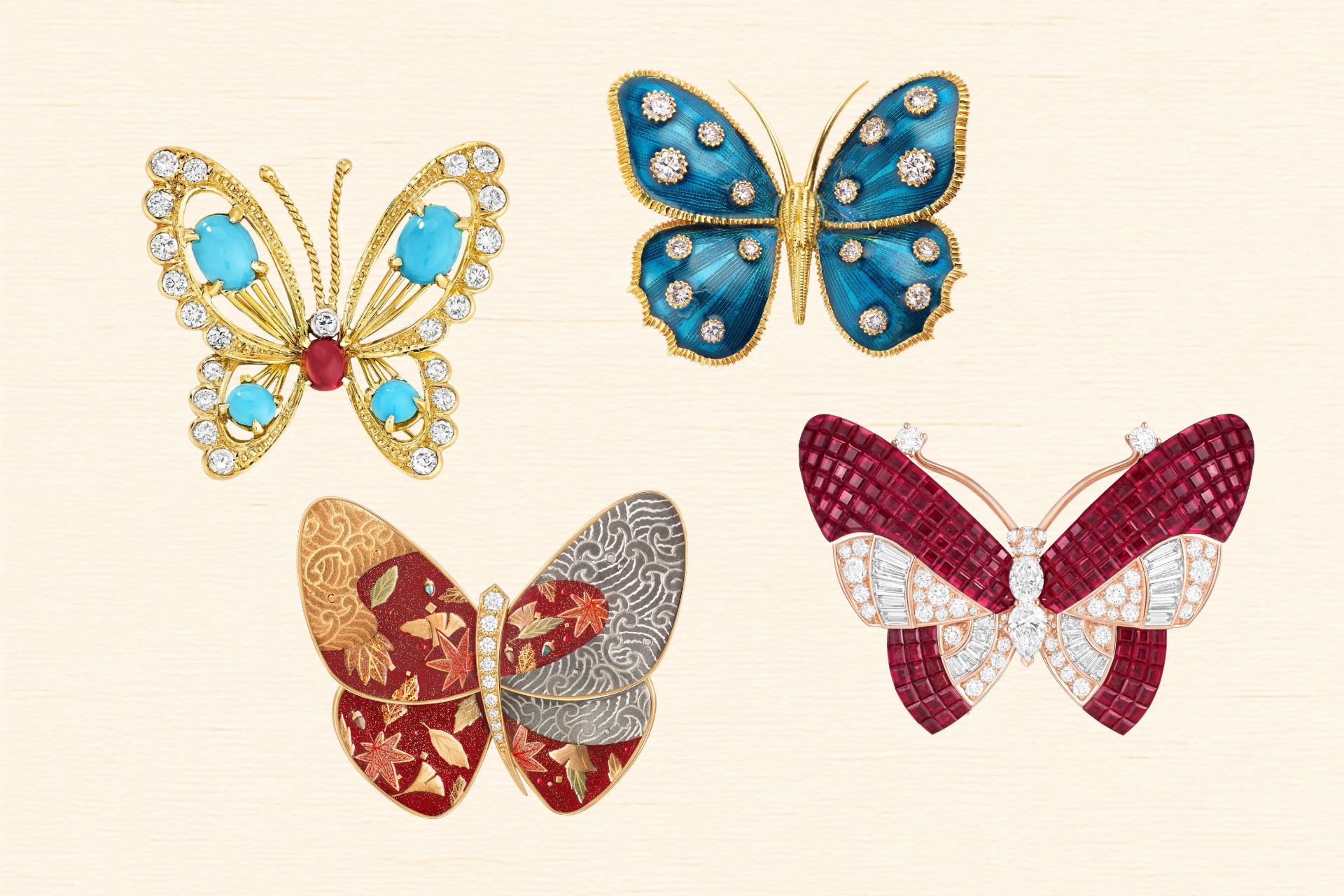
The Maison has also explored technical artistry through its use of Mystery Set, a technique patented in 1933 that gives gemstone surfaces a smooth, almost fabric-like finish. This approach still appears in High Jewellery today, seen in creations such as the Kallima ring and the Onde Mystérieuse clip. The butterfly continues to flutter across collections, from jewellery and watchmaking to more imaginative objects, including the Two Butterfly line and the Lady Arpels Brise d’Été Poetic Complications watch.
READ MORE
Rainer Bernard of Van Cleef & Arpels on Storytelling Behind Their Poetic Complications Watches
Why Lucky Charms Endure in Modern Jewellery
Van Cleef & Arpels Alhambra Watches Explained: From Jewellery Icon to Timepiece