
Thread Talk is a series venturing into a designer’s inner workings and thoughts. Today, we have Han David and Cyii Cheng, the founders of Ghostboy, a local brand that centres around youth culture, giving the younger crowd a space to be expressive through fashion.
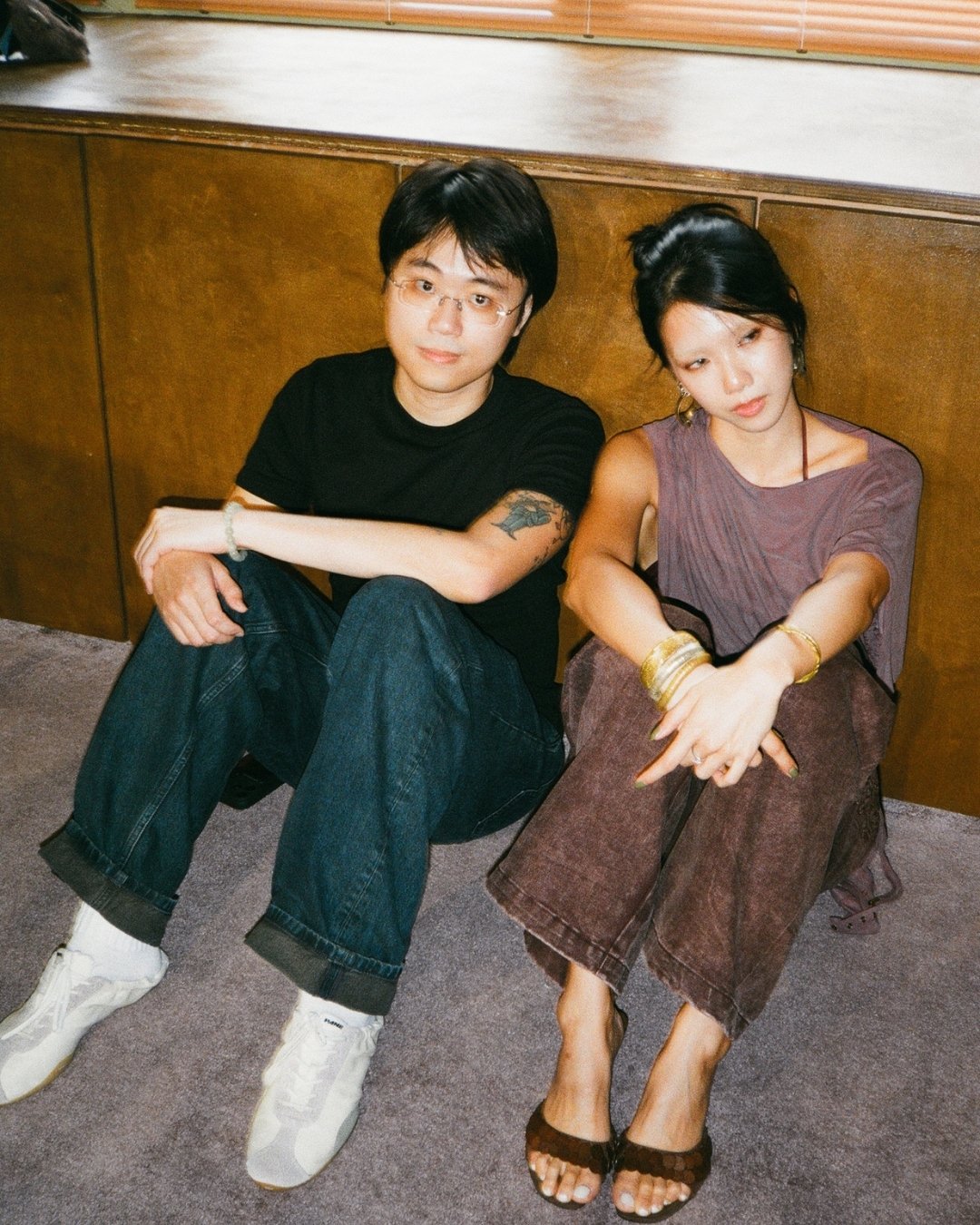
The current tableau of a fashion girl’s outing in KL looks like this: stepping into a walk-up building lifted straight from a 2000s Hong Kong film. Inside, neon signage bleeds vivid colour, and UV-lit fish tanks cast a vibrant blue glow. She has her pulse read and her back cupped, sips a herb-steeped cocktail, browses Ghostboy’s latest collection, and rounds it all off with a restorative sound bath before spilling into an after-party. This, in essence, is what a Ghostboy launch event looks like.
The homegrown label that built its name on the pulse of youth culture has become the badge of honour for the stylish set, not only locally but also across borders, now that it ventures overseas. But with how fashion has become a crowded bazaar where new names crop up each day, the threat of reducing clothing to a mere merchandising of a prefabricated image has never felt so acute. Ghostboy, however, reverses the current, and that makes it a standout.
The brand started as a conduit that draws together those of like mind until, organically, a distinct and instantly recognisable identity hardens into place. What grounds this authenticity is the willingness to address the elephant in the room: for a brand with youth culture as the backbone, pricing out the very community that defines it is absurd. And for Ghostboy, keeping their pieces accessible has been a deliberate effort to ensure the conversation remains open to as many as possible.
Perhaps this is why striking a balance between creativity and commercial realities has never felt much of a struggle for the duo, Han David and Cyii Cheng, behind the brand. “Our customers are risk takers; we don’t feel the need to compromise our vision when designing,” the designer David shares. Whilst party culture is deeply etched into the brand’s foundation, it was never a mapped-out strategy but merely a “part of our personal identity,” Cheng notes. “We were creating something we wanted to be part of ourselves, and over time it grew into something bigger than us,” David concludes.
What’s your first encounter with fashion?
Cheng (C): My first encounter with fashion was when I started modelling in 2015, but I’ve always been into DIY and altering clothes since I was in secondary school. I’d sold thrifted clothes online with some of my friends in university and also sold my self-made tie-dye clothes with another group of friends before eventually starting Ghostboy.
David (D): Tumblr. I stumbled across an Alexander McQueen compilation and fell into a rabbit hole. His work revealed a path I didn’t know existed. Before that, I’d never thought about working in fashion or even sketched a dress.
So fashion wasn’t something you envisioned yourself doing?
C: I actually thought I’d be working in finance.
D: Not even close. I wanted to be an architect. But my grandmother, who’s a fortune teller, always told me I’d end up in business and that it would somehow revolve around women. She was right.
How did the brand come about then? What is the lore behind the name “Ghostboy”?
C: It started when David offered to teach me how to sew, and we realised some people actually find our pieces appealing. As for the name, Ghostboy is inspired by Robotaki’s song. It was the first suggested name, so we just went with it—we didn’t initially plan to start a business together; it goes to show how unserious we were when we were picking a name.
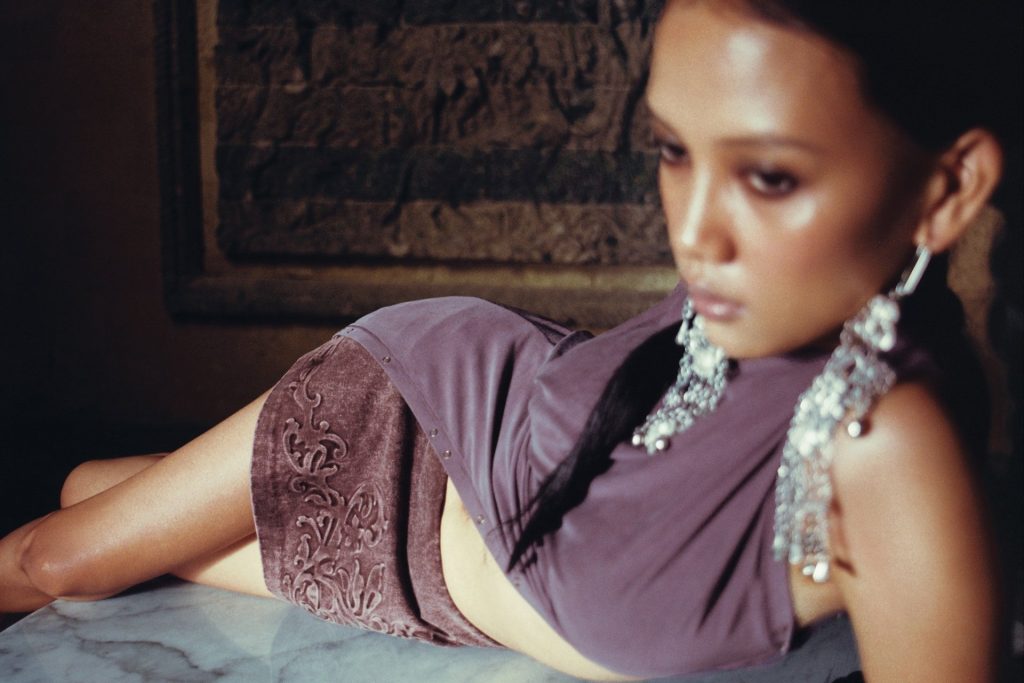
Tell us more about the latest collection, “Meranti Mori”.
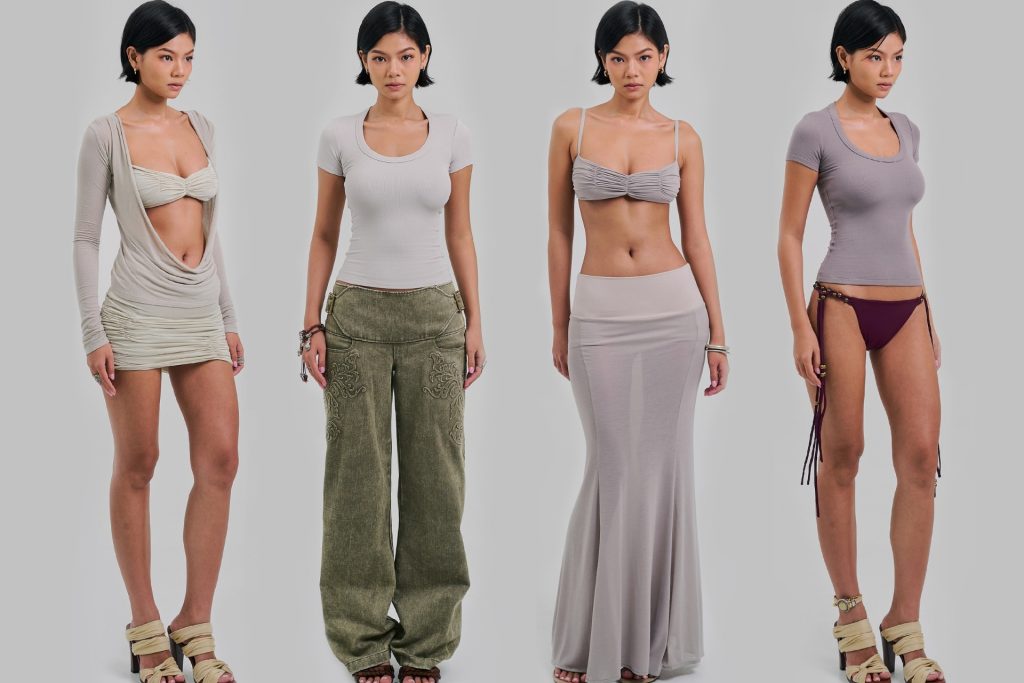
D: I went on a yoga retreat in the mountains of Hanoi earlier this year before working on this collection. It gave me space to think about spirituality, connection, and self-care. I wanted the clothes to carry that same sense of peacefulness, like stepping into an ancient temple in a foreign land.
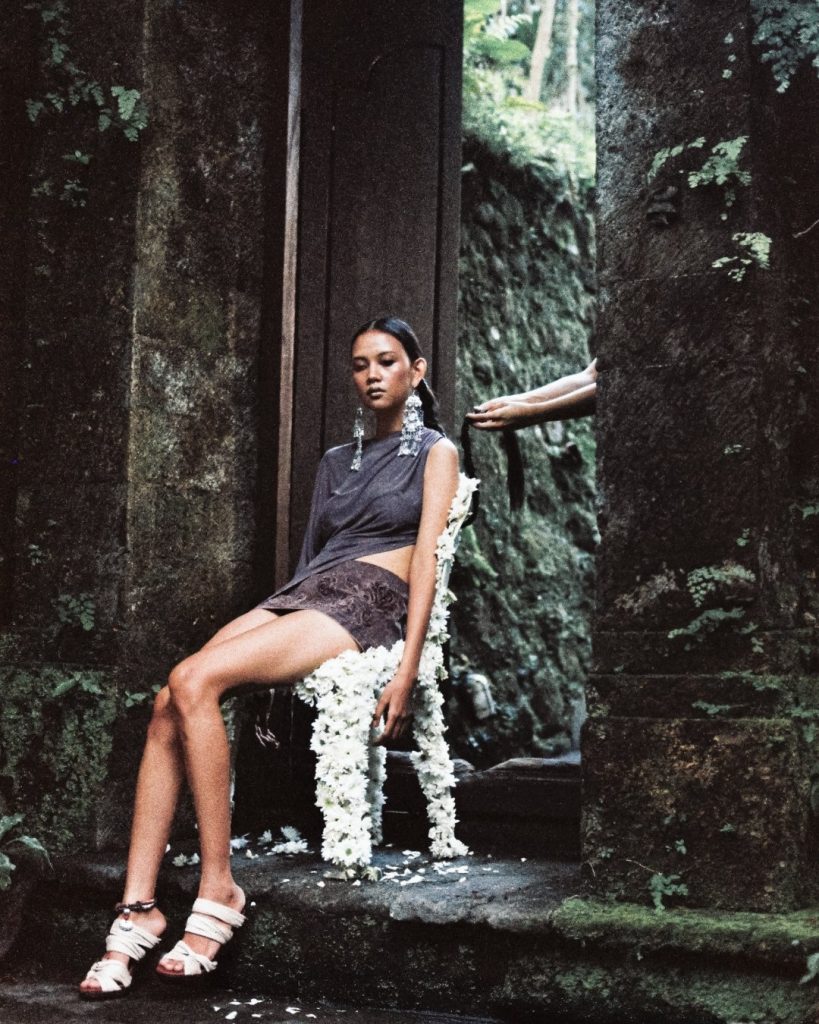
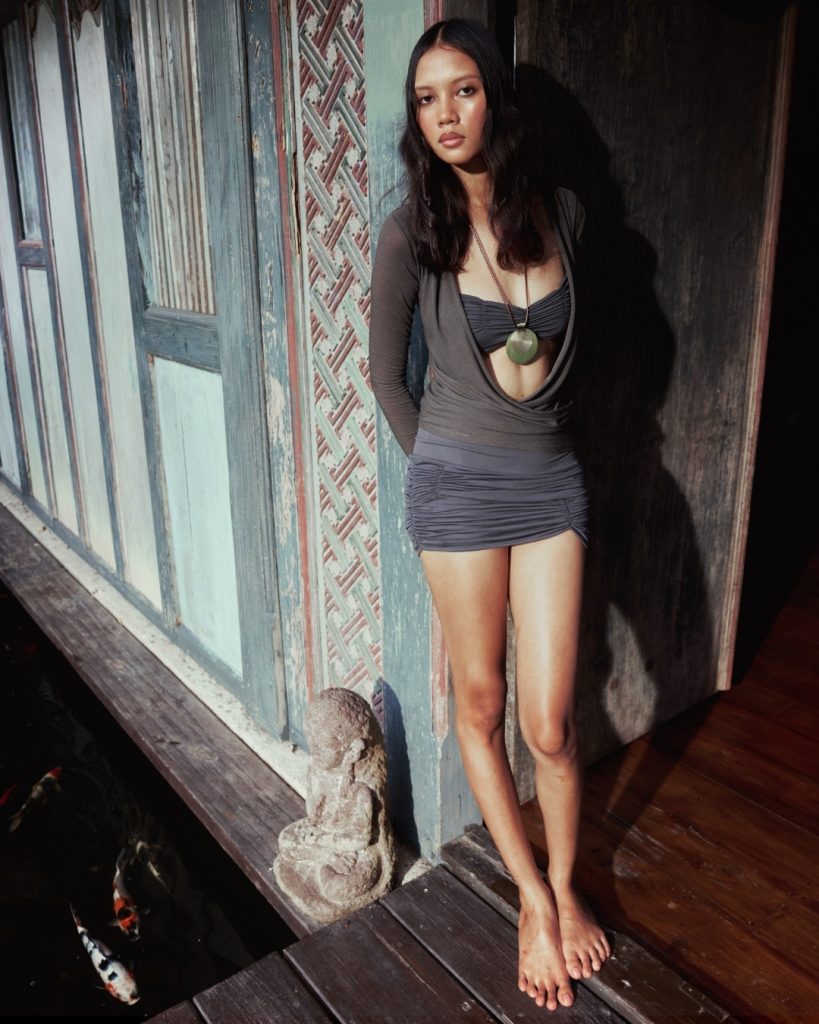
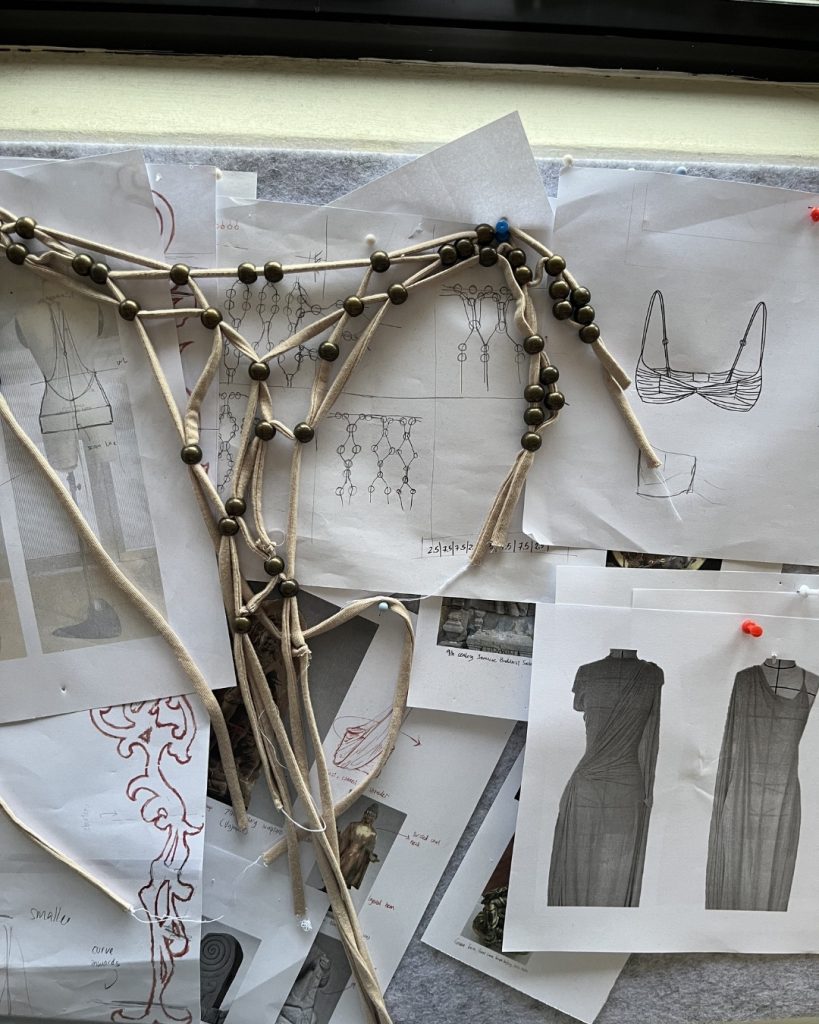
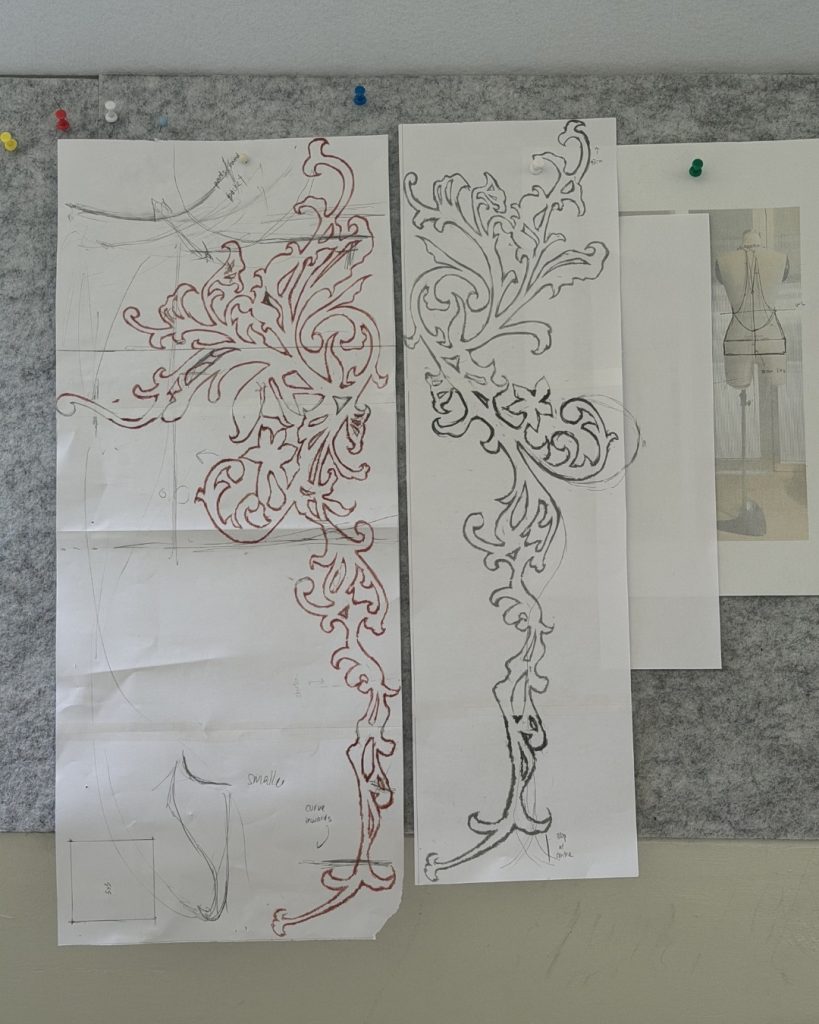
From there, we looked at spiritual objects across different cultures. Prayer beads and rosaries became the starting point for our Amulet Top, reimagined through hand-woven beadwork. The carved wood details found in furniture and home altars inspired the patterns of our Meranti Skort and Pants. We also explored the drapery on the Buddhist sculptures across different cultures and time periods, especially the contrast between Greco-Buddhist and Chinese Buddhist statues, and how different cultures translate spirituality into their own expressions of art and beauty.
C: Our campaign shoot was done with local photographer Nelson Chong in Bali, for its scenic nature and wood carving elements. As for the marketing, David pitched the idea of throwing an event focused on wellness, encouraging people to be in touch with their inner self, so our launch event—hosted by Erxi—went just as we envisioned, with activities like sound healing sessions by NenekMoyang, Traditional Chinese Medicine practices such as cupping by TianShengTCM, and Ba Mak sessions (pulse reading).
Ghostboy has built a strong community by extending fashion into lifestyle, particularly through the party scene, which feels quite novel locally. What led to that decision?
C: David and I started Ghostboy when we were 21 and 22—prime partying age. We were making clothes for ourselves to wear anyway, so I wouldn’t say it’s something we decided to do; it just became part of our brand identity because it was part of our personal identity.
D: It wasn’t really a plan. We were creating something we wanted to be part of ourselves, and over time, it grew into something bigger than us. But we’ve always believed in staying fluid, reinventing ourselves, and moving with what feels right.
For a brand anchored in youth culture, what is the biggest challenge?
D: Finding the right price point. As an independent label with a lean team and limited resources, we’re constantly balancing the cost of making things thoughtfully and keeping them accessible to the young people who wear them. We want our pieces to feel special but never out of reach.
Looking back, from “Portal to Another Planet” to “Meranti Mori” in 2026, what has changed most for the brand, and what is something you both insist on holding onto?
C: We’re so different now, yet so much is still the same. Ghostboy’s identity is largely unchanged; however, our take on what is considered “sexy” is a little more nuanced now. It doesn’t necessarily have to be skin-baring or over-the-top silhouettes—we still love making miniskirts and bikinis, but it can also be done with some level of elegance. As we grow older, we are more level-headed with our designs.
After years in the industry, what’s one of the biggest mistakes you’ve made, and what have you learned from it?
D: We’ve made plenty of mistakes along the way, and we’re still learning. The biggest lesson has been understanding the importance of building a strong foundation before scaling. Supply chain, merchandising, and logistics—these things aren’t always visible, but they are the facets that keep a brand alive. Going viral can happen overnight, but building something that lasts takes much more than that.
Is balancing creative integrity with commercial viability a challenge for Ghostboy?
D: Not really. Sometimes it wows me that the pieces we thought were too experimental end up becoming bestsellers. Our customers are risk-takers, so we don’t feel the need to compromise our vision when designing.
What do you hope to bring to the table? What are your long-term goals?
D: A table next to the table, by paving a way for ourselves and our community.
READ MORE