
At the World Presentation of Haute Horlogerie 2026, Franck Muller did not present a sequence of watches so much as a shifting landscape of ideas—where complications become choreography, dials become architecture, and ornament is never separate from mechanics.
Across the collection, one impulse repeats itself: to destabilise how time is read, and reassert how it can be experienced.
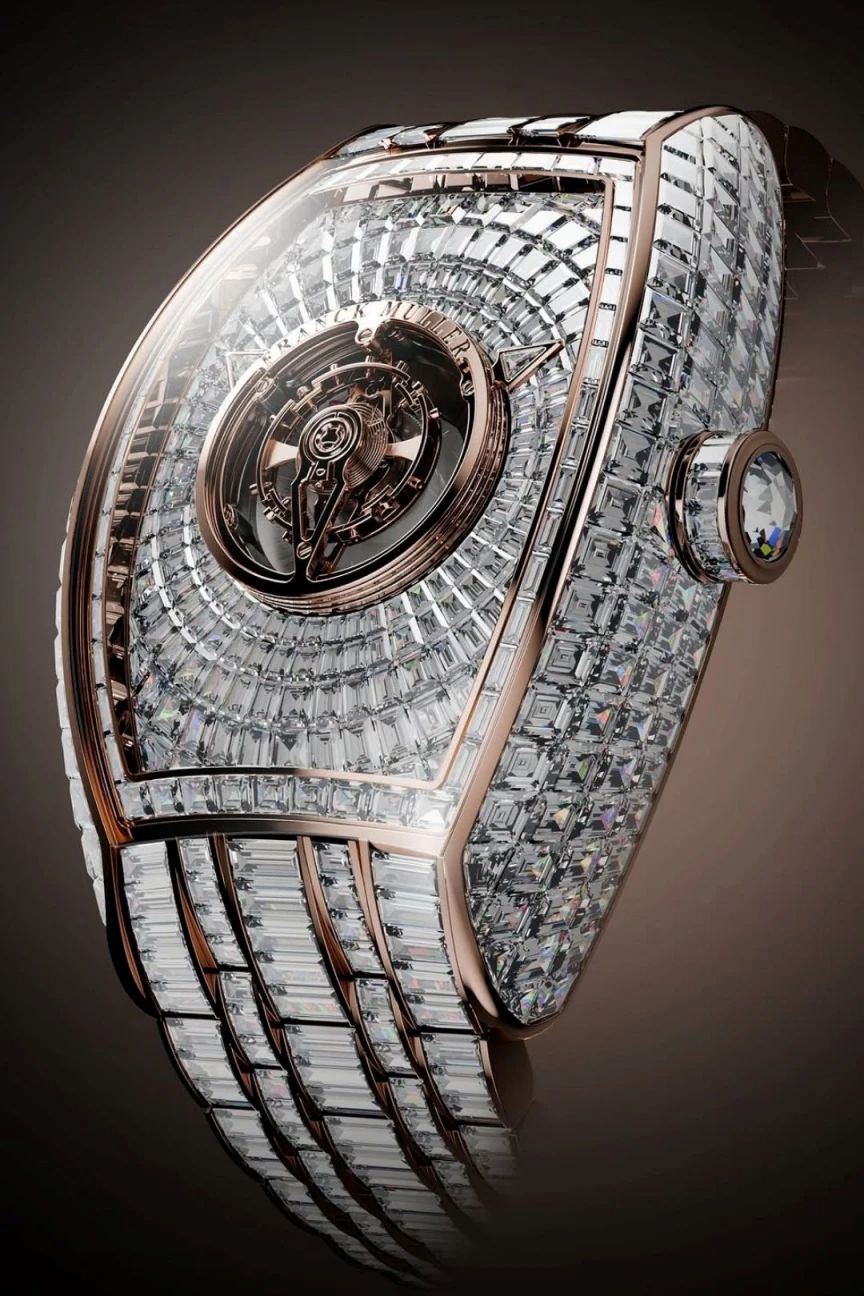
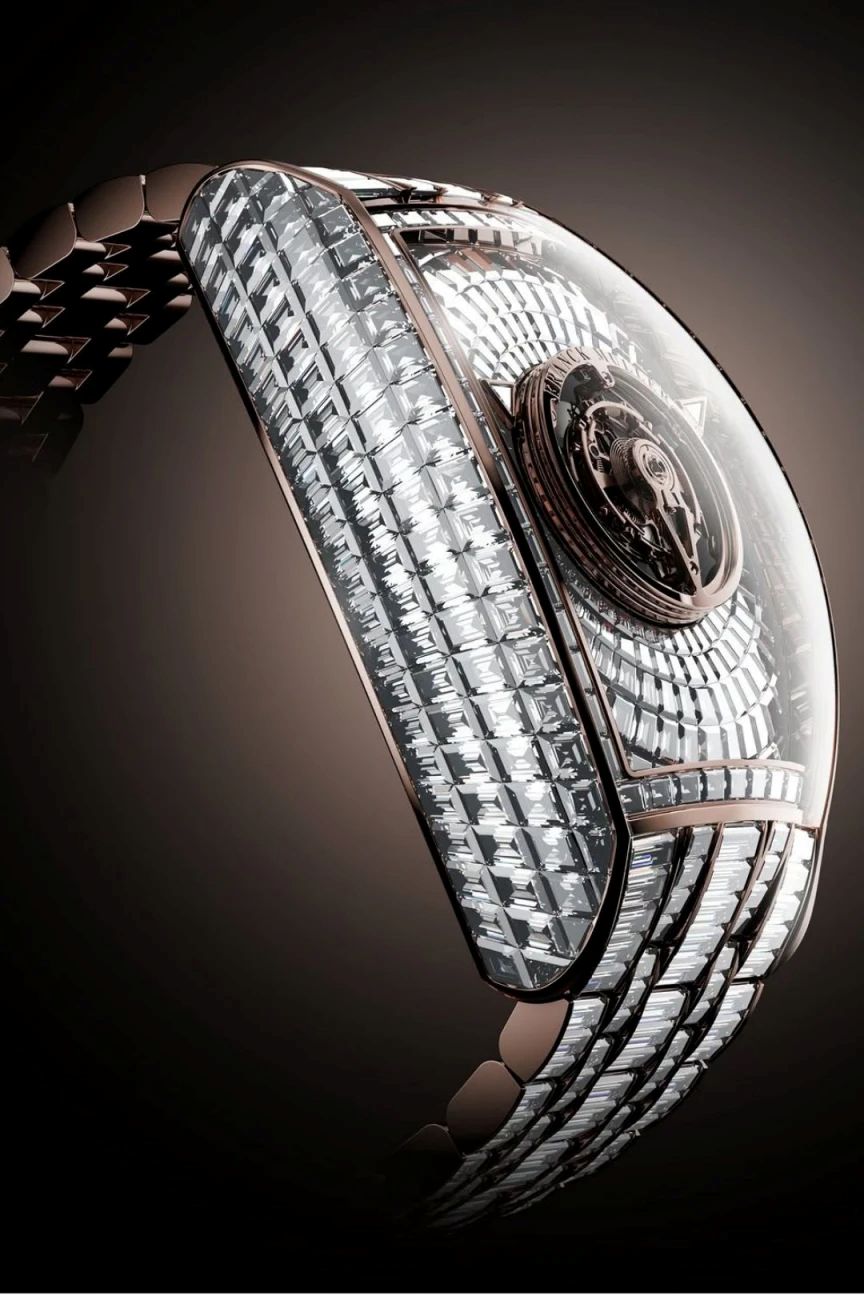
If there is a shared grammar running through this year’s most technically ambitious pieces, it is movement—not just of gears, but of perception. The centre of gravity shifts, quite literally, in the Curvex CX Grand Central Tourbillon Baguette, where the tourbillon abandons its conventional position and takes centre stage.
Framed in an uninterrupted field of baguette-cut diamonds, the complication becomes both mechanism and spotlight. The hour and minute hands orbit the cage in concentric motion, turning time into a rotating composition rather than a linear readout.
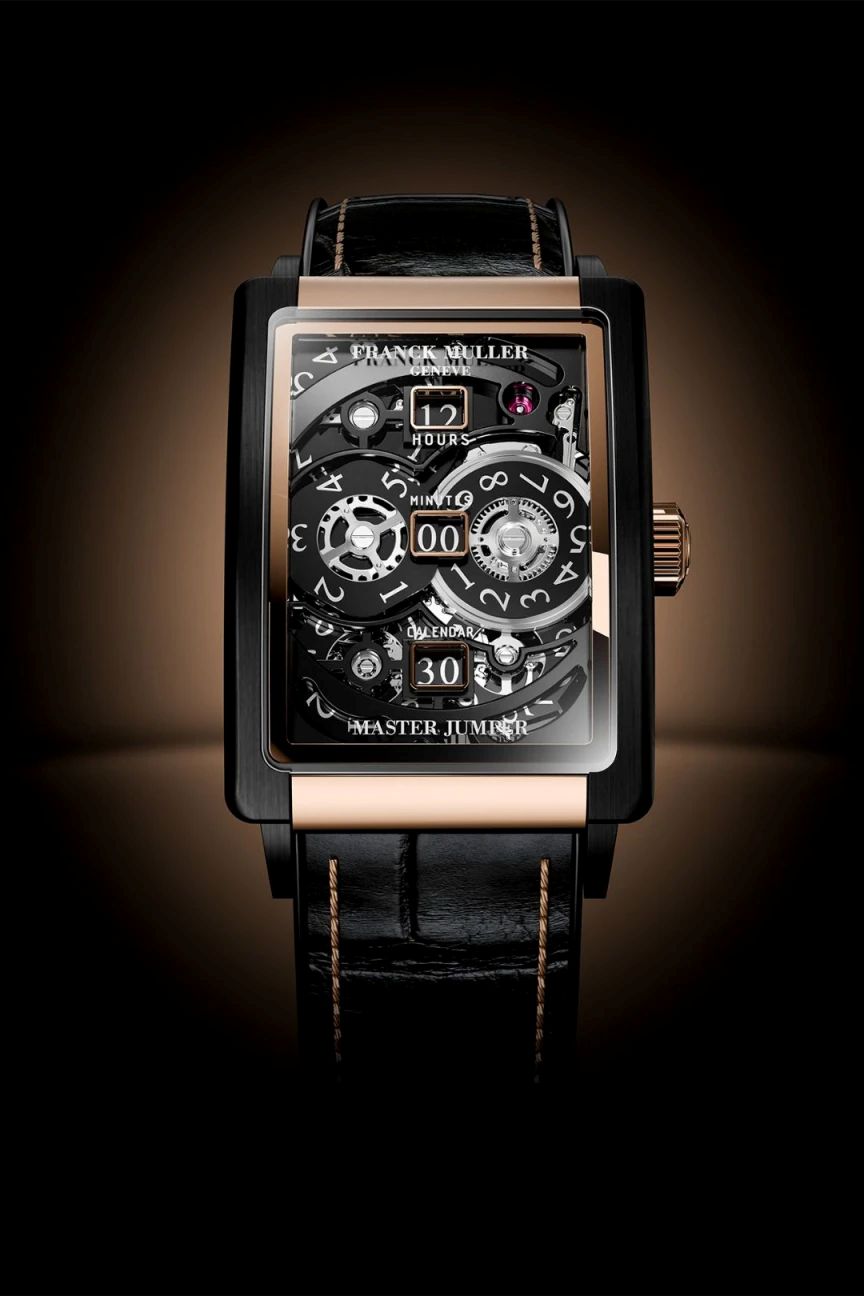
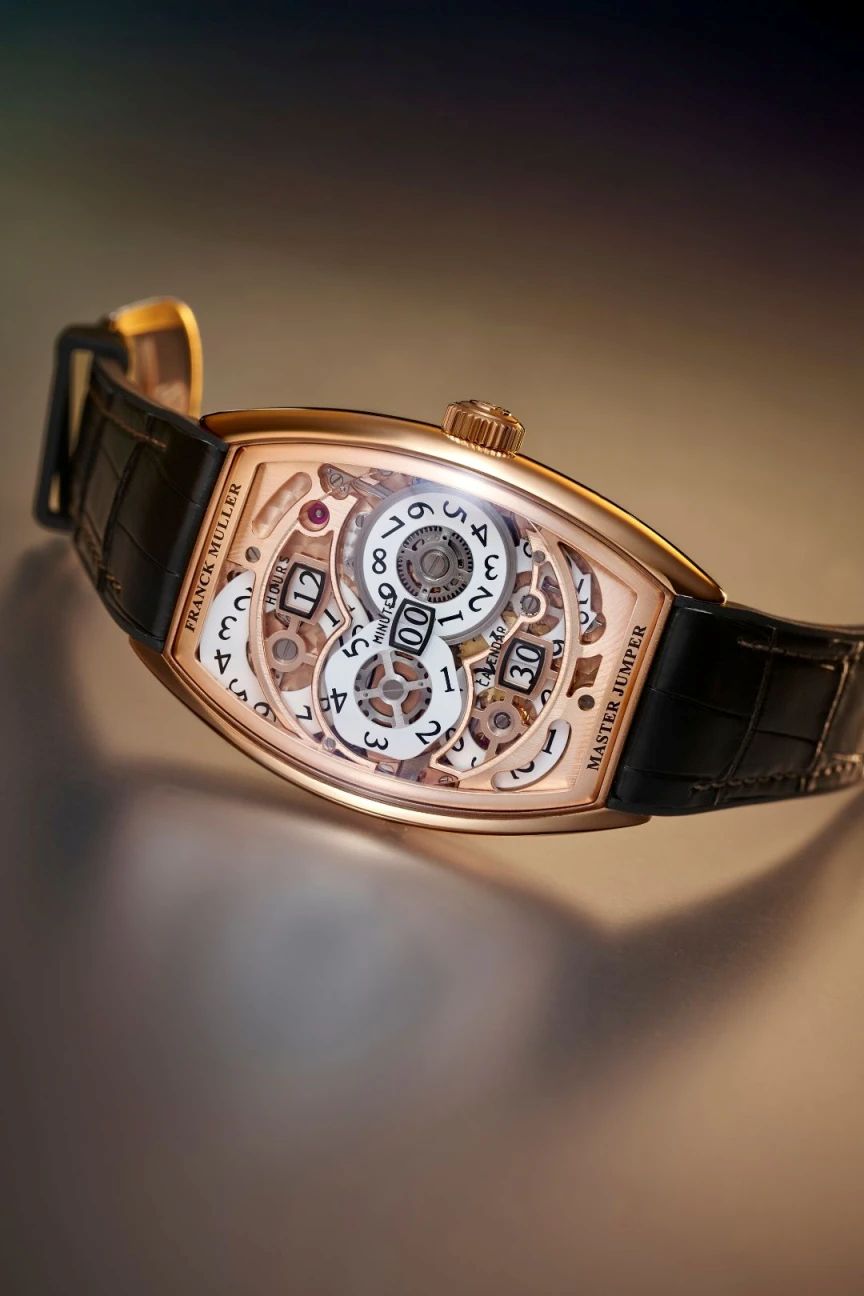
That same sense of controlled spectacle reappears in the Master Jumper Skeleton, where time refuses continuity altogether. Hours, minutes, and date are instead expressed through instantaneous jumps across floating discs—a mechanical punctuation that replaces sweep with shock. Here, Franck Muller splits energy across a dual-barrel system to ensure that each leap arrives with precision.
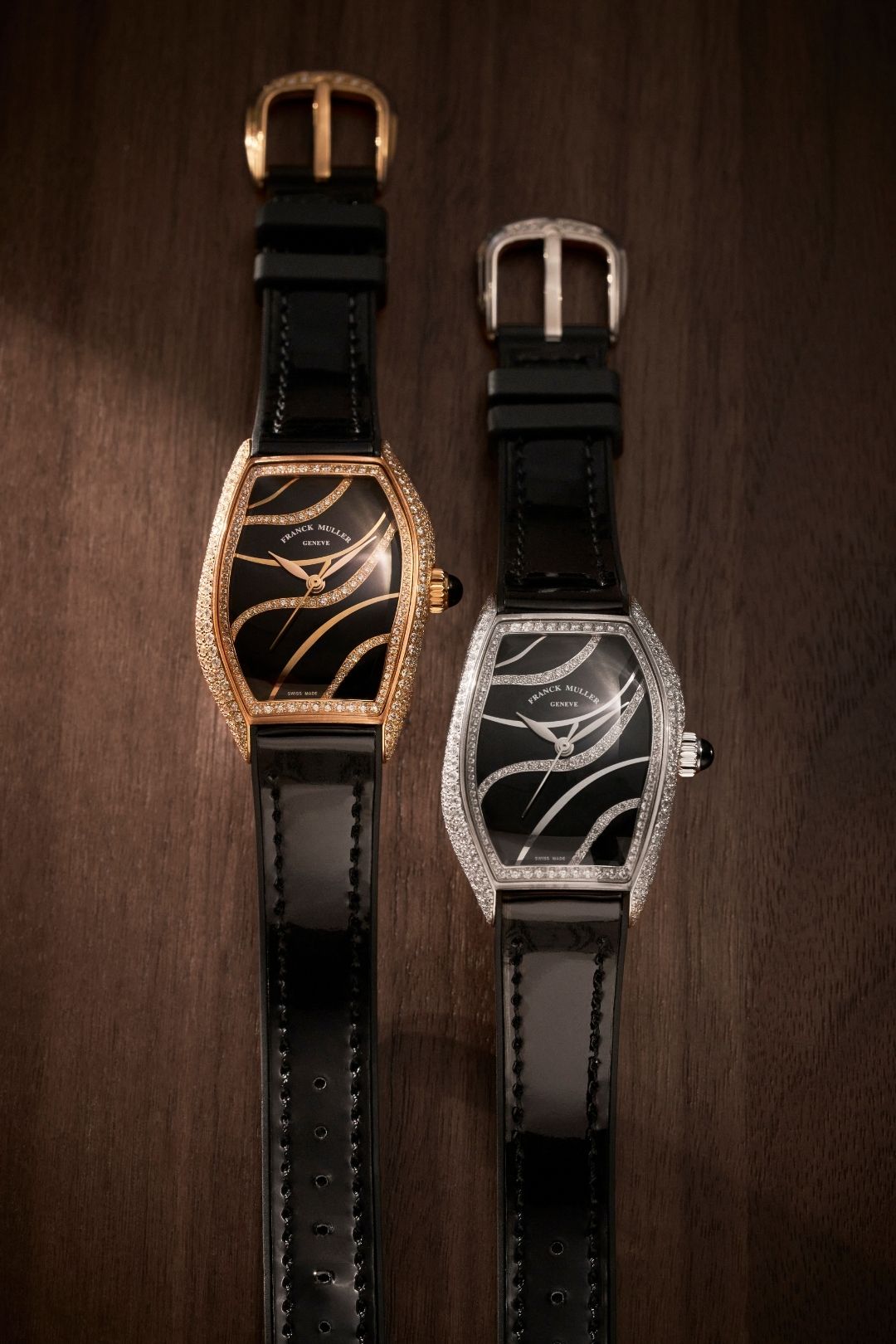
Elsewhere in the collection, the spectacle shifts from motion to material, but the effect is no less kinetic. The Curvex CX Silhouette speaks in form. Its asymmetrical case flows like a carved current, while the dial is built in layered stages: machined relief, matte black lacquer, then 25 successive coats that deepen the surface until it reads almost liquid.
Within these channels, diamonds are set not as decoration but as continuation, tracing the movement already implied by the dial itself.
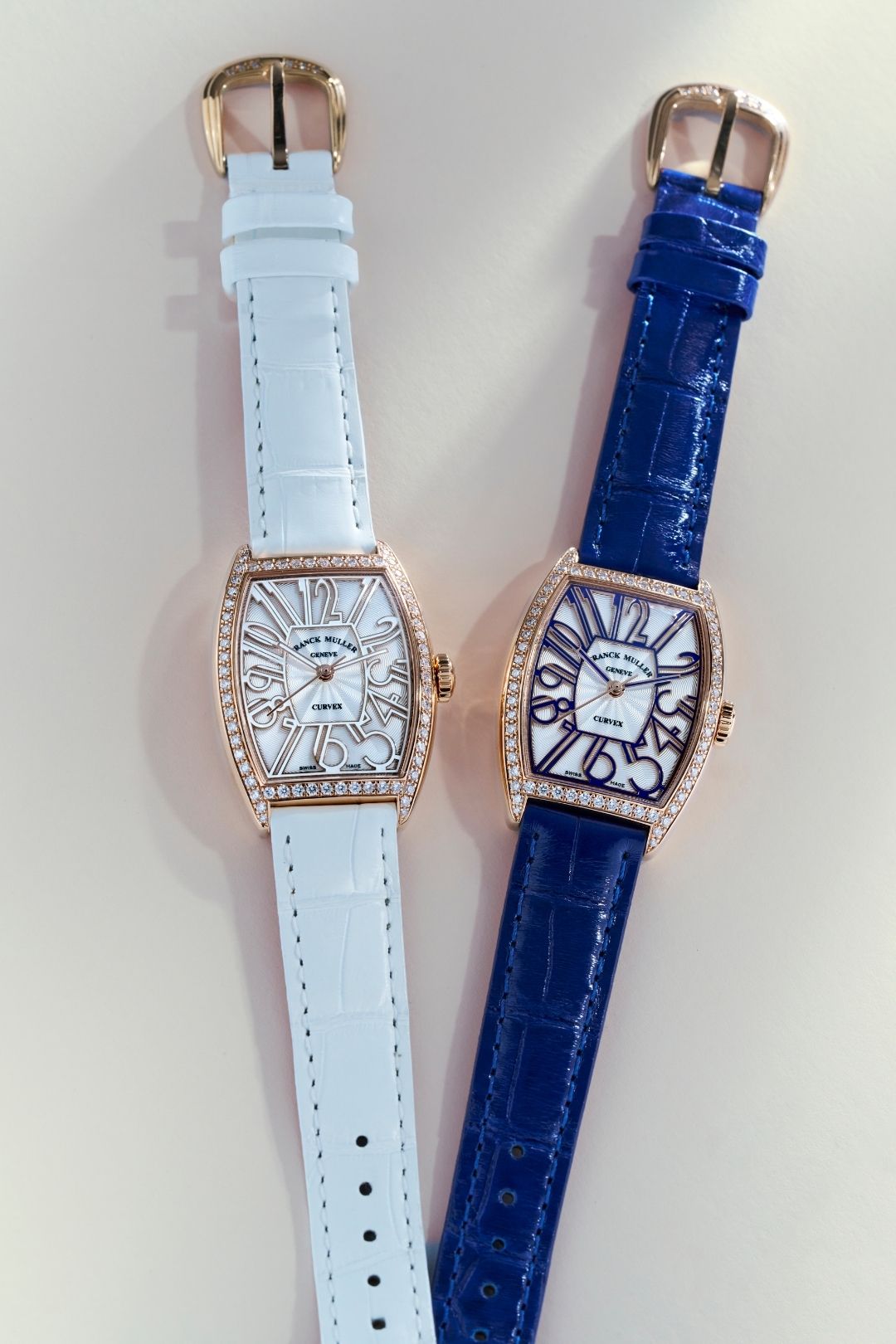
A similar tension between surface and structure defines the Cintrée Curvex Gatsby, where Art Deco nostalgia is translated into material density: guilloché stamped with a radiating sun motif, lacquered into depth, and punctuated by bold graphic numerals that feel closer to typography than indices.
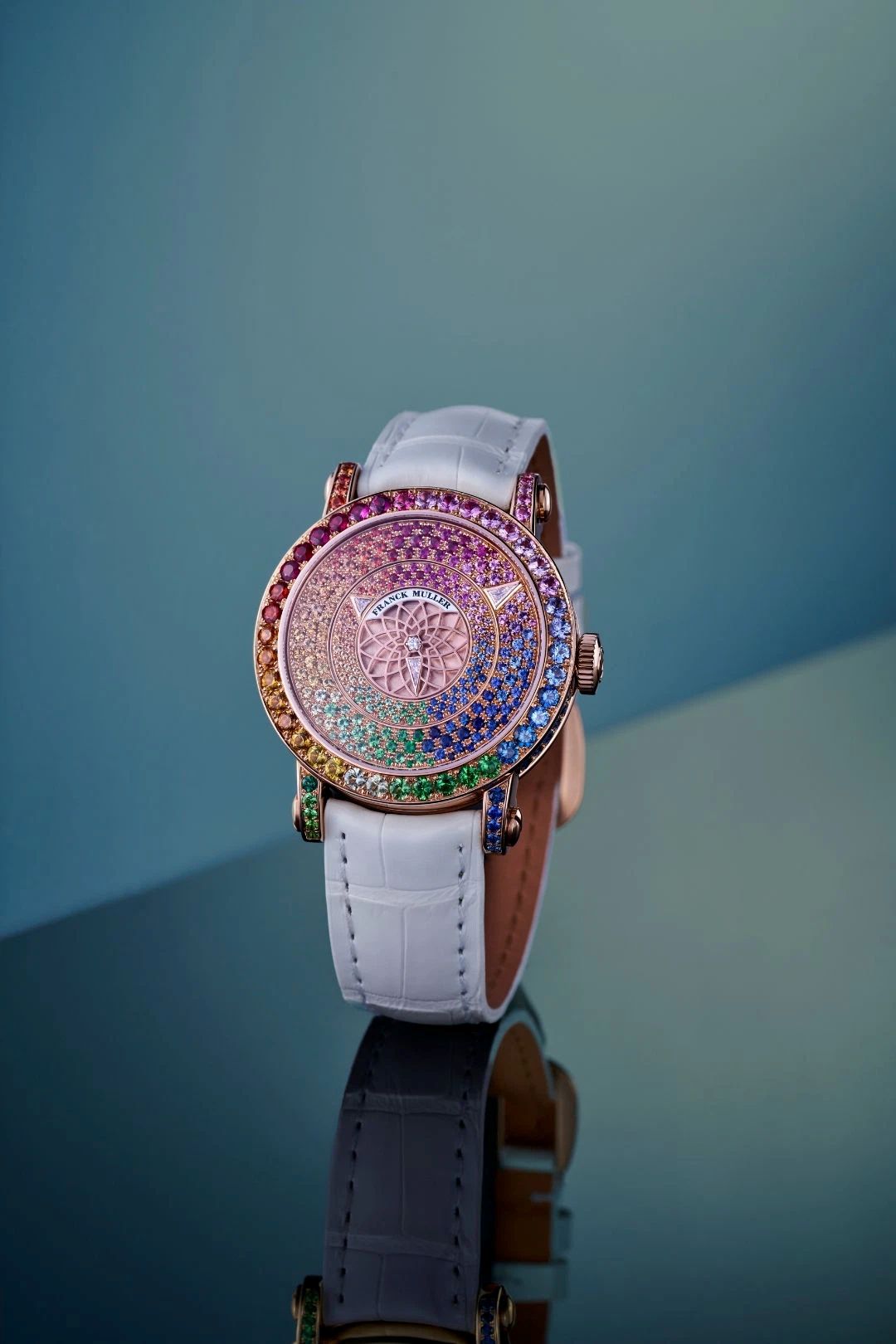
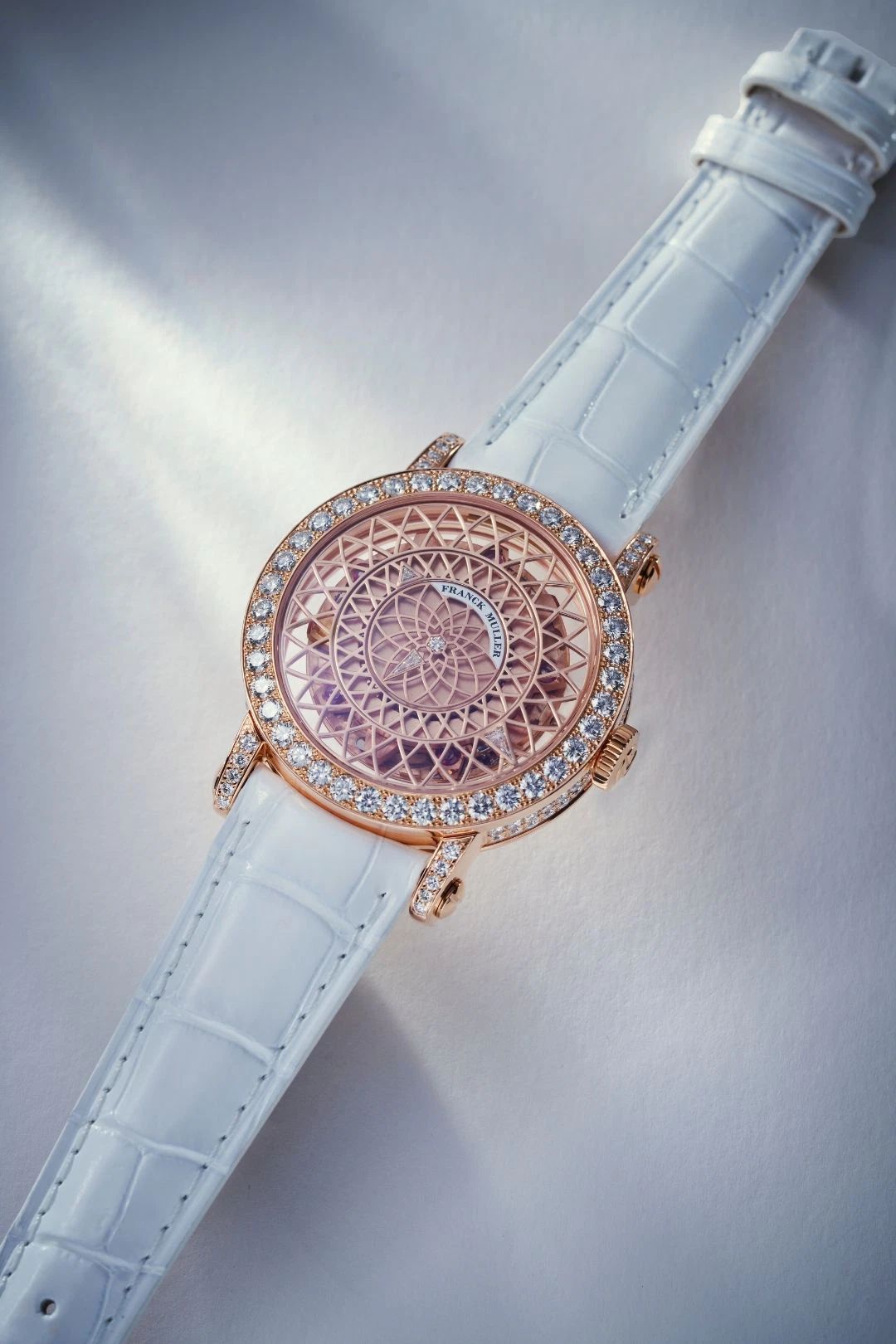
Franck Muller has long treated time not as something to be read, but something to be deciphered—and nowhere is this clearer than in its Mystery lineage. What began as a single rotating disc indicating hours has, over time, evolved into increasingly layered systems of concealment and revelation.
The Round Triple Mystery extends this logic into full abstraction: three rotating discs replacing hands entirely, turning the dial into a moving field of references rather than fixed markers. Even its most gem-set executions—from Rainbow to Invisible Baguette—share the same conceptual core. The stones do not merely decorate the surface; they structure how the eye tracks motion.
In the Skeleton version, where sapphire and openworked bridges expose the mechanics beneath, the illusion is inverted: nothing is hidden, yet everything still feels suspended.
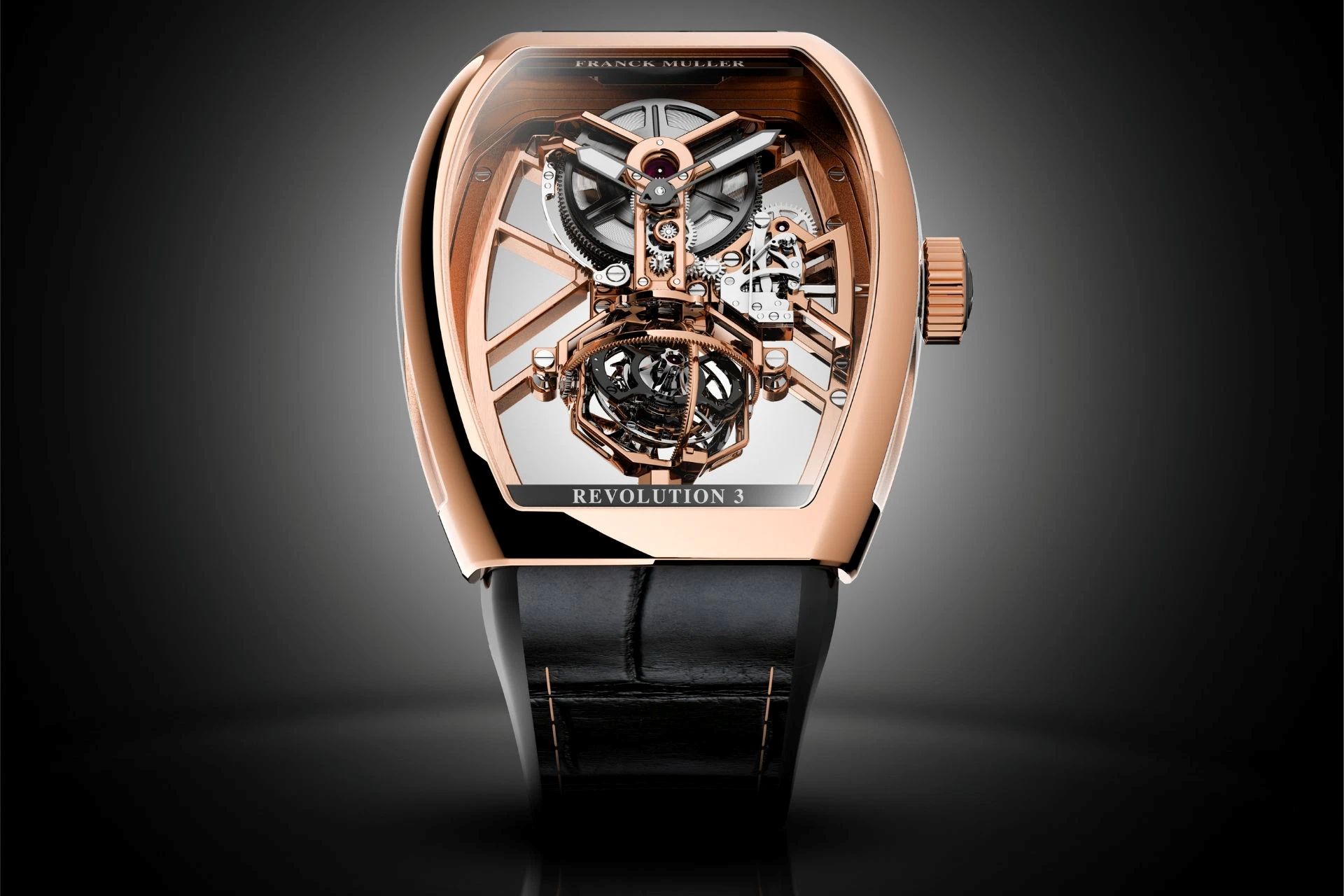
And at the most extreme end of the collection, Franck Muller turns its attention inward, focusing on how far a watch can be structurally reimagined. The Vanguard Aero Revolution 3 Skeleton pushes this to its limit. The tri-axial tourbillon is not simply visible; it is exposed across three gravitational planes, each rotating at a different speed.
To accommodate this, the movement is mounted directly onto the caseback, transforming the watch into a layered architectural object rather than a sealed mechanism. Bridges become structures in space. The domed caseback becomes an extension of the movement itself. Even the crown system is re-engineered into the case architecture, dissolving the boundary between function and form. That architectural logic gives way, in the final expressions, to something more immediate: image.
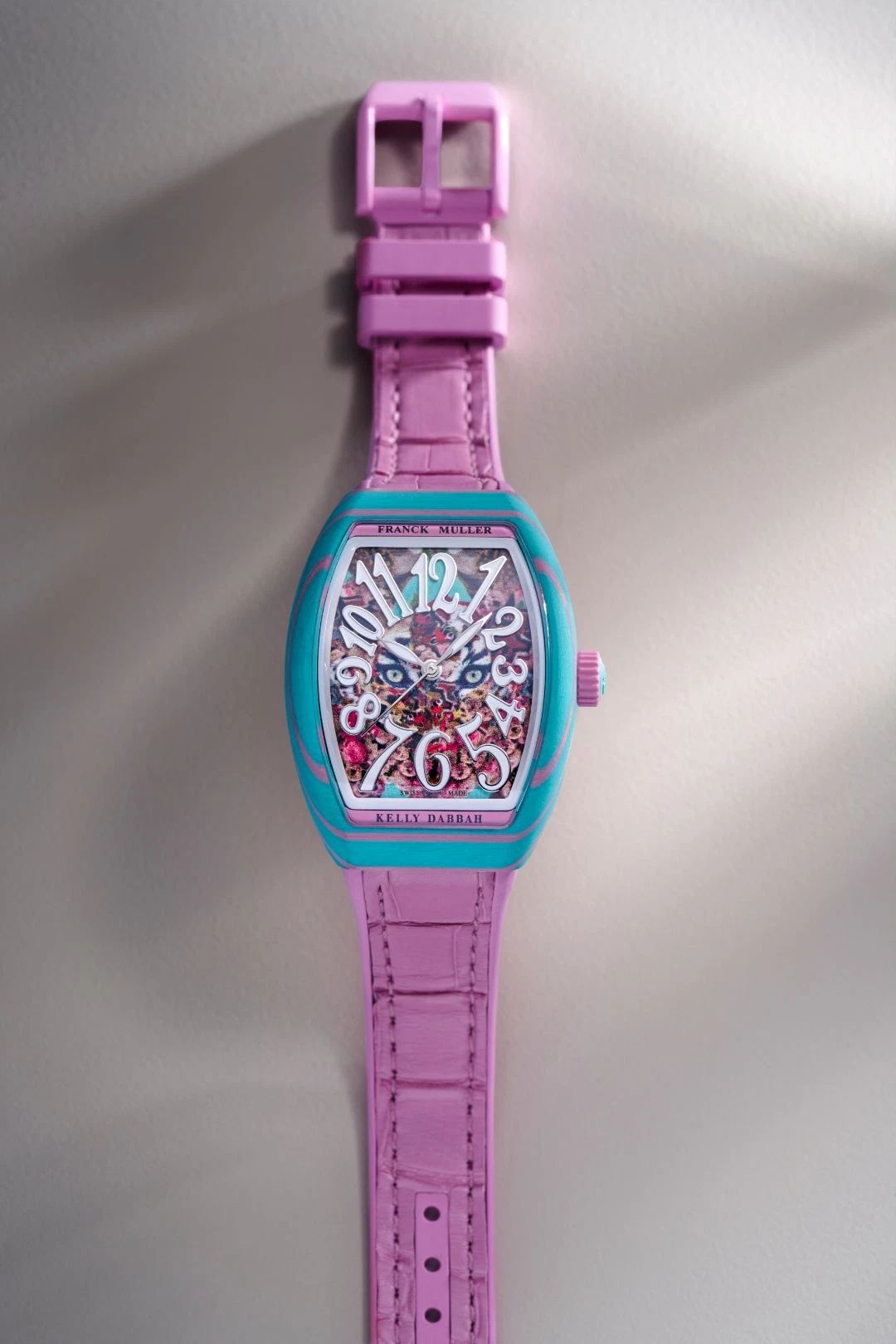
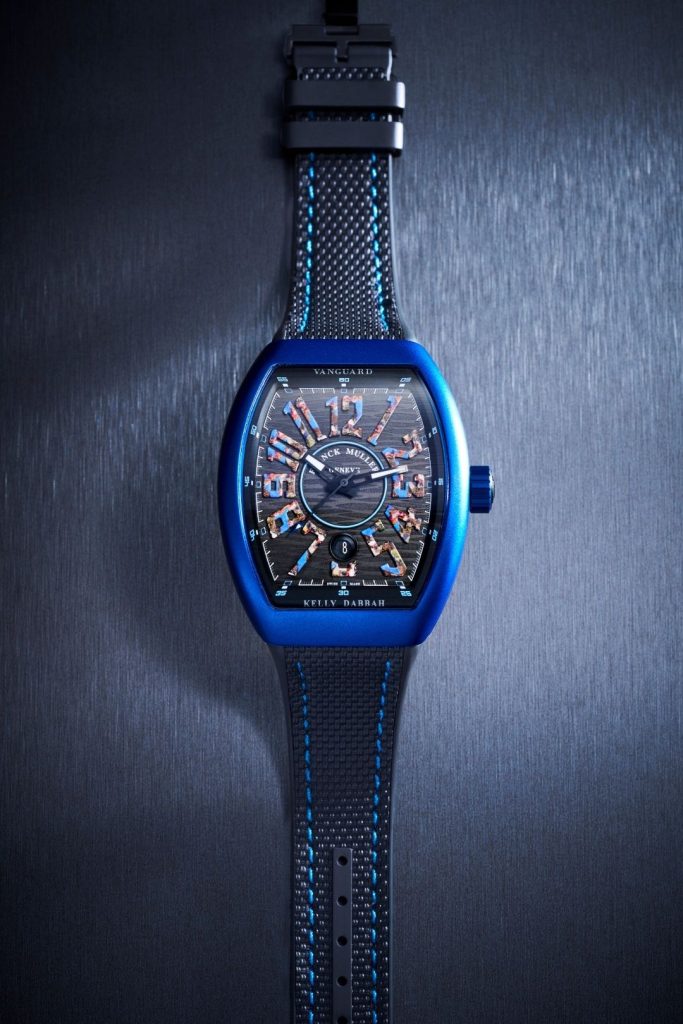
With Vanguard Lady Crazy Hours Kelly Dabbah, Franck Muller collapses the distance between horology and contemporary art. Through sublimation, pigment is embedded directly into lacquer under heat and pressure, making the dial a permanent extension of the artwork rather than a surface applied to it. In Candy Mint and Electric Feel, collage becomes structure—eyes, symbols, and fragments of narrative embedded into the geometry of the dial itself.
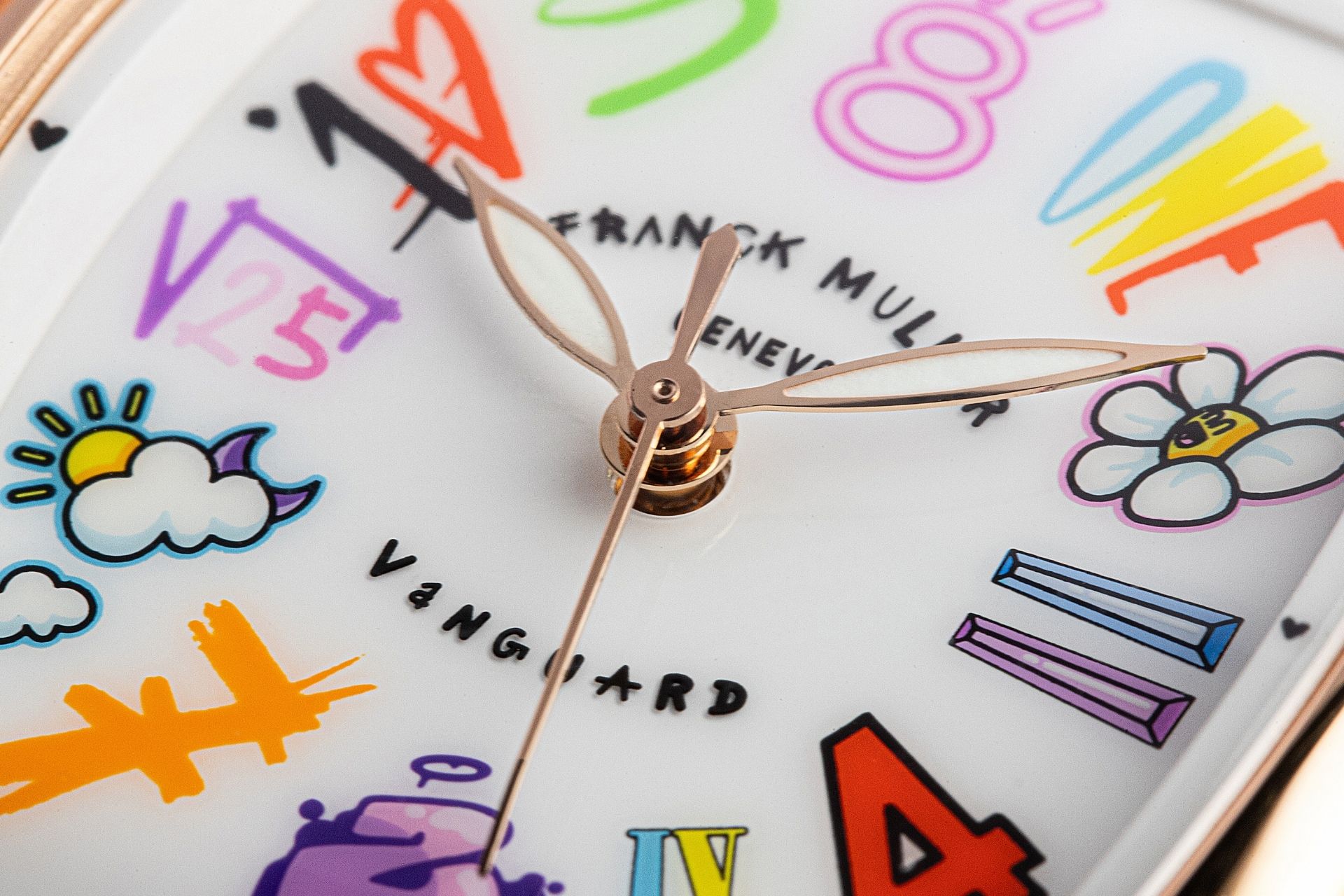
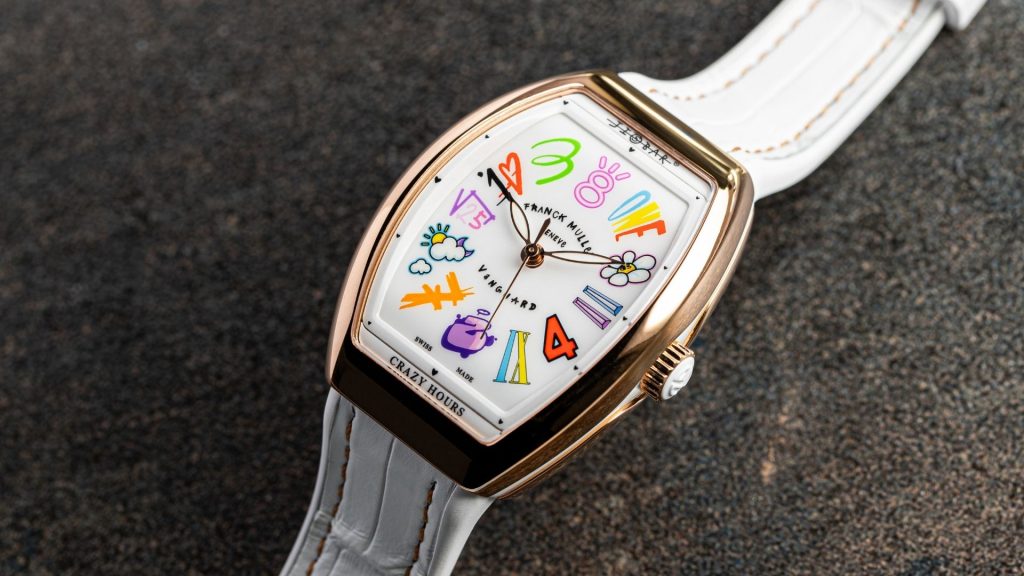
In Crazy Hours Jisbar, visual language meets mechanical disorder, as numerals are scattered across the dial and corrected only through the jumping hour complication. What could have been decoration instead becomes system. What could have been illustration becomes mechanism.
Across the 2026 collection, Franck Muller does not present a single direction so much as a set of recurring questions: what if time moved differently? What if it looked different? What if it could be read, or misread, or not read at all? The answer, as ever, is not restraint. It is invention—expressed through light, motion, and the refusal to let time stay still.
This story first appeared in Grazia Singapore.
READ MORE