
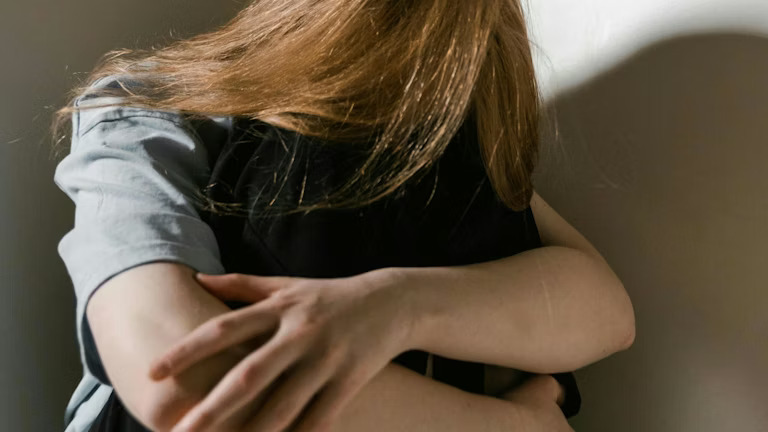
The first time I really became aware of International Women’s Day as an event, was in 2021. It came five days after the death of Sarah Everard. The country was screaming. And I remember it clearly, bonded by a furiously desperate rage at the magnitude of this injustice, with women all over the country, all over the world, the 8th of March felt like a moment. We lit candles and we believed: this is the day it changes; please, God, let this be the day something changes.
In the 5 years since her murder at the hands of police officer Wayne Couzens, 600 women have been murdered. A lot has changed since 2021, some for the better, some for the worse. A lot else has stayed the same. One woman is still being killed every three days in the UK by a man, as has been happening here for two decades. Alarmingly, the vast majority of these women are being killed in their own homes. The place in which they should have been safe.
Increasingly though, I am struck by the realisation that with the relentless advancement of technology, and the lag in any sort of meaningful legislation to regulate it, the list of places in which women can truly feel safe, shrinks.
Whilst the traditional threat of male violence on dark alleyways prevails, the weaponization of so much of the technology we use, from the sending of unsolicited sexual images to the boom in deep fake technology, revenge porn, stalking and the good old fashioned ‘online abuse’ that I have been victim to throughout my career, means that male violence is now almost impossible to escape.
As a woman in the digital space, the misogyny I receive is relentless. My visibility, and the topics I choose to tackle, have exposed me to a raft of misogynistic hate, and my experience is far from unique. It reflects a broader pattern of abuse that women face simply for existing online. It shows me in so many ways how far we still have to go before legislation and regulation catches up with perpetrators of tech-facilitated abuse, it shows me how far we still have to go to change our societal attitudes towards it.
It’s a horrible reality to confront, but the dangers that women are currently facing are by this point well documented, and thus, well known. And yet, still it happens, Every day, millions of women and girls across the world are being subjected to domestic abuse. In England and Wales alone, one in four women will experience domestic abuse in their lifetime. But it doesn’t happen in a vacuum, it is not passive. It is not just ‘violence against women’. It has a perpetrator; it has a cause. It is male violence against women. And I think we’d do well to start calling it that.
Most women are being abused by men that are known to them, in the very spaces that should protect them.
Because violence against women and girls (VAWG) is not confined to dark streets or unfamiliar places, overwhelmingly it does not happen at the hands of strangers, or “bad apples”. Most commonly it is happening behind closed doors, hidden in plain sight. Most women are being abused by men that are known to them, in the very spaces that should protect them. Women deserve to feel safe in their homes. In their bodies. In their society. But this cannot be achieved without urgent government action. A £55.5 million annual shortfall in funding for refuge accommodation remains – a gap the Government’s recent VAWG Strategy did nothing to close. For too many, the absence of safe accommodation leaves no choice but to remain in a dangerous home.
This week, I’ll be joining Refuge for a high-profile activation outside Parliament to call on the Government to act. Members of the public will be invited to sign an open letter, and I urge as many people as possible to add their voices. I had a genuine hope in my heart on 8th March 2021. That has dissipated year on year, as we have watched women all over the world, from the US to Afghanistan have their rights rolled back. But in the preceding five years, I have had two children, both girls.
And so, whilst my hope has faltered from time to time, my resolve has stayed very strong. I am determined to ensure that my bold and brilliant girls will grow with confidence, with resilience, with strength, and passion, with love and joy and happiness and freedom and an abundance of whimsy magic. I want them to know that they celebrated and cared for and championed. But overwhelmingly, the thing that I am desperately committed to, is fighting for their safety. Safety at home should not be a privilege; it’s the bare minimum women and girls deserve.
Yet after joining forces with Refuge, the UK’s largest specialist domestic abuse charity, I’ve learned a troubling truth: home is, in fact, the most dangerous place for a woman. This is why I’m supporting Refuge’s International Women’s Day campaign, Home is Where the Hurt is, which sheds light on the dangers women face in their own homes. No woman should ever have to fear the place she calls home.
In England and Wales, one in four women will experience domestic abuse in their lifetime, and 75 women were killed by a current or former partner or family member in the year ending March 2025. Refuge’s International Women’s Day campaign, Home is Where the Hurt Is, exposes a devastating truth: the most dangerous place for a woman is her own home. Watch the campaign film to learn more: Home is Where the Hurt is
This story first appeared on GRAZIA UK.
READ MORE