

The design language at the Maison of Van Cleef & Arpels develops subtly over time, like a pattern that repeats in different forms. The Perlée collection proves it. Its beaded motif appears across different pieces and collections, sometimes returning later in a slightly different way. Its variation, and keeping it recognisable and relevant to modern times, is what maintains the identity of the collection without becoming monotonous.
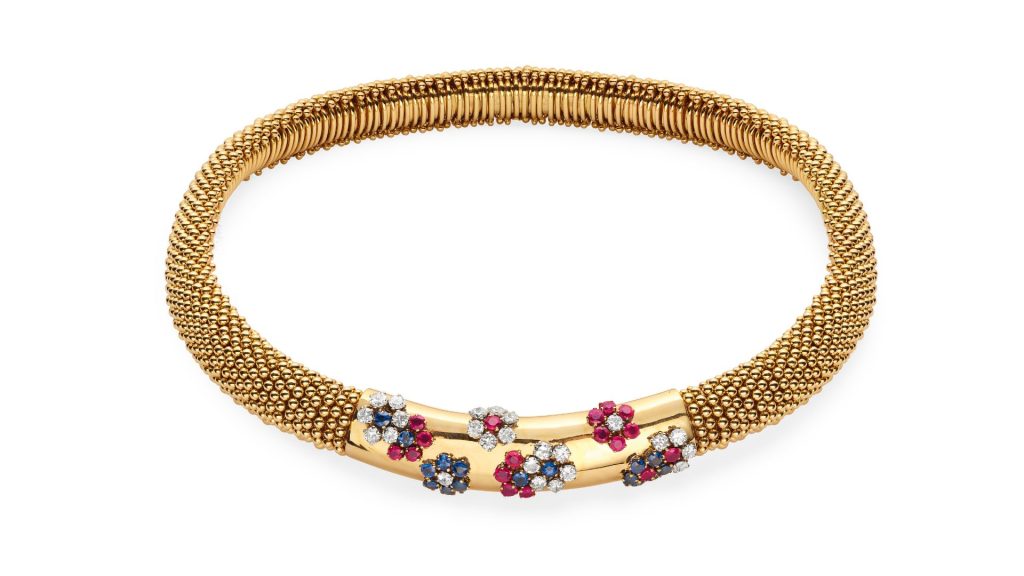
The golden bead is one of those elements that has been around long enough to feel inevitable, though it did not start that way. Within the Maison’s history, it has been a recurring form since the late 1940s, used for its ability to catch and redirect light without needing a setting or a frame to hold it together. At first, it appeared experimentally—small, rounded points breaking up gold surfaces. Then, it became more structural. By the time it entered collections like Couscous, the beaded motif was not just for decorative purposes but became a look on its own.
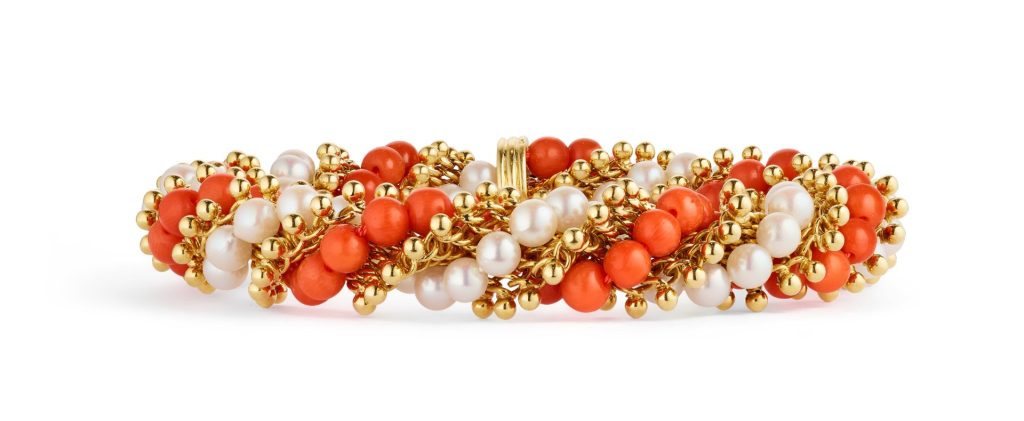
Launched in 2008, the Perlée collection combines clean, simple lines with fine jewellery craftsmanship, offering multiple variations of a timeless design. It is used in repetition—sometimes in single rows, sometimes layered, and sometimes circling the wrist or finger.
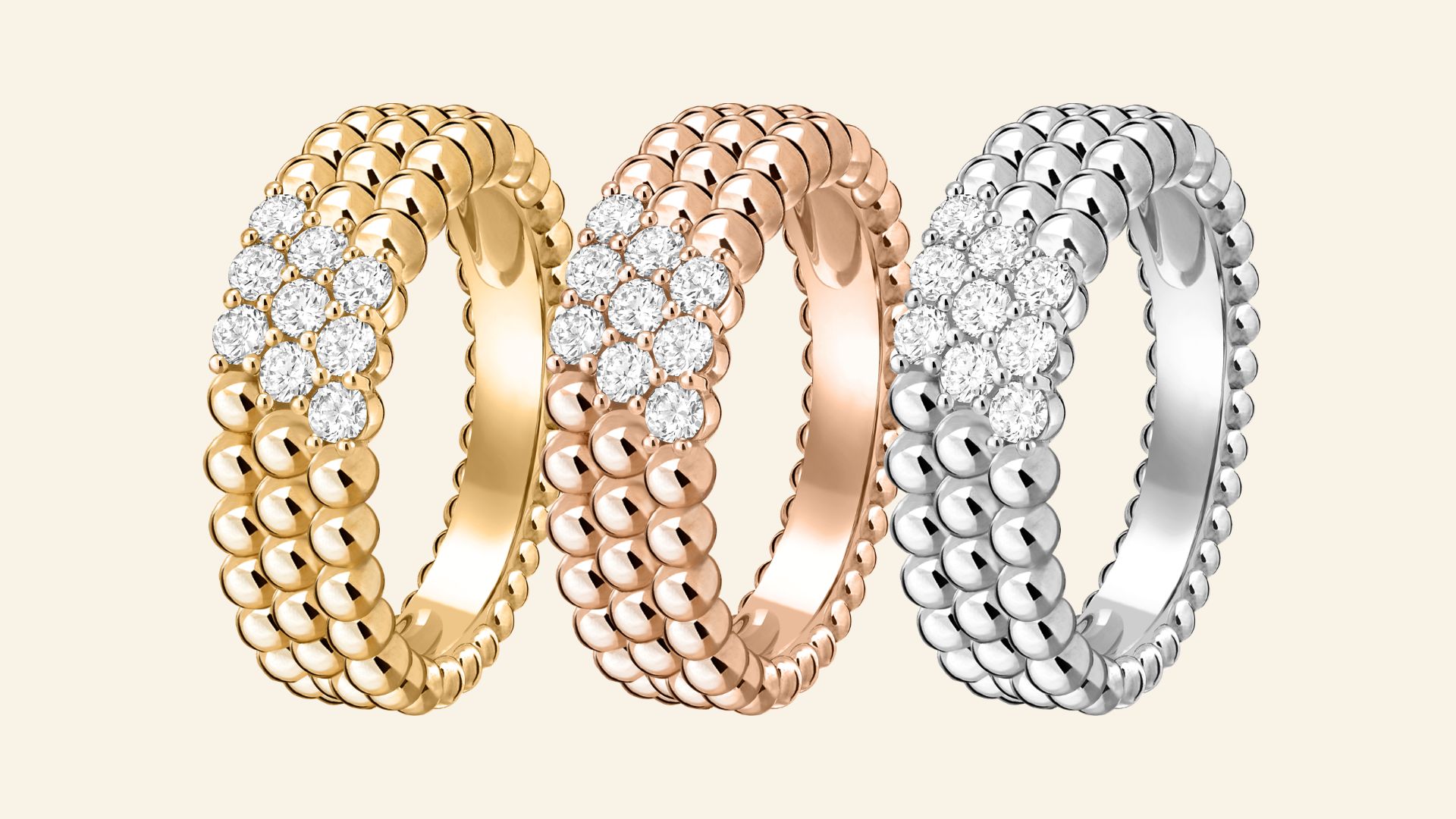
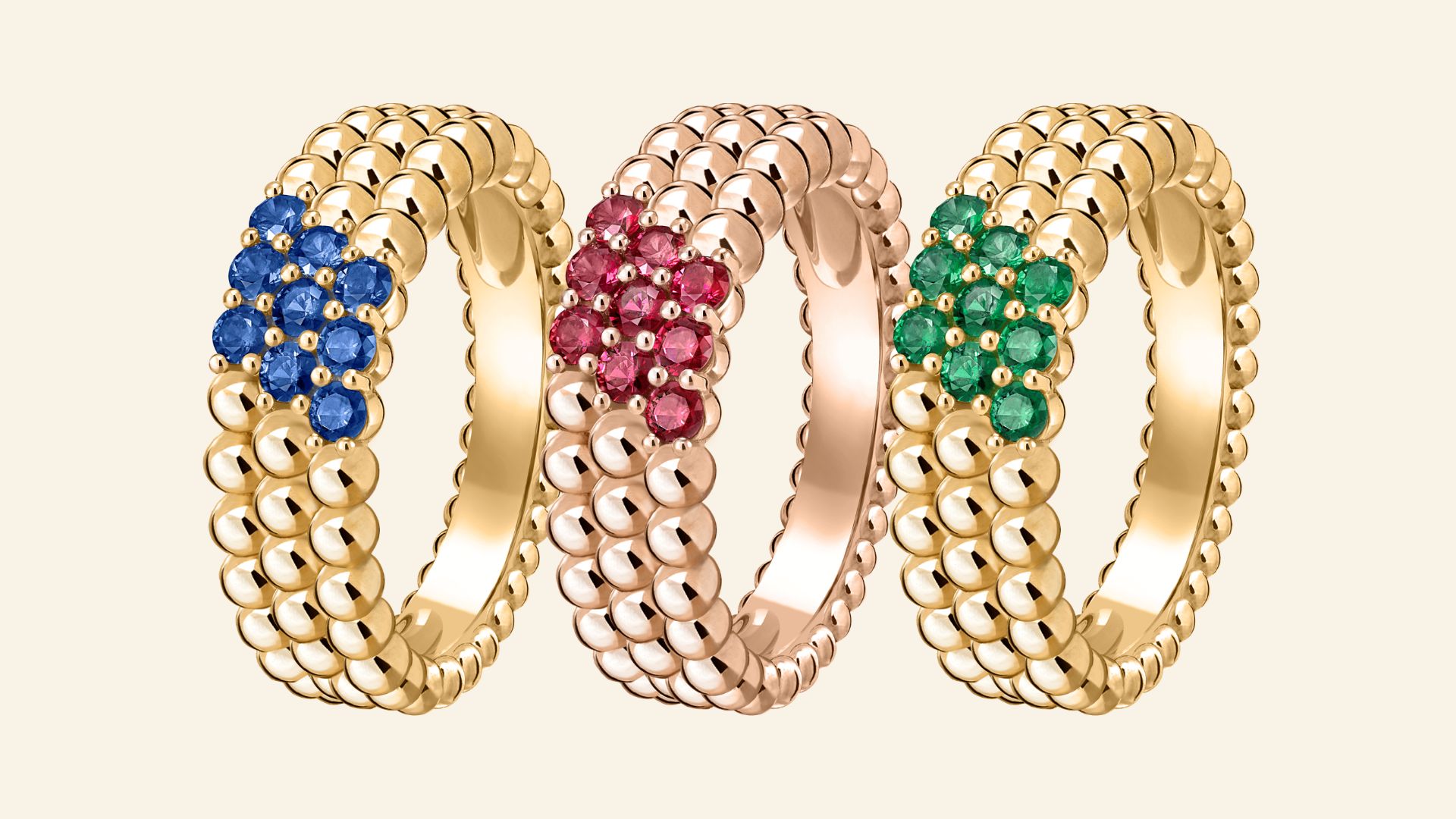
The newer ring designs push this idea further. Yellow, rose, and white gold are used as the base structure, with diamonds or coloured stones introduced as breaks in the rhythm. The three-row construction is where most of the movement happens. Larger beads sit along the upper curve of the finger, smaller ones tuck underneath. The size shift is subtle, but it changes how the ring sits visually.
On some versions, a diagonal line of nine round diamonds runs across the beadwork. Each diamond is selected under strict internal criteria, with only stones of the highest colour and clarity grades accepted. That standardisation matters, especially for this design, because the line is not meant to dominate the design.
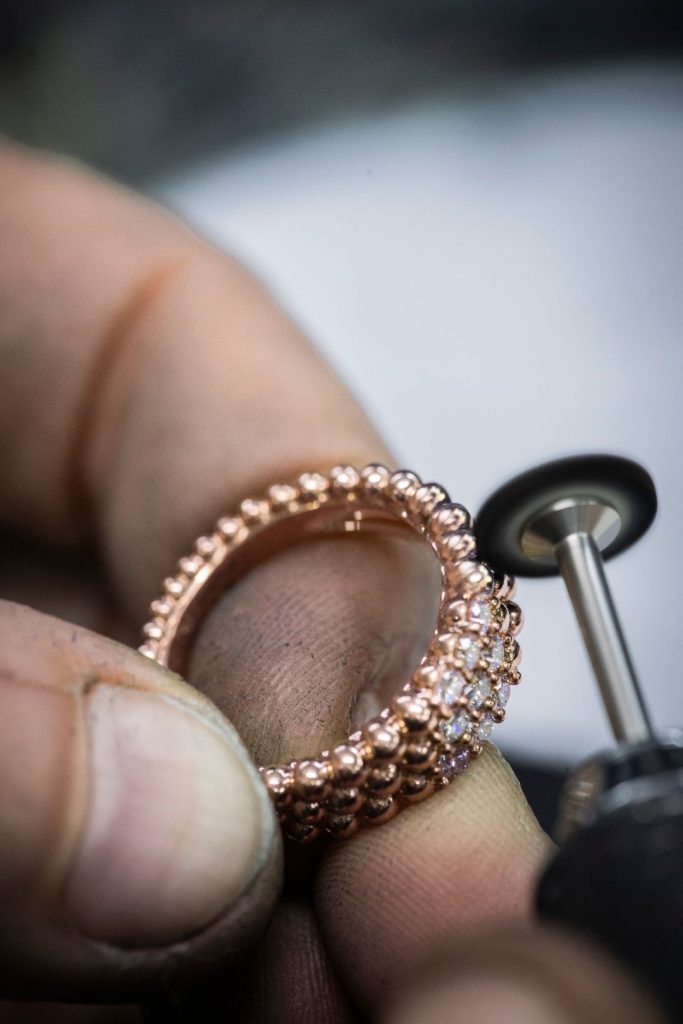
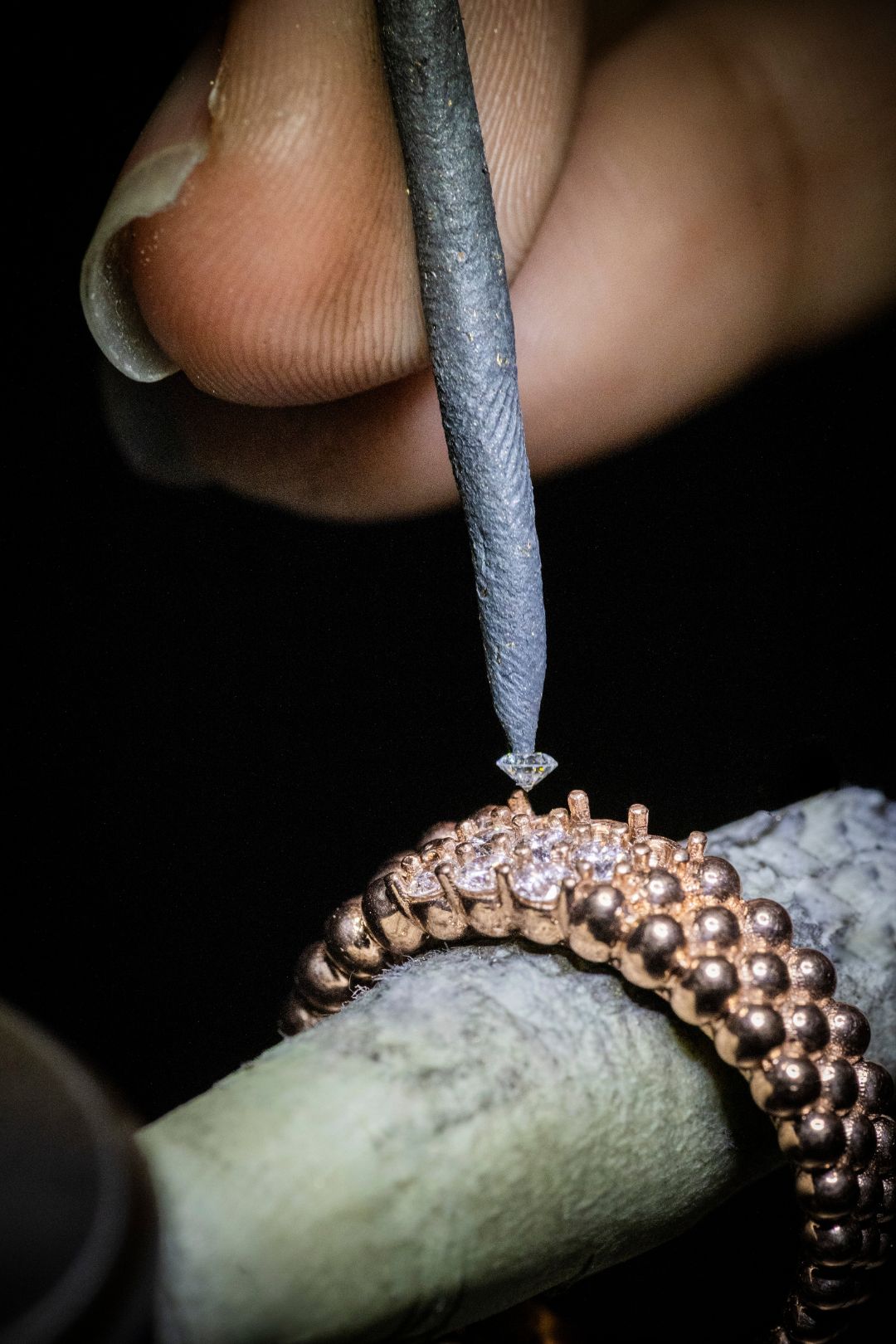
The setting plays a part, too. A nail-style setting is used, with rounded tips that echo the beads themselves. There is no sharp separation between metal and stone. The transition is handled in a way that keeps everything on the same visual level.
Alongside the diamond versions, there are rings that bring in sapphires, rubies, and emeralds. The sapphires are dense. Rubies arrive in a concentrated red that feels compressed. Emeralds shift depending on light; sometimes deep, sometimes more open.


Behind all of this is a process that relies heavily on repetition and control. The beads are formed using lost-wax casting, then reworked by hand until their shape is consistent. Each one still carries small variations that only become visible when they are grouped. Several stages of polishing follow, building a surface that responds differently depending on how it is turned. On the reverse, honeycomb openwork is used to allow light through the structure. This is not decorative, but it changes how the stones appear when worn, giving them more depth and variation.
The golden bead has carried through decades of the Maison’s work. From early post-war experiments to the Alhambra designs of the late 1960s, it has moved between ornament and structure without losing its identity. In Perlée, the bead is the main star, and everything else is arranged around it.
READ MORE