
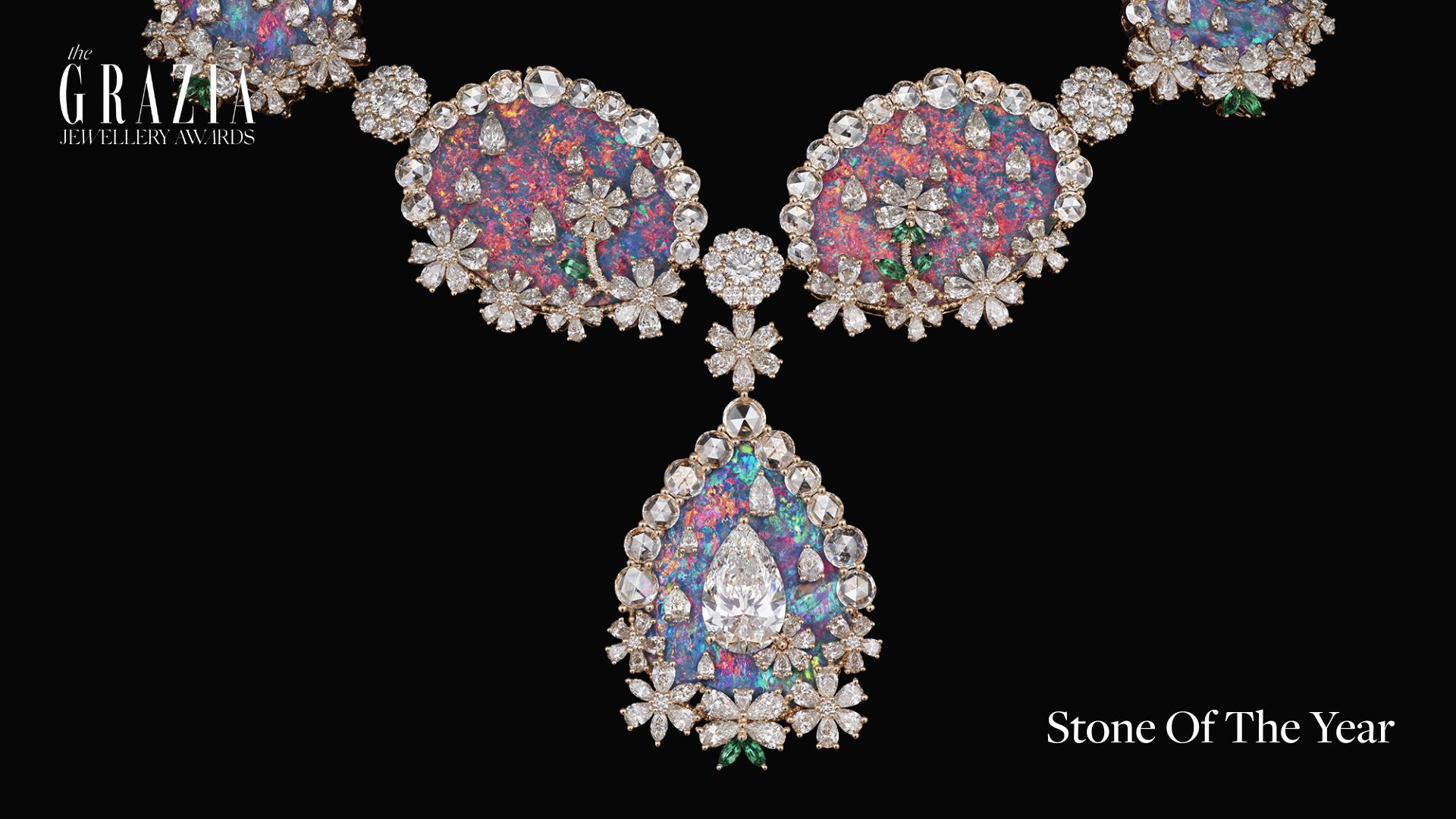
Opals capture the wonder of the natural world in a way few gemstones can. Unlike diamonds, which dazzle with predictable brilliance, or emeralds, which seduce with a single green, opals reveal shifting galaxies of colour that change with every movement. Their beauty lies in unpredictability—an alchemy of light, structure, and time.
Rarity adds to the allure. Fine black opals from Lightning Ridge, Australia, are increasingly scarce, with prices rising steadily over the past five years. Collectors now treat them as investment-grade treasures, much as coloured diamonds rose to prominence in the early 2000s. Each stone is unrepeatable: value rests on intensity, pattern, stability, and impact.

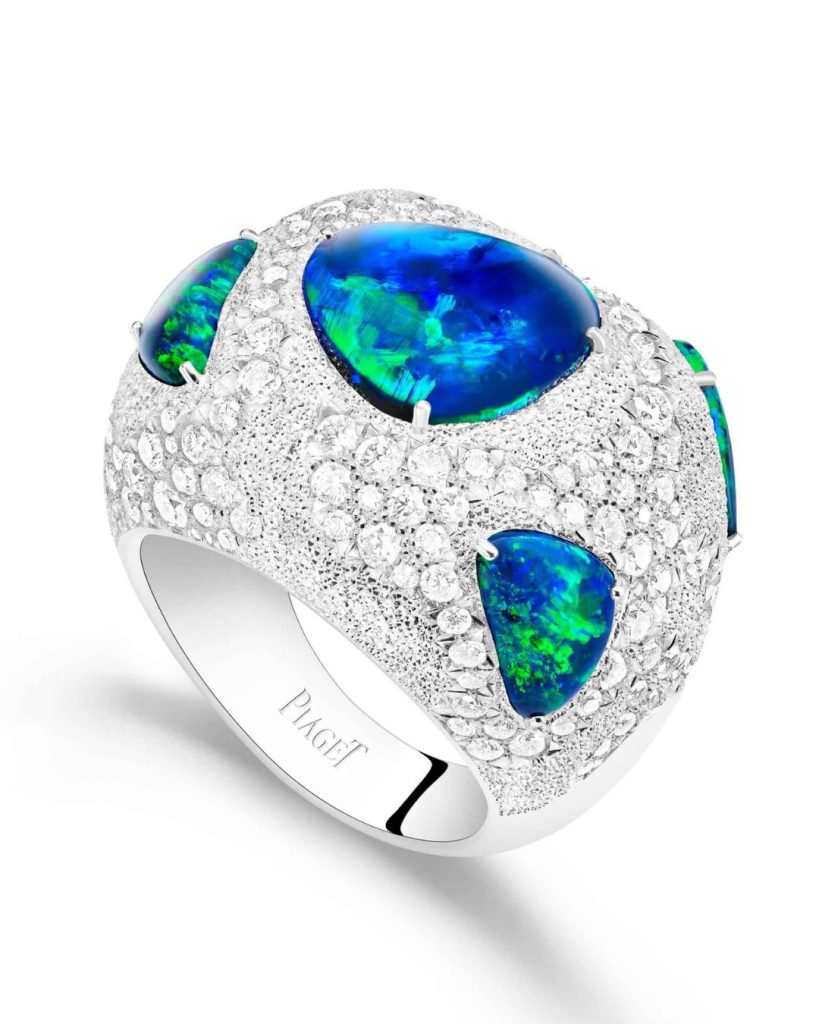
High jewellery maisons are taking note. At the Venice Film Festival, Riley Keough unveiled Cartier’s Cafayate necklace from the second chapter of their En Équilibre high jewellery collection, set with twin opals of 5.64 and 4.59 carats, framed by coloured sapphires and echoed in a chain of custom-cut umba sapphires. Piaget’s Shapes of Extraleganza sets black opals in hand-hammered white gold using a newly developed technique, while Fred experiments with Opalazur, a hybrid of opal and turquoise, alongside tourmaline and transformable designs.
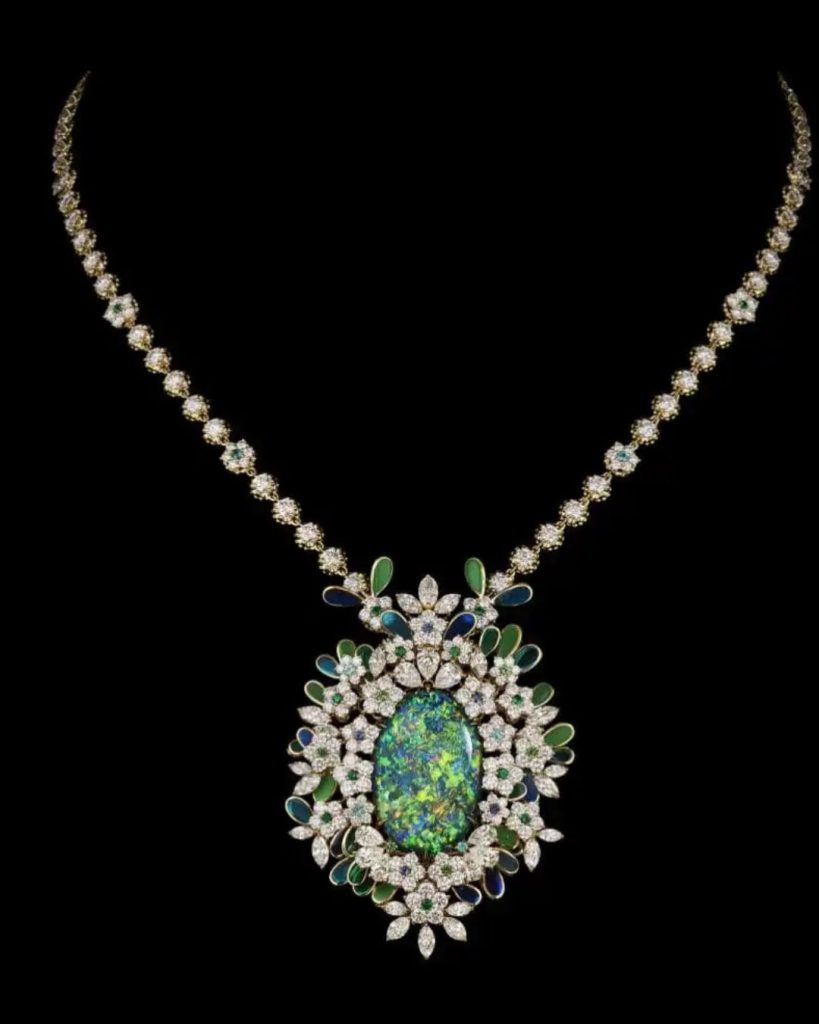
Even watchmaking joins in: Dior’s La D de Dior Coffret d’Opale, limited to ten pieces, places a single Australian opal at its dial, capturing the spectral glow of a thousand rainbows.
Call it a comeback or a revolution—either way, opals are the stone of the moment, proof that beauty resists predictability.