
Thread Talk is a series venturing into a designer’s inner workings and thoughts. Today, we have Phoebe Wong, a London-based Malaysian couturier who recently launched her debut collection, Heirlooms, drawing from the rich diversity that defines her home country.
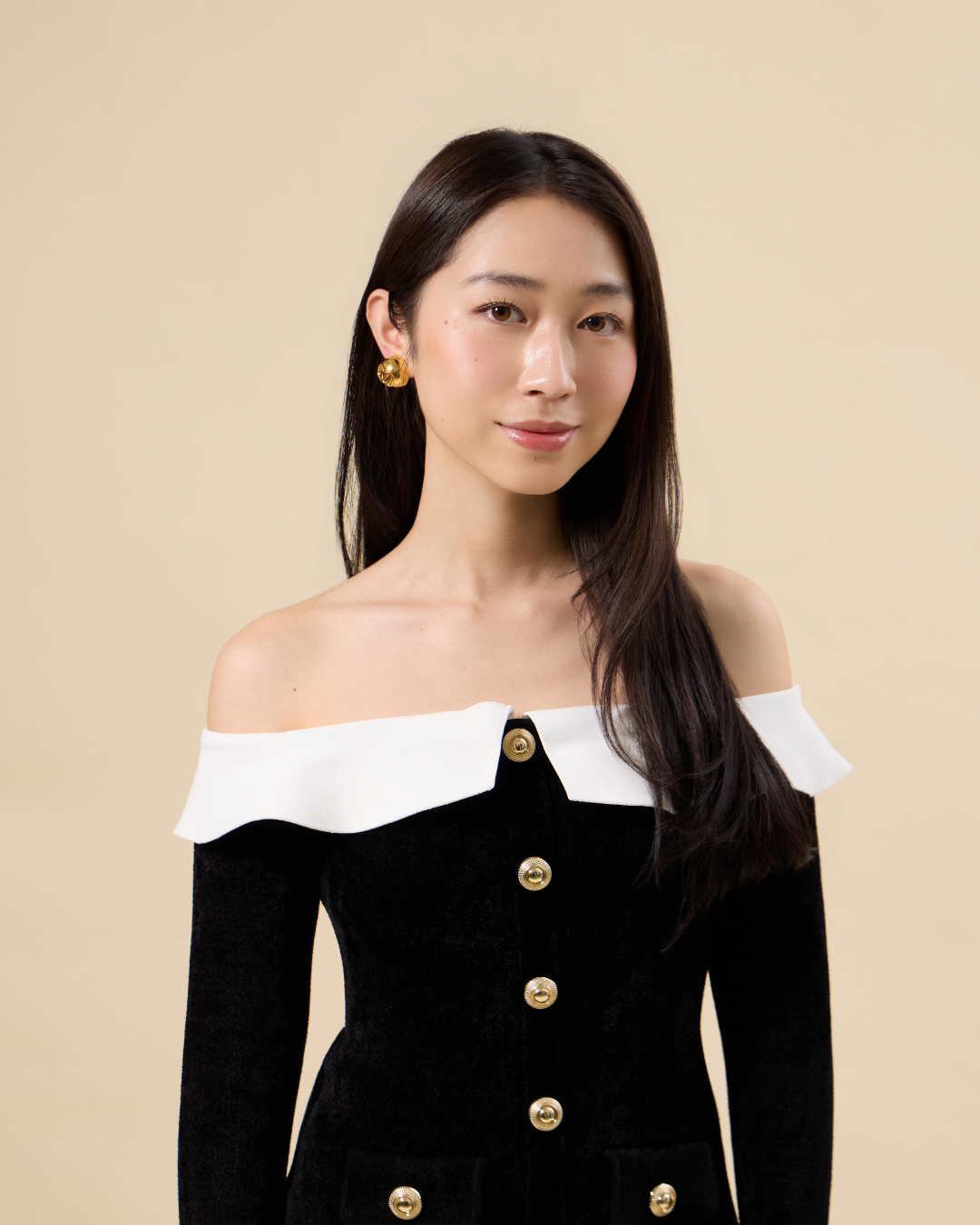
Phoebe Wong may be a new kid on the block, but her debut collection—launched earlier this year in May—was anything but green. “My work is deeply inspired by the traditions I grew up with, my Malaysian heritage, and the beauty found in my everyday life,” the Central Saint Martins and Kingston University alumna reflects.
What stayed with us after our conversation was when she said, “Heritage should never become a costume or simply a visual reference.” It’s the respect she has for craftsmanship that has allowed her to develop her own artistic language. While keeping these heirlooms as close to home as she could, she is also working to put an entire nation on the couture map. Frustrated by the glaring absence of her culture from the global fashion dialogue, the London-based designer took it upon herself rather than waiting for a seat.
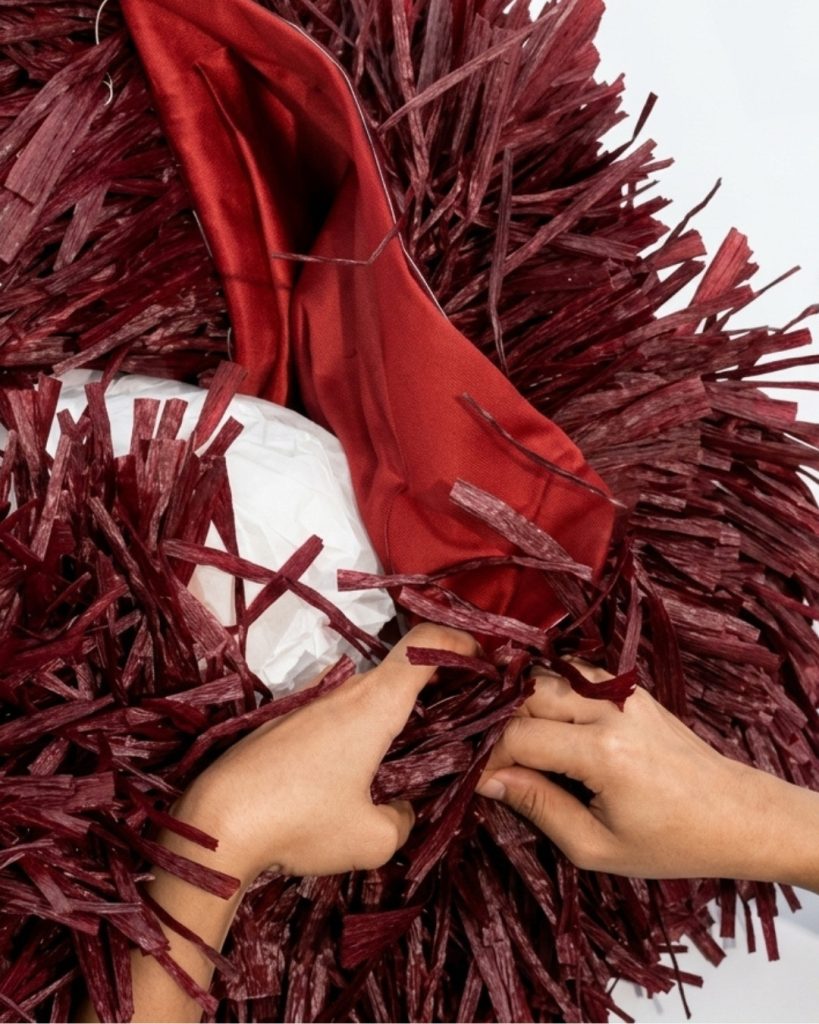
For GRAZIA Malaysia readers, the label is far from unfamiliar. Her project Campur, which began as her final-year project, has graced our pages on several occasions. Our November 2025 cover star, Daiyan Trisha, twirled in the Sarong Wrap Dress and Raffia coat, while Jestinna and Christinna Kuan donned the sarong skirt and coin dress for our June/July 2025 issue. Phoebe Wong is a talent that keeps the industry on pins and needles—in the best possible way.
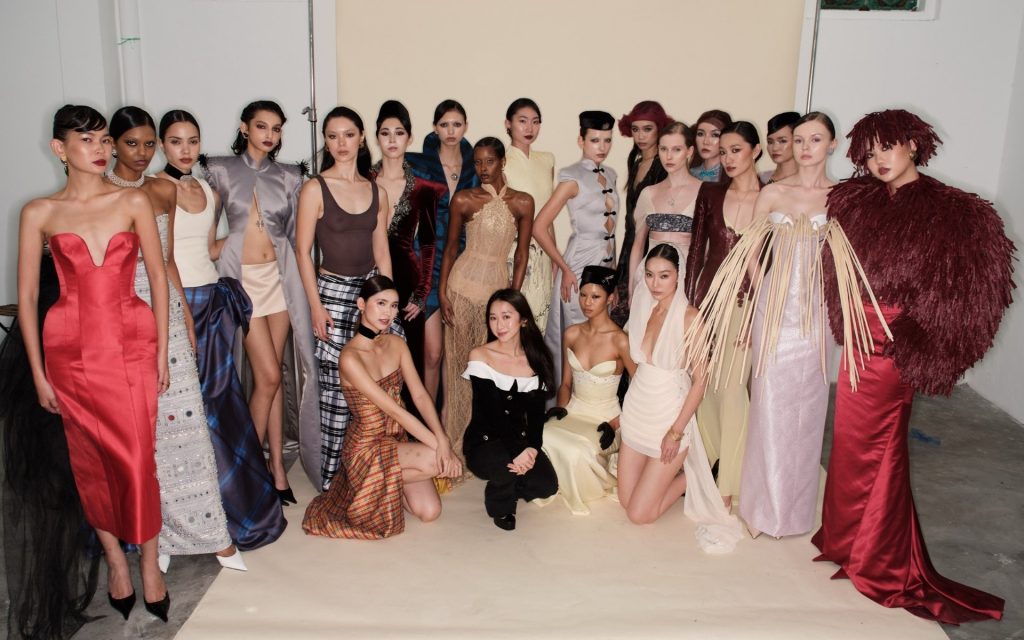
For all of its romance, running a couture label is never as straightforward as it seems on paper. As an emerging couturier, Wong admits that while the world readily applauds the painstaking handiwork, especially in an age where artificial intelligence threatens to automate artistry, the emotional resilience demanded behind the curtain is seldom acknowledged. “Couture is incredibly labour-intensive,” she confessed. And in a market that thrives on breakneck speed and disposable consumption, it is never conducive for a brand to grow at a sustainable pace.
“I was surrounded by bold and inspiring women who were never afraid to express themselves, and that confidence has always influenced the way I approach fashion,” the designer shares. The adage that “it takes a village” rings especially true in her case—people around her are the marrow of her inspiration and would show up wholeheartedly whenever she needs an extra pair of hands. Her relatives, for instance, came to the rescue for an eleventh-hour change before her recent showcase.
Here, we speak to the designer to unravel the threads of her journey as a young talent breaking through the scene as she stitches together identity, heritage, and fond memories through couture.
What was your first encounter with fashion?
My first encounter with fashion was through my mother. She loved dressing me up when I was little—one of my favourite childhood memories was playing dress-up with her wardrobe, creating different characters and scenarios with them.
At the time, it was simply a game, but retrospectively, it sparked my curiosity about how clothing can transform the way we feel and express ourselves. Those little moments taught me how fashion can be deeply personal; it carries memories, emotions, and stories. That perspective continues to shape the way I design today.
Was fashion always the path you envisioned for yourself?
I always knew I wanted to pursue something creative. When I was younger, I thought of becoming a wedding dress designer because I was fascinated by the craftsmanship and emotion behind bridalwear.
It wasn’t until my time studying in London that my perspective on fashion completely changed. I realised just how expansive the industry is—it is a powerful medium for storytelling, culture, and identity. At the same time, I felt there was a lack of representation of Malaysian culture within the global fashion conversation. That really motivated me to start my own label. Knowing that there’s always room for new voices and fresh perspectives gave me the confidence to create work that celebrates my heritage. Through my brand, I want to share the richness of our culture in a contemporary way, while showing how traditional craftsmanship and cultural narratives have a place on the international stage.
Tell us more about your latest collection.
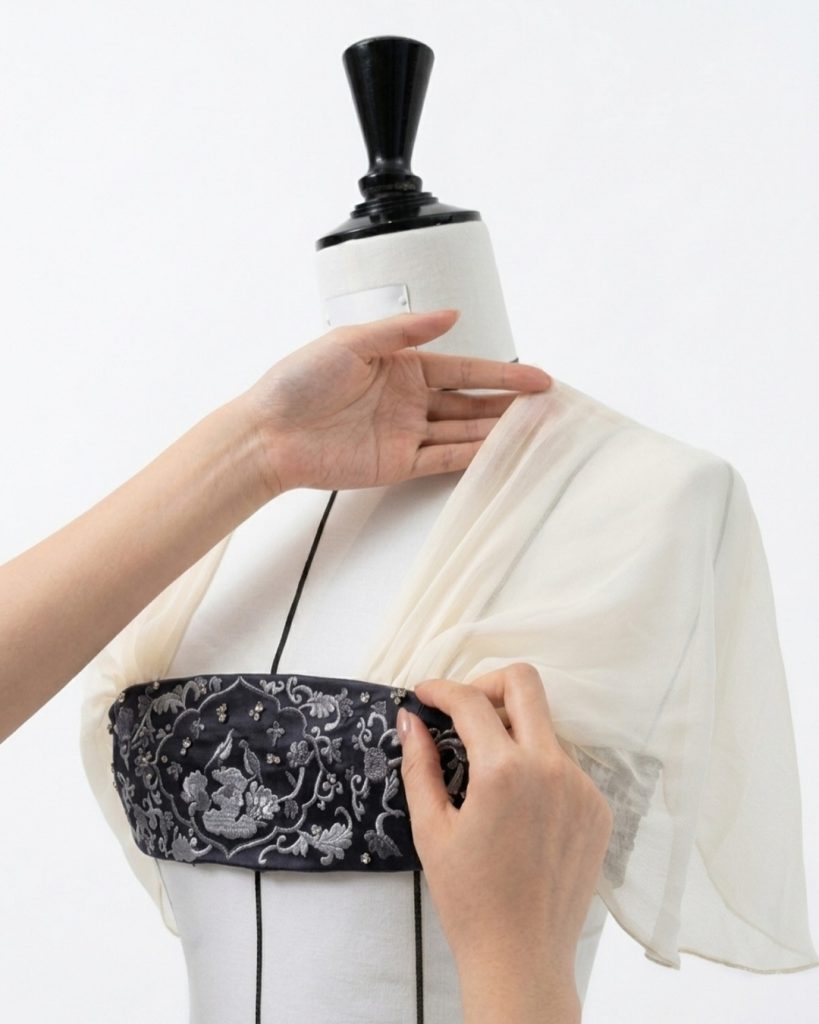
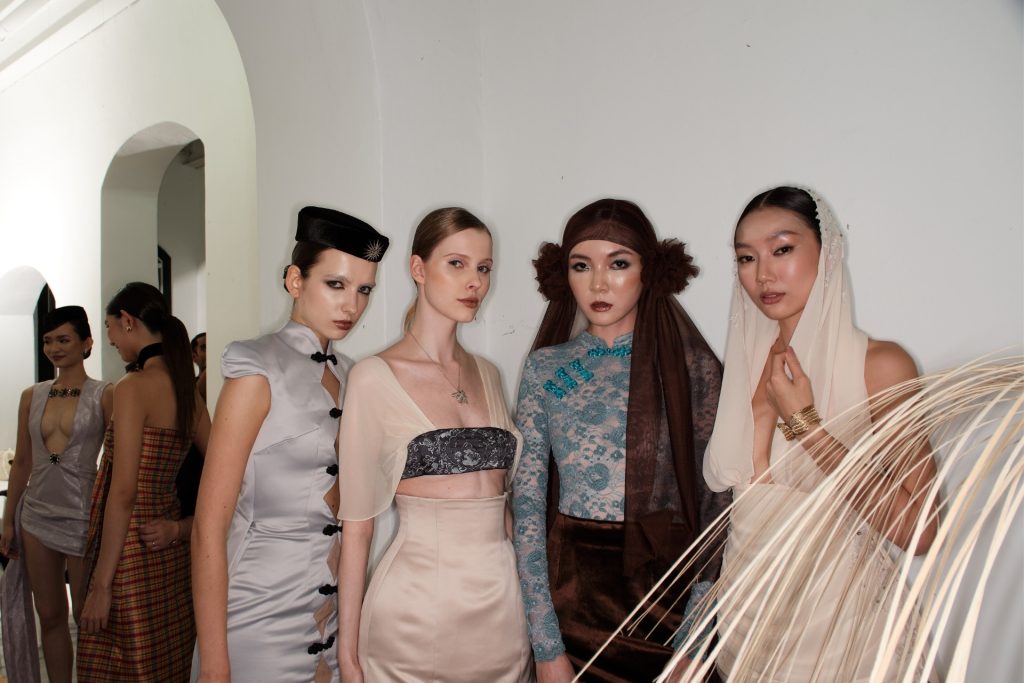
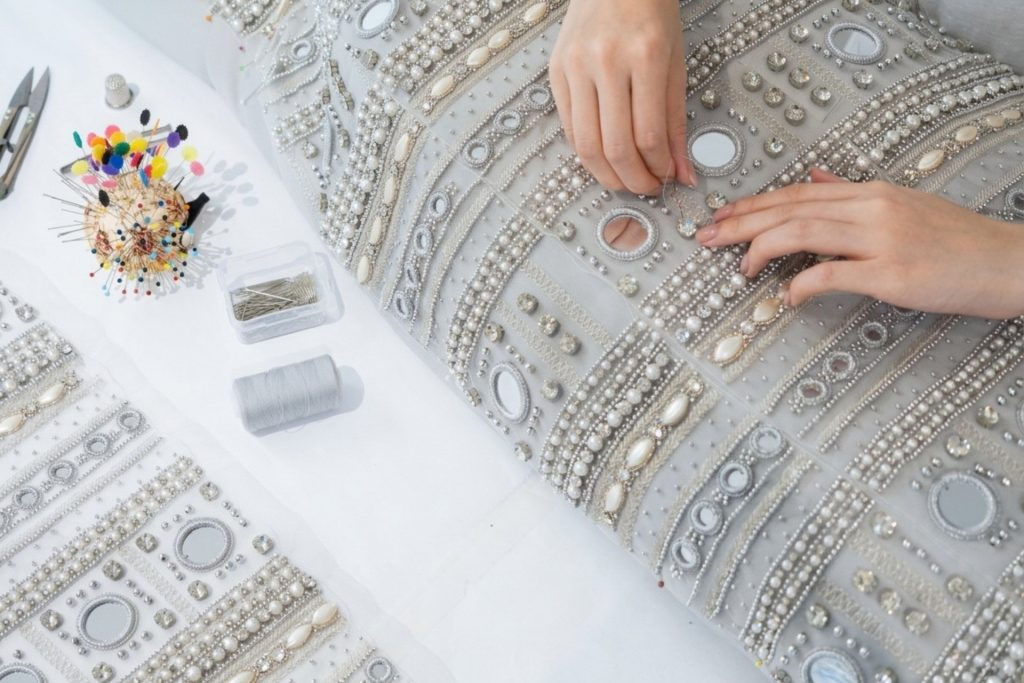
Heirlooms explores the idea that heritage is something we inherit, reinterpret, and eventually pass on. Rather than looking at heritage as nostalgia, the collection asks how memories and craftsmanship can continue to evolve across generations. Every collection begins with research. I spend months reading, travelling, visiting museums, documenting traditional crafts, and collecting visual references. I then identify a central narrative before developing material experiments, embroidery techniques, silhouettes, and textile manipulations that support that story.
For Heirlooms, I explored heirloom objects like traditional jewellery, family keepsakes, and artisanal techniques across different cultures. The process is highly collaborative with artisans, as many embellishments require countless hours of experimentation before becoming part of the final garment.
For a brand that anchors itself in heritage identity, what do you consider to be the biggest challenge in running a fashion brand in today’s landscape?
One of the biggest challenges is finding the balance between preservation and innovation. Heritage should never become a costume or simply a visual reference. It requires respect, research, and understanding. At the same time, fashion must remain relevant. My responsibility is to honour these traditions while presenting them in ways that resonate with today’s audience without compromising their authenticity.
The expectation to constantly produce something new can be overwhelming. Social media has accelerated the pace of fashion, but meaningful craftsmanship cannot be rushed. It’s challenging to remain commercially sustainable while staying true to your creative values. Sometimes saying no to opportunities that don’t align with the brand is just as important as saying yes.
Your work often highlights intricate artistry. What motivates you to continue despite the hardships?
What keeps me motivated is knowing that every handcrafted detail also preserves a skill, honours an artisan, and tells a story that may otherwise be forgotten. Craftsmanship has always been the heart of my practice. These techniques require immense patience, time, and resources, but they carry a human touch that cannot be replicated. If fashion can become a bridge between tradition and contemporary audiences, then every hour spent creating these pieces feels worthwhile.
As a young designer, what aspect of the industry do you think people don’t talk about enough?
People often celebrate the final runway presentation but rarely talk about the emotional resilience required. Running an independent fashion brand means constantly balancing creativity with finance, production, logistics, and uncertainty.
I also think the realities of building a couture brand aren’t discussed enough. Couture is incredibly labour-intensive—it requires countless hours of craftsmanship, skilled artisans, and resources—yet it’s one of the hardest markets to break into because it’s such a niche space.
At the same time, there’s an expectation to constantly produce new work and stay visible, even though true craftsmanship can’t be rushed. For me, investing in couture is about more than creating beautiful garments; it’s about preserving artisanal skills, celebrating cultural heritage, and showing that slow, thoughtful fashion still has an important place in today’s industry.
How do you balance the creative, commercial, and heritage aspects of your work?
For me, heritage is the foundation of my brand. Creativity allows me to reinterpret those stories, while the commercial aspect ensures the brand remains sustainable enough to continue telling them.
What is the most rewarding part of your practice?
Seeing how people connect with and interpret my work in their own way. I love seeing someone wear my design, but add in their own perspective to it, sometimes styling it in a way I never imagined, and I’d find beauty in that reinterpretation.
It is also meaningful when someone appreciates what goes into a garment—the hours, techniques, and dedication. Knowing that the work resonates with someone beyond just its appearance is what makes the process truly rewarding.
Is there a particular piece that you hold very dearly?
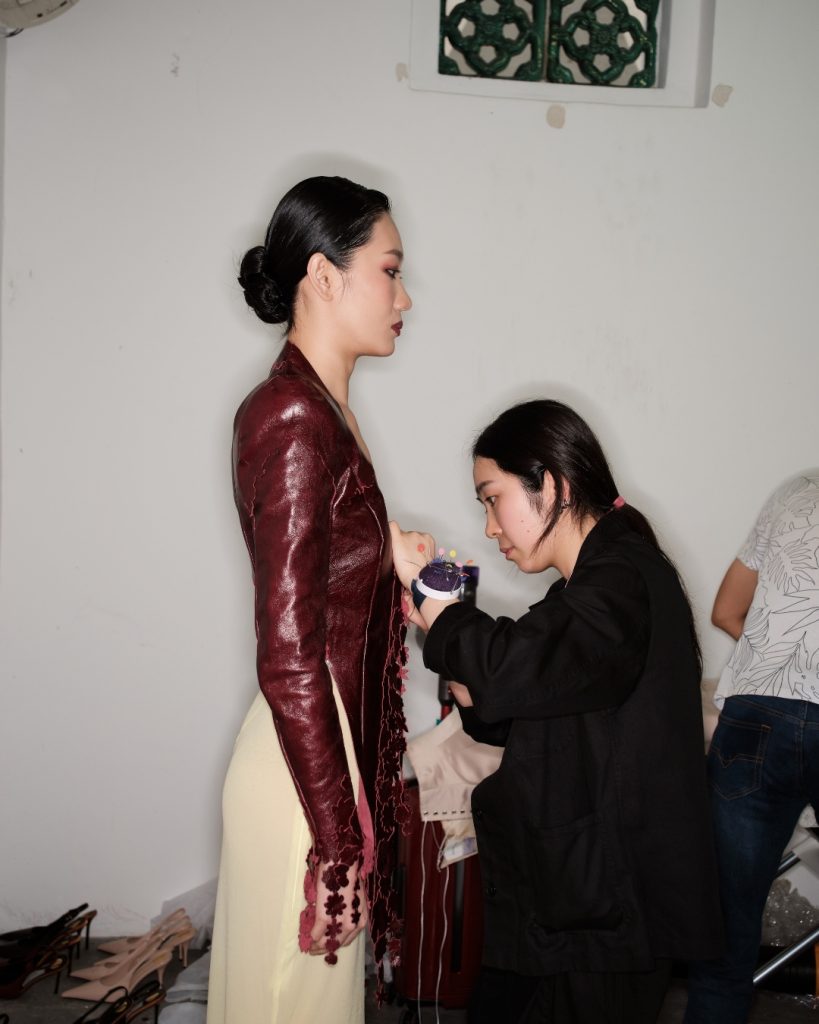
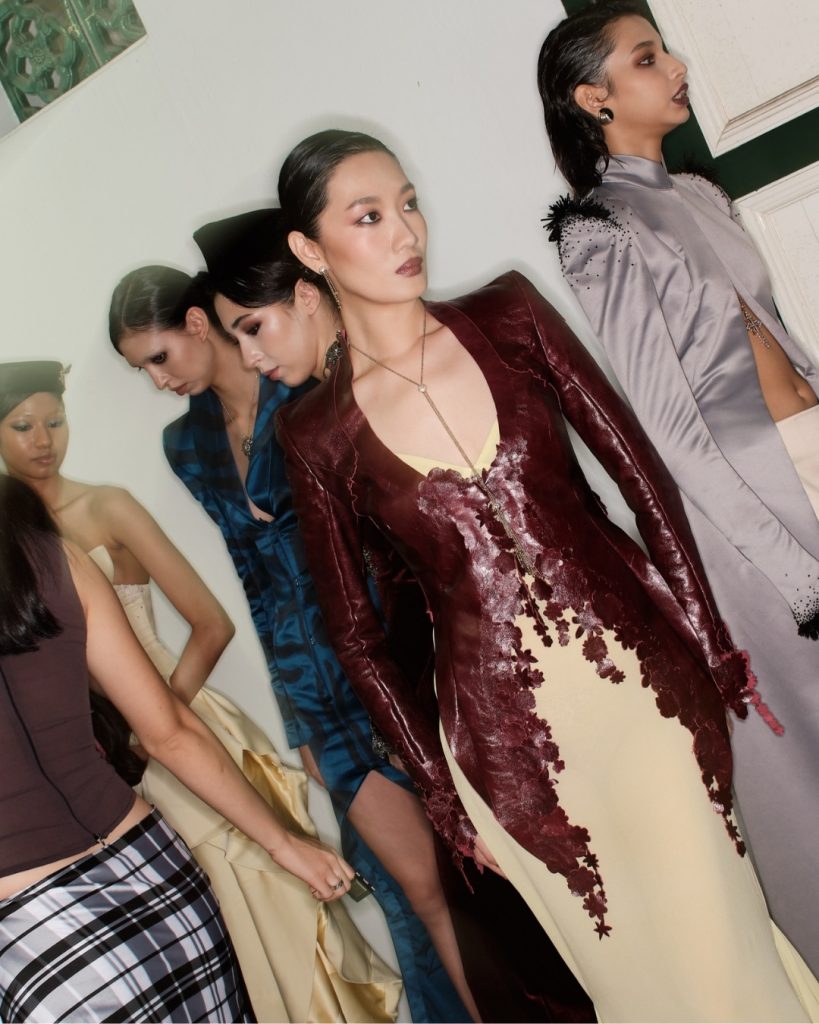
My burgundy leather kebaya from the Heirlooms collection.
Before our showcase, we were at risk of losing one of our looks. Less than 12 hours before the presentation, I decided to cut up my leather jacket from the Campur collection, and my relatives came to help me hand-cut the small leather flowers so we could complete the garment in time. Beyond the final piece itself, the memory attached to it—the people who assisted me, the pressure we overcame, and the amount of love and effort that went into creating it—makes it meaningful to me.
Are there any designers or celebrities that you’d wish to collaborate with?
If I had the opportunity to collaborate, it would be with Daniel Roseberry. I would love to see his interpretation of our traditional fabrics, craftsmanship, and cultural artefacts and how he would transform those elements through his own artistic language. His ability to create pieces that feel theatrical, emotional, and deeply rooted in storytelling is something I really admire.
Locally, I would love to collaborate with Uzair Shoid. I really admire his understanding of colour, his confidence in mixing prints, and his ability to create designs that feel bold and expressive. I think our approaches share a similar appreciation for these elements, and it would be exciting to see how they could be translated into a couture setting.
READ MORE
Thread Talk with Ummi Junid, Natural Fabric Dyer and Founder of Dunia Motif