
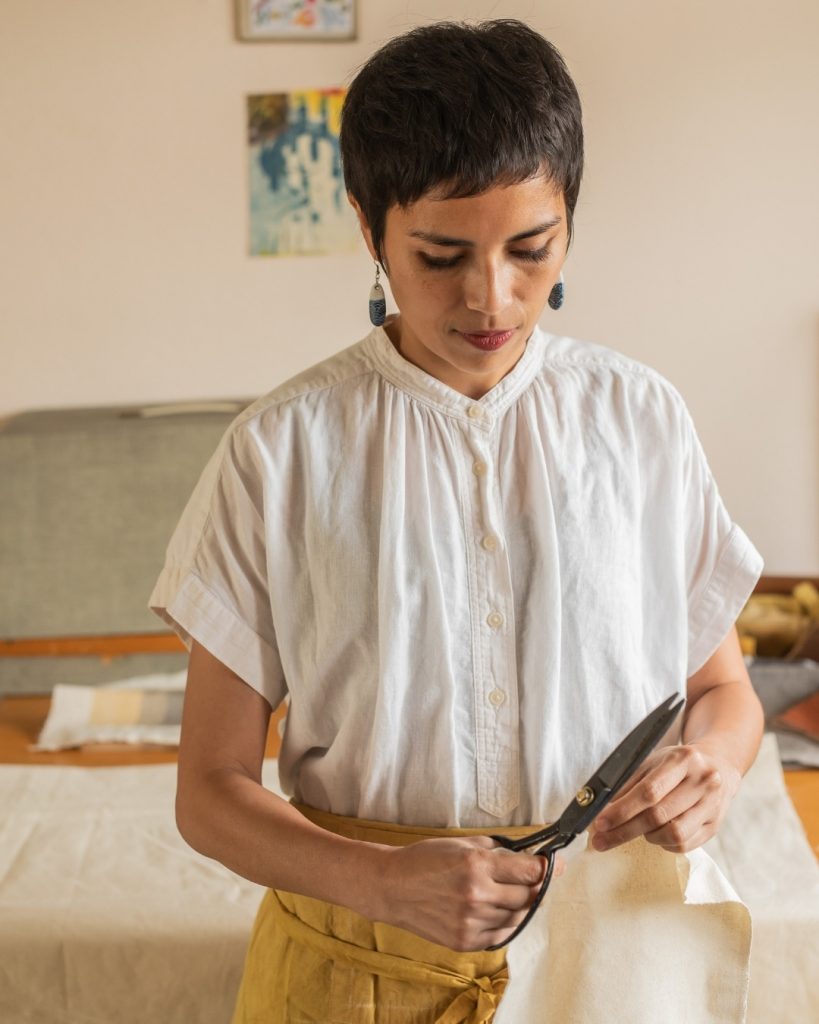
Natural fabric dye is no new innovation. But in the hands of Ummi Junid, the craftsperson behind Dunia Motif—a brand for hand-dyed textiles—it’s a craft that has taken to her life the way tannin binds to the cloth, with a grip that only time can tell.
“I love it when it rains,” she confided when I asked what she loves as an icebreaker. The sound of it on the roof or the ground calms her. For someone who spends her days coaxing colours from onion skins and mangosteen rinds, her days look like this: with music playing in the background—she can’t work without it—as she watches the colour of nature unravel, calm and soothing.
I have come to understand over the course of our conversation that this is how everything begins for her—with attention paid to what most overlook. The tea residues and the banana trunk left to dry in the sun—waste, we call it. She calls it a beginning.
In 2014, she was travelling through West Africa—Freetown, Sierra Leone—with transits through Ethiopia and Ghana when she first encountered Kente cloth and African batik. “I was immediately drawn to the richness of the motifs and the depth of the designs,” she revealed, not knowing then that this moment would unspool into years of learning at Semarang, Pekalongan and Yogyakarta—to explore batik more seriously.
It was through batik that Ummi discovered natural dyeing. “I began experimenting with plant-based colours, learning how to grow indigo and work with natural materials.”
This is how her fabric—her life—reveals itself: slowly, in stages, never all at once. You think you understand the pattern, and then the light shifts. Years later, she found herself in the UK—a visual designer who left her 9-to-5 to pursue a Master’s degree in Textiles. She had planned to work with denim waste to reimagine batik. And then the world stopped. The pandemic locked her inside with limited materials and a kitchen full of scraps. She began rummaging through the “leftovers”, wondering what they might yield. It then dawned on her that her home country, where food is a huge part of our culture, would be the best place to embrace this practice. “Who would have thought that Malaysia’s food waste holds so many unseen colours?” she wrote in a post on her Instagram account.
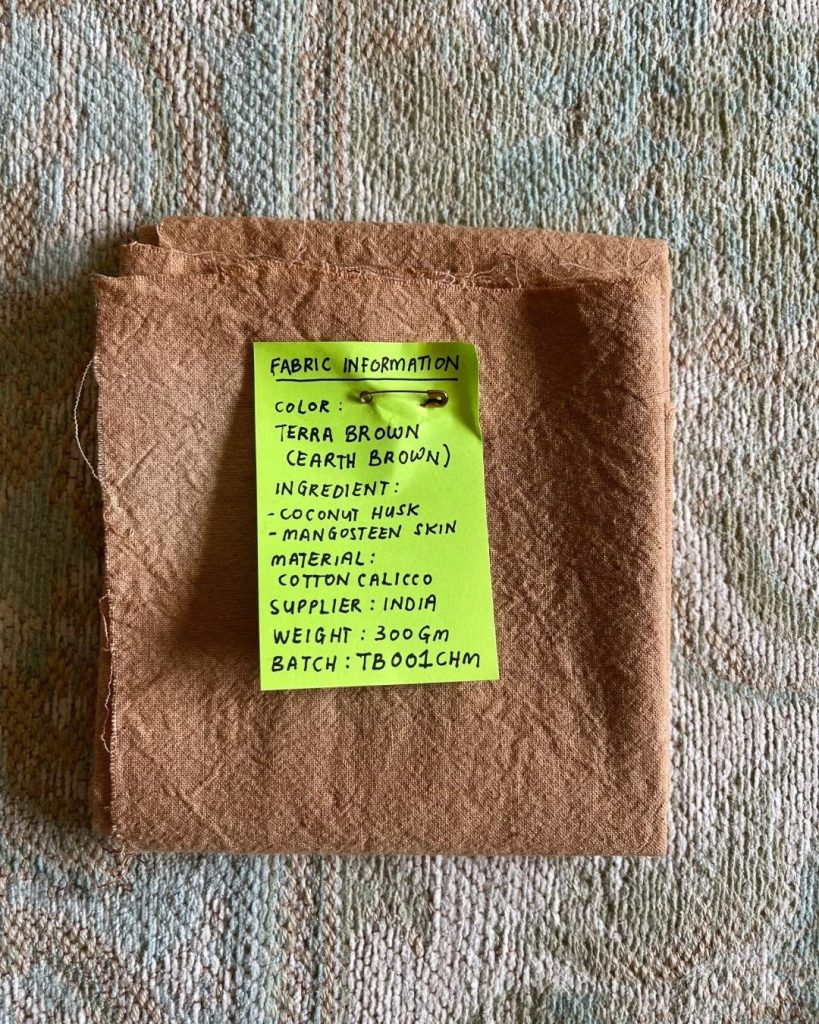
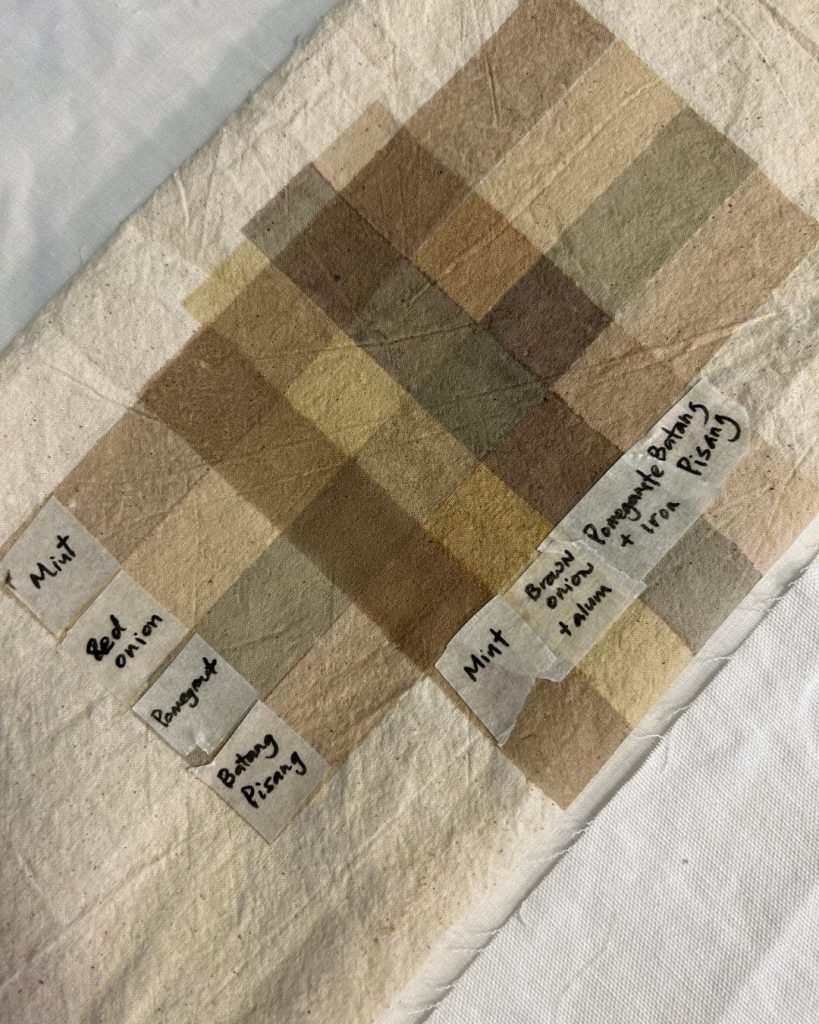
“That shift in perspective led me to explore the possibilities of extracting colour from food waste. What started as a constraint became a turning point in my practice, opening up a new way of thinking about materials, sustainability, and the potential of everyday waste.”
To dye fabric with natural materials is to enter into a relationship with time. She explains this as one might describe the temperament of a friend. The process begins with collecting onion skins, fruit peels, used tea bags and leaves. These are cleaned, sorted, and simmered, and different materials release their true colours differently depending on time, temperature, and concentration. Meanwhile, the fabric waits. It must be prepared—mordanted, the word is—so that it can receive what the dye offers. Natural mordants, or low-impact alternatives such as milk or tea tannin, are the mediators chosen based on the desired outcome or sustainability considerations. Then comes the immersion in the dye bath—hours, sometimes days. Dipping, resting, watching, and repeating. The colour does not arrive all at once. It builds.
What emerges at the end is never quite what she expected. The water, season, particular mood of the material, and even time itself all leave a mark. She has learned not to predict, only to trust the process. “It ends with rinsing, drying, and allowing the fabric to settle, revealing tones and textures that carry the story of the material it came from,” Ummi explained.
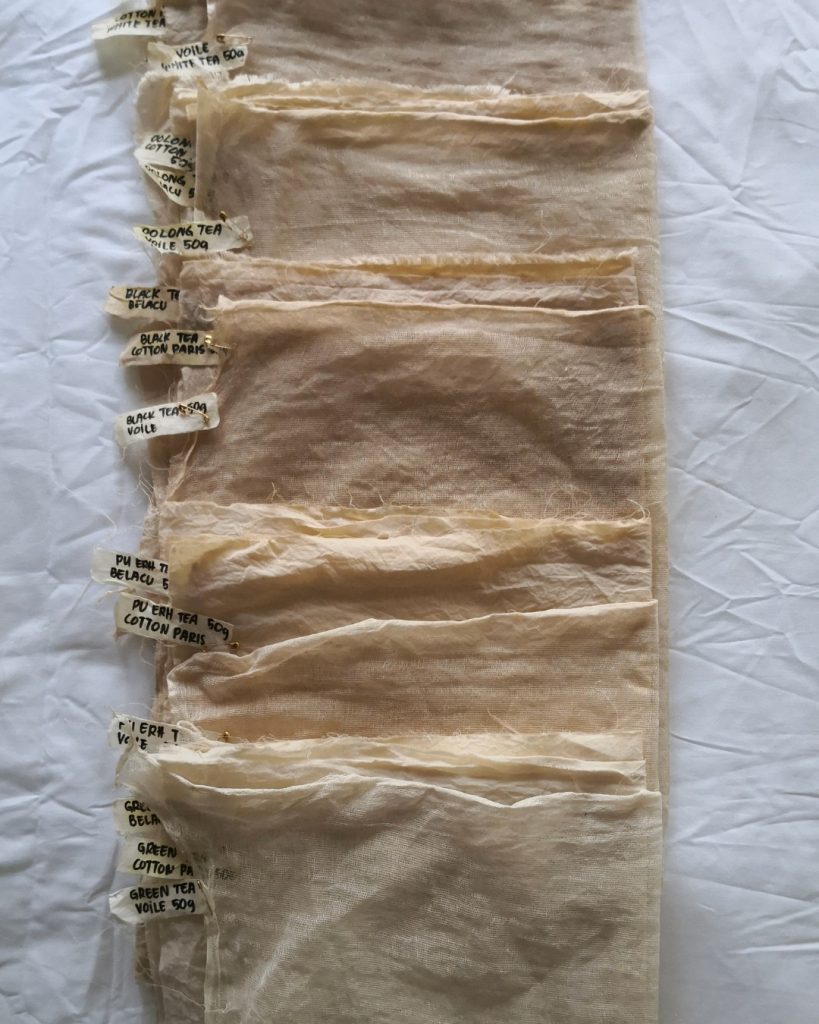
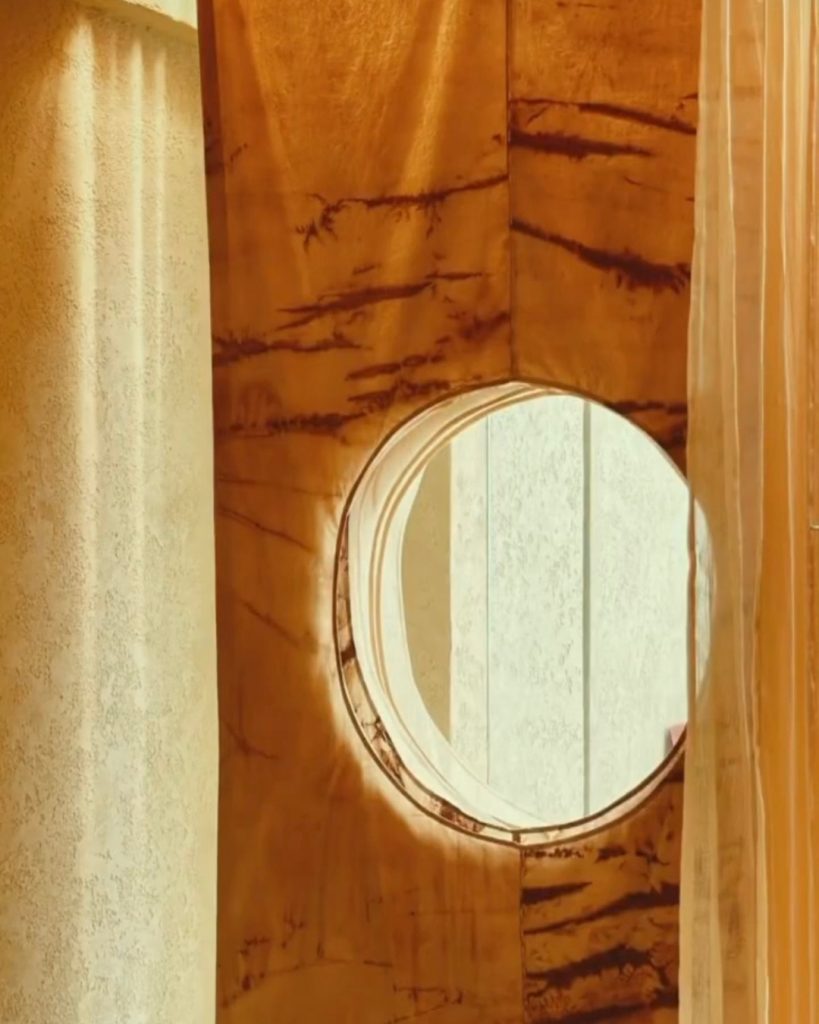
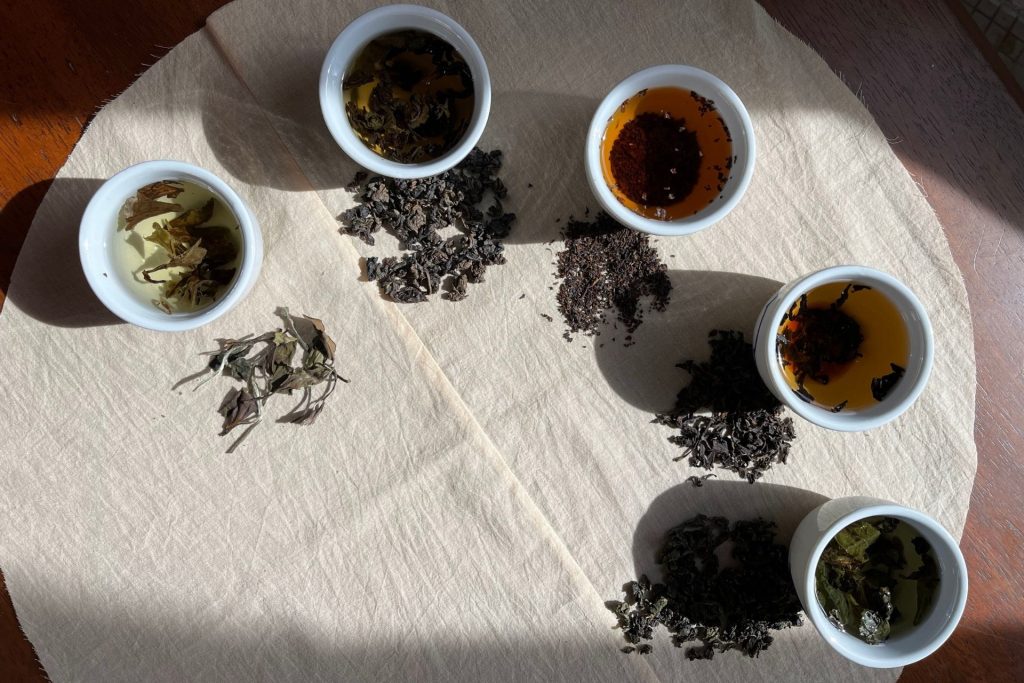
Some materials keep secrets longer than others. Tea, for instance, she once believed had only one colour and a consistent character—she knows better now. Black tea yields one tone; Pu-erh another. Oolong and jasmine each speak in their own grace. The differences in appearance might be subtle, but when layered, they create something she describes as “incredibly calming and meditative”. Banana trunk gives a delicate terracotta, whereas mangosteen skin produces a purple so deep, though over time—weeks, months—it shifts into brown. “These shifts feel magical,” she was amazed. It’s the air and oxidation, she explained, that cast the spell.
Her favourite, though, is onion skin, for its richness and unpredictability. The material itself, albeit easily forgotten, produces a surprisingly wide range of tones—the shades of earth and fire—depending on the process. “There’s also something quite poetic about working with onion skins. They carry traces of everyday life, of cooking, of domestic spaces, and when translated into dye, those subtle narratives become embedded into the textile,” Ummi enthused. The transformation reflects the core of her practice: from waste to something valuable—soaked in not just colours but also emotional memory. “And no, there’s no smell of onion on the fabric. I get that question a lot.”
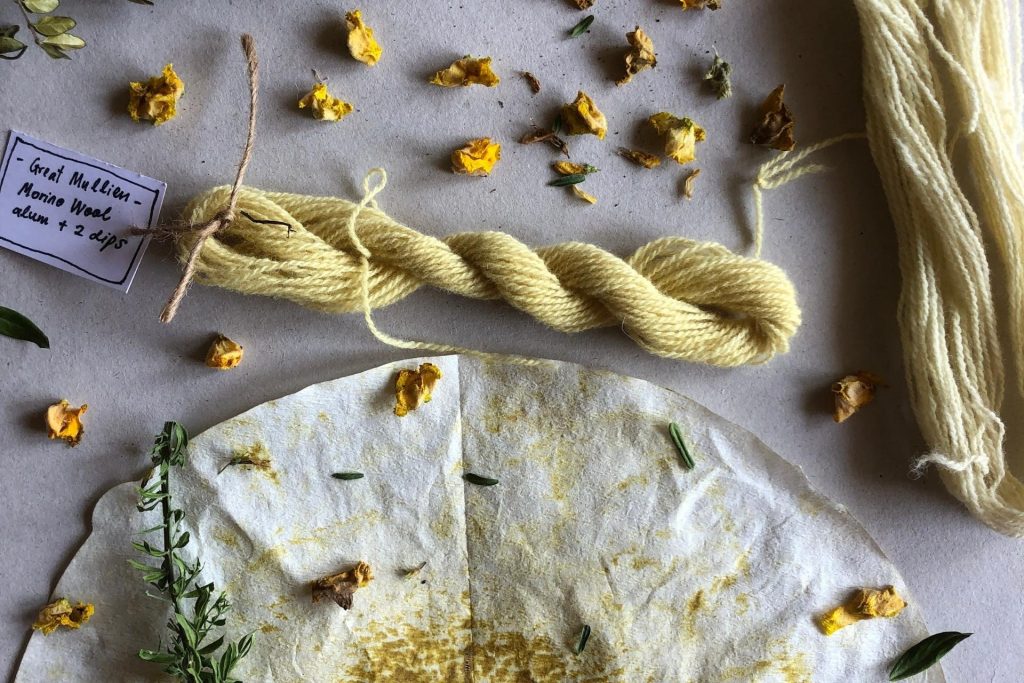
Not everyone believes in what she does. Even within the natural dye community, some insist that food waste produces stains, not dyes—temporary colours that fade with a few washes. They are not entirely wrong. Biowaste, in nature, contains lower concentrations of dye compounds than established materials like indigo, madder, or morinda (pokok mengkudu). “That doubt became a starting point rather than a limitation,” she said, and so she took this as a challenge.
Through years of experimenting and refining techniques, she has proven that food waste dyes, if done right, can achieve the desired stability and depth. “Not always, though,” she admittedly said. Sometimes the outcomes failed her, but she has made peace with this. “Willing to fail,” she shares, “will be the main challenge.” There is no technical guideline on exploring new materials, so she turns to books and reading, but most of the time, she lets her intuition take the lead in getting the right pH, material, mordant, or methods. “It’s like Malay cooking,” she concluded.
Working with waste means accepting imperfection as part of the process and also the character of the outcomes. In markets like the UK or Europe, this has always been valued— the irregularity and the mark of the hand. In Malaysia, she notes, the expectation still leans toward consistency, polish, and a finish that does not betray its origins. But this is changing. She sees it in the people who come to her public workshops, who ask not just how but why, who want to understand where the colour came from and what something discarded can do.
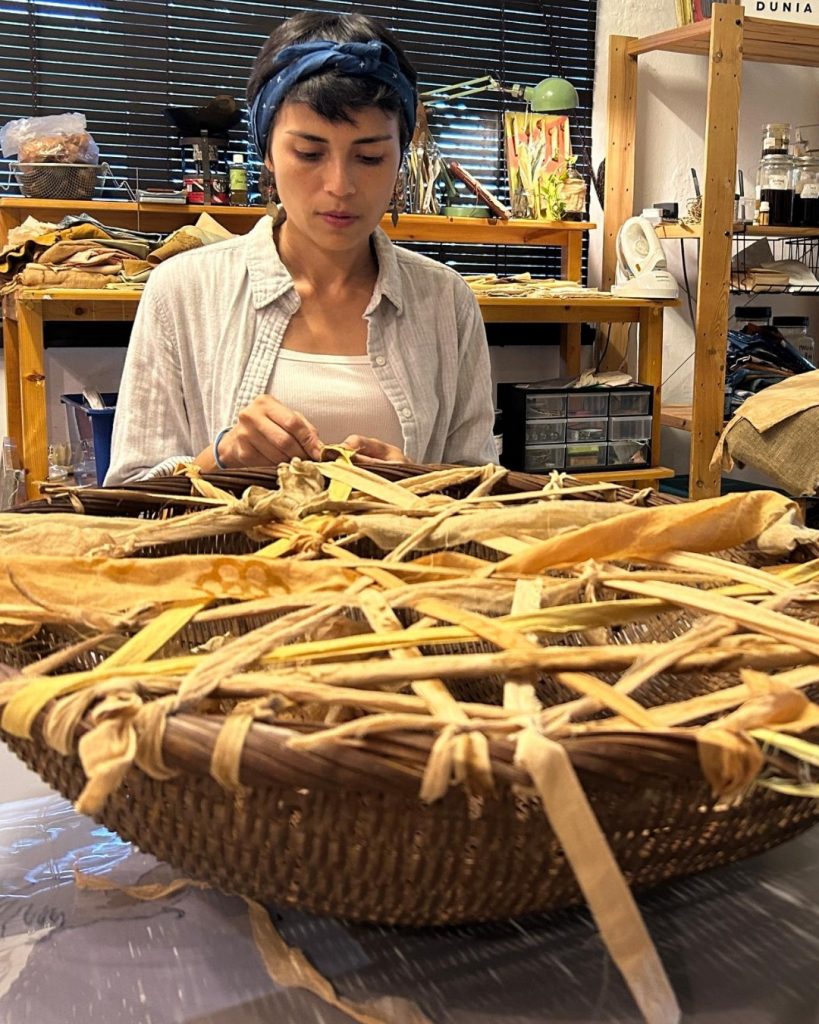
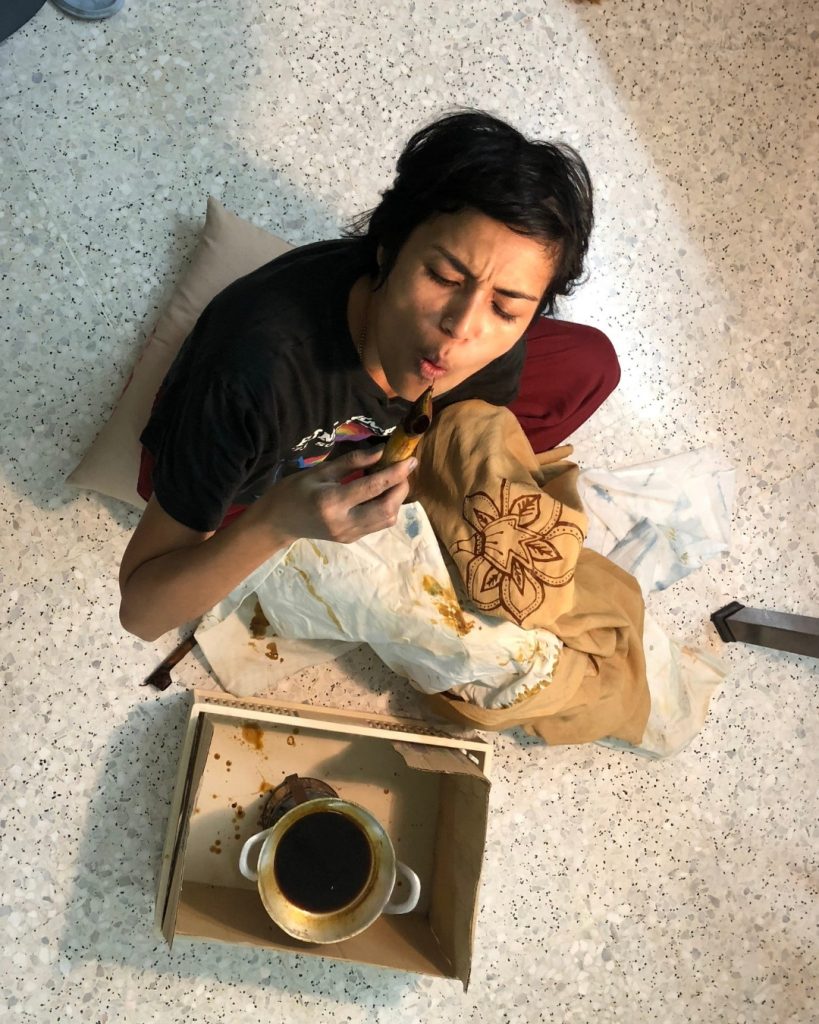
“That’s when I realised, the issue isn’t interest. People are showing up. The real gap is what happens after that first exposure,” she suggested. Workshops fill quickly—people are curious, eager to try. But a single afternoon of dipping fabric into dye is not sufficient to build a practice, let alone preserve a craft. The missing link between exposure and commitment, she perceives, is the need to “move from passive participation to active involvement”.
What is needed is a continuation, where spaces are created for more to return, practice, and deepen their skills. It lies in the access to process, in embracing the messy, technical, behind-the-scenes work, not just obsessing over the results, and, of course, a community that holds the work long enough for it to take root. “Workshops alone are great for exposure, but they can sometimes feel like a finished experience—tick the box, try something new, and move on.”
She began inviting participants into her studio rather than meeting them in makeshift spaces. In her studio, they see the mess; they ask better questions and stay longer. Some of them come back. The dynamic changes, “it becomes less about instruction, but more about exchange.”
This, she thinks, is how craft survives.
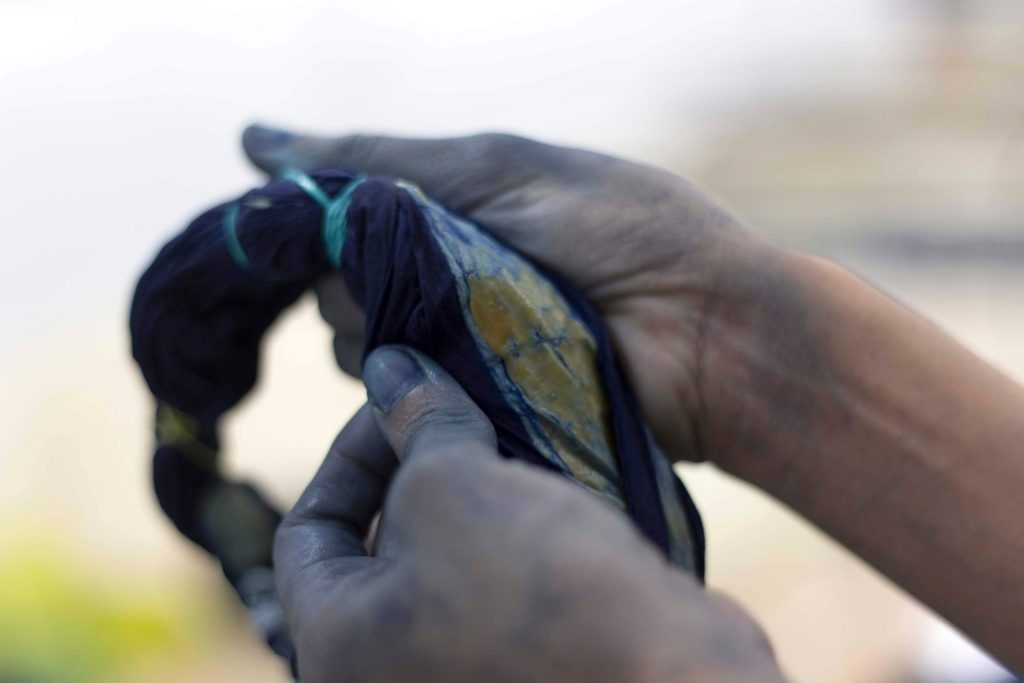
I think about what she said at the start—the sound of rain and the calm it brings. There is a kind of tenacity in that tranquillity, just like Ummi’s hands, soaked in natural dyes and move like gushes of water carrying colour into fibre, slow but steady. Courage alone is not enough for a craftsperson to put her past behind her and start over again, betting on the peels, the pits, the wilted leaves and time—the endless patience required to find, extract and wait for the beauty to happen from what the world has discarded.
When the world outside grows quiet, she’d treat herself to her favourite pastime: a late-night listening session with her vinyl hi-fi, perhaps tracks by her favourite artist, Emilíana Torrini. The needle finds its groove as colours settle in and fabric dries in her studio. In the hush between tracks, as the tannins bind, she shows us that crafts require time; so does life as it unfurls against all odds.
This story first appeared on GRAZIA Malaysia May 2026 issue.
READ MORE
Thread Talk With Shan Shan Lim On Being A Multidisciplinary Artist
A Look into the Innovation of Traditional Textile Manufacturing
Bright Young Things: Seri Mizani is A Gentle Green Fashion Warrior