
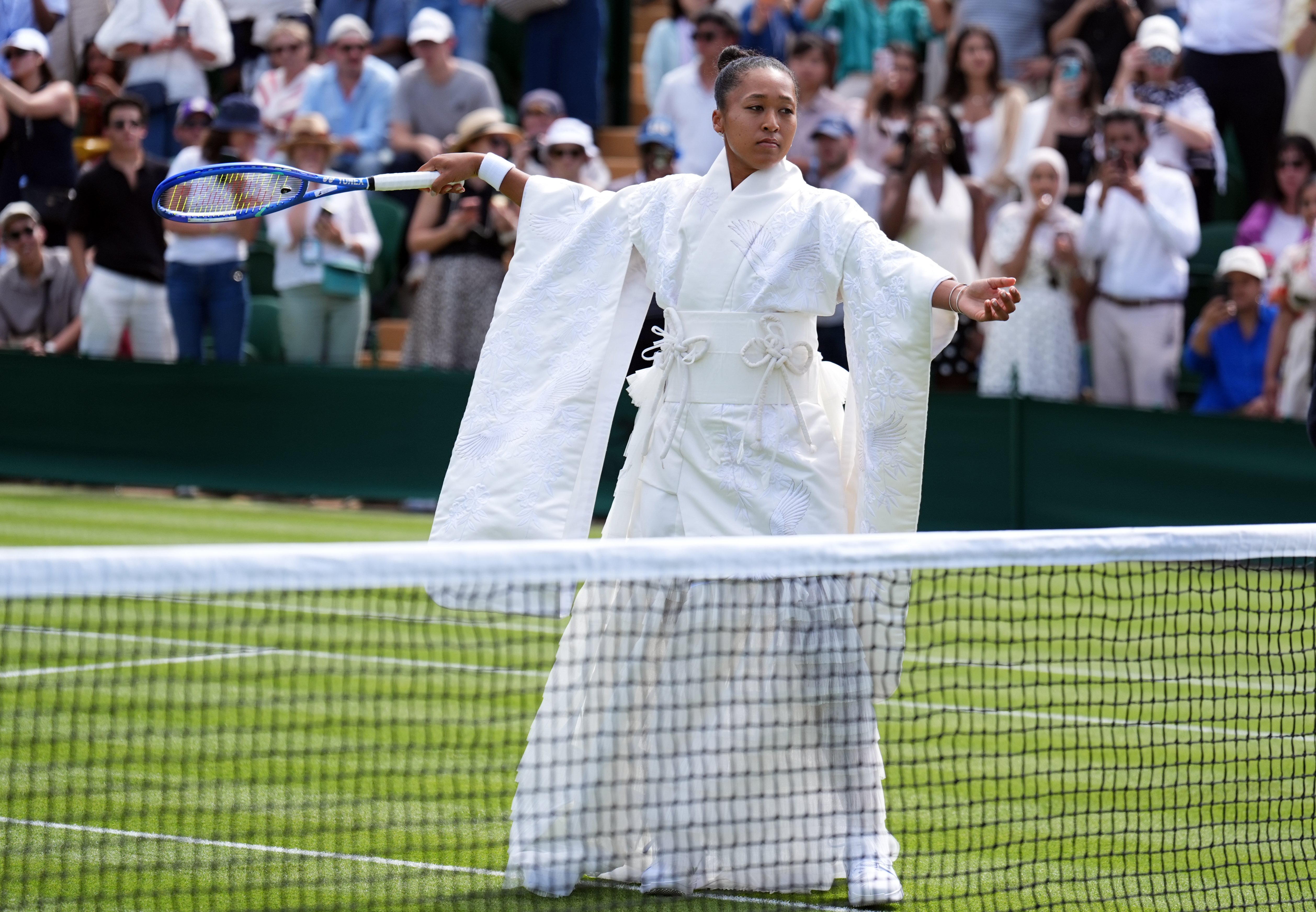
Naomi Osaka understands something fashion has always known: an entrance can change the entire meaning of a look. At Wimbledon, where the all-white dress code usually turns individuality into a quiet exercise in restraint, Osaka found a way to obey the rule while still making the court feel like a runway. Before her first-round match against Elsa Jacquemot, which she won 6-1, 7-5, the Japanese tennis star walked onto the grass in a white kimono-inspired outfit with wide, swinging sleeves and delicate embroidery. The reference was deeply personal.
Osaka explained that the look came from her Japanese heritage and from one of her favorite films, Quentin Tarantino’s Kill Bill. More precisely, it nodded to O-Ren Ishii, the character played by Lucy Liu, whose white kimono remains one of the film’s most recognizable images. In Osaka’s hands, that inspiration became less costume than transformation. She has said she likes to feel almost like a video game character when she plays, and this look gave that idea a powerful visual language.
Why Naomi Osaka’s Wimbledon Look Matters
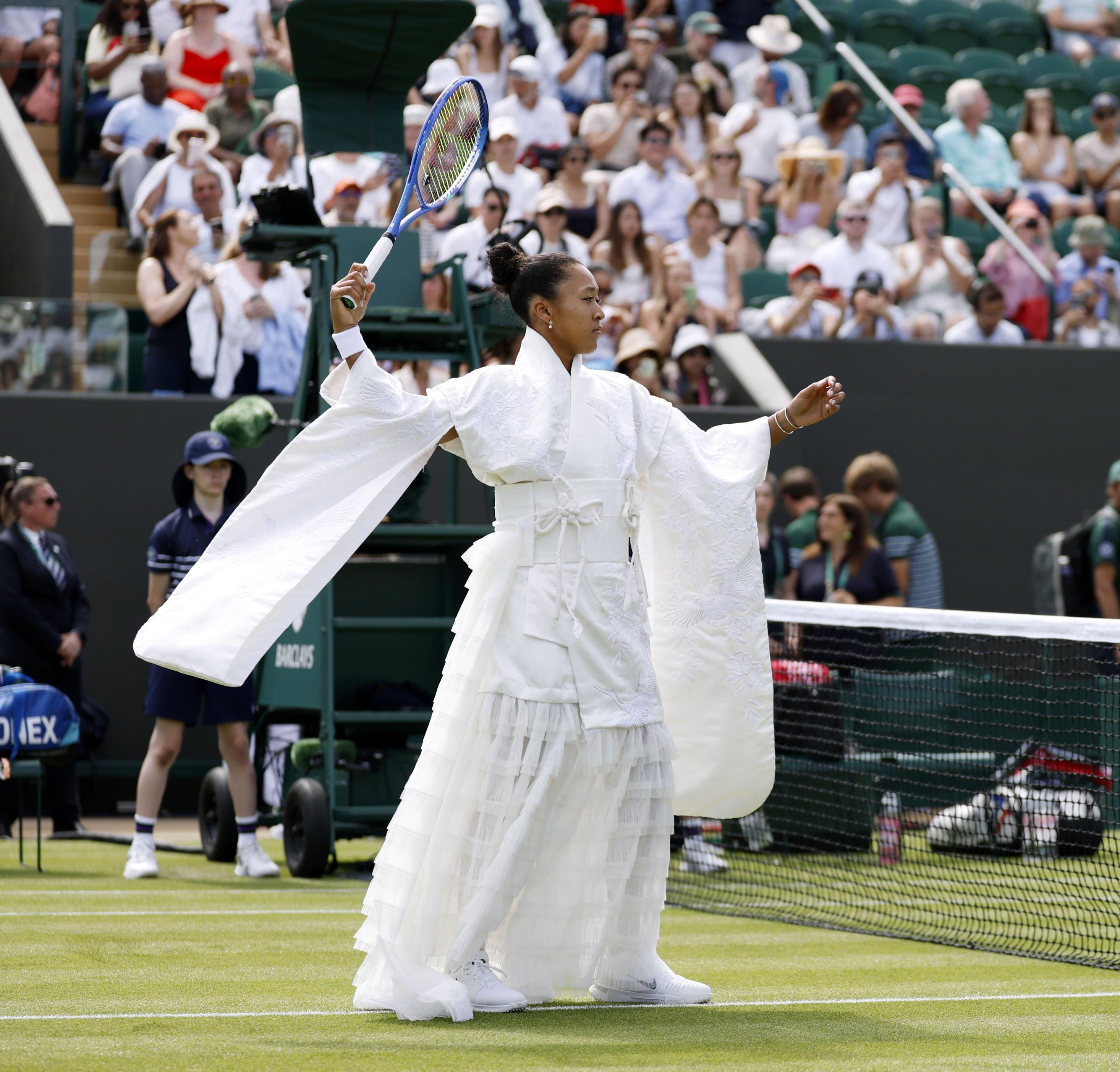
Naomi Osaka’s tennis fashion works because it never treats clothing as decoration alone. Her outfits often create a character before the match even begins, giving the audience a story to read before the first serve. At Wimbledon, the kimono silhouette brought drama to a space that usually rewards discipline and understatement. The white palette kept the look inside tradition, while the shape shifted the mood entirely. That tension makes Osaka one of the most interesting style figures in sport. She knows how to turn cultural reference into performance without losing the athletic purpose of the moment. The outfit moved as she walked, creating a ceremonial feeling before the match had even started. It was elegant, theatrical and completely her.
The Court as a Fashion Narrative
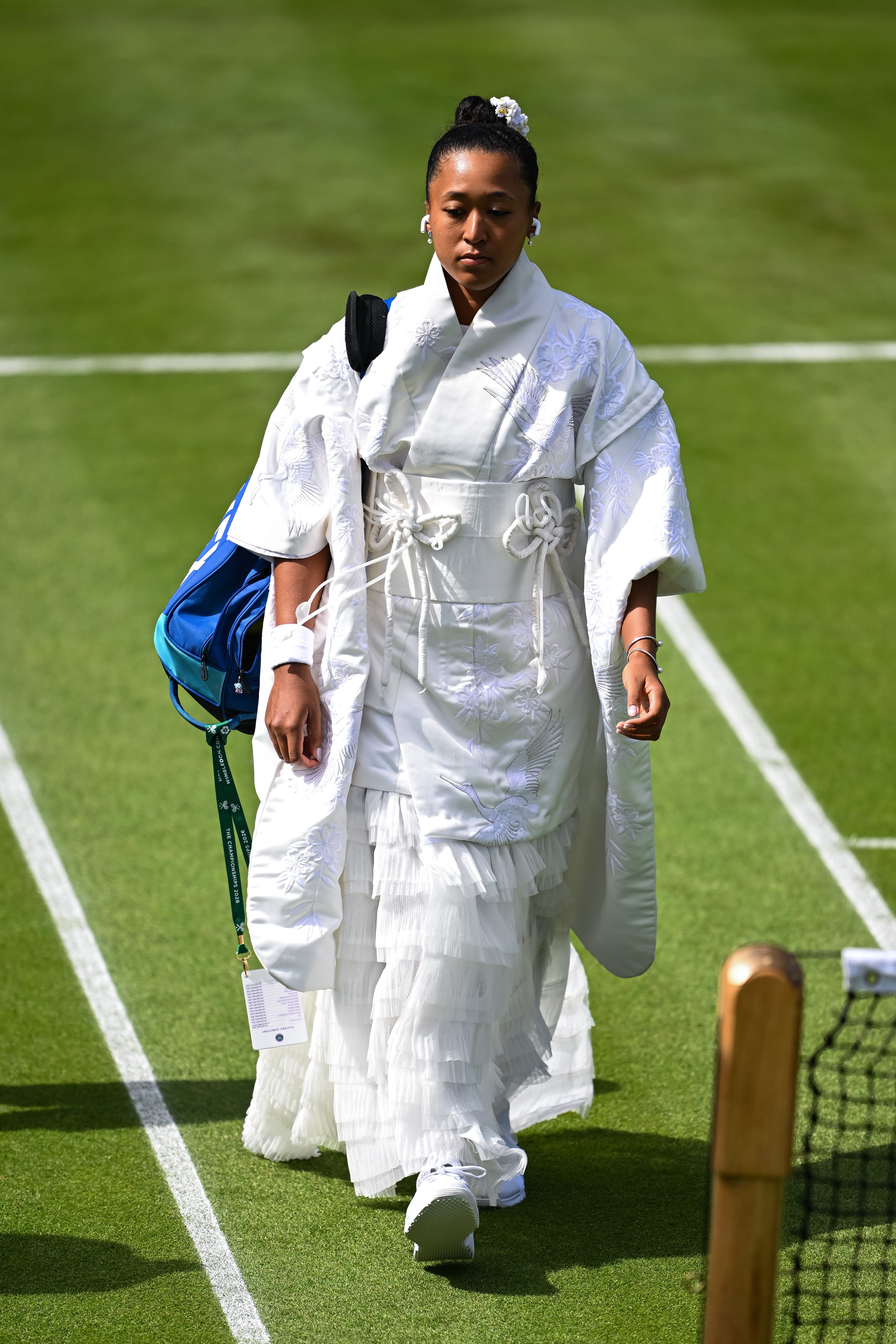
This Wimbledon appearance also belongs to a larger Osaka language. Earlier this year, she drew attention at the Australian Open with a wide-brimmed hat and parasol, then brought a more ceremonial attitude to the French Open. Each look adds another chapter to her visual identity, where tennis style becomes a form of authorship. At Wimbledon, the kimono gave that authorship its most cinematic form. Naomi Osaka did more than wear a beautiful outfit. She turned the walk to the court into a scene, using fashion to declare heritage, fantasy and competitive presence before the match even began.
This story first appeared in Grazia INTERNATIONAL.
READ MORE