
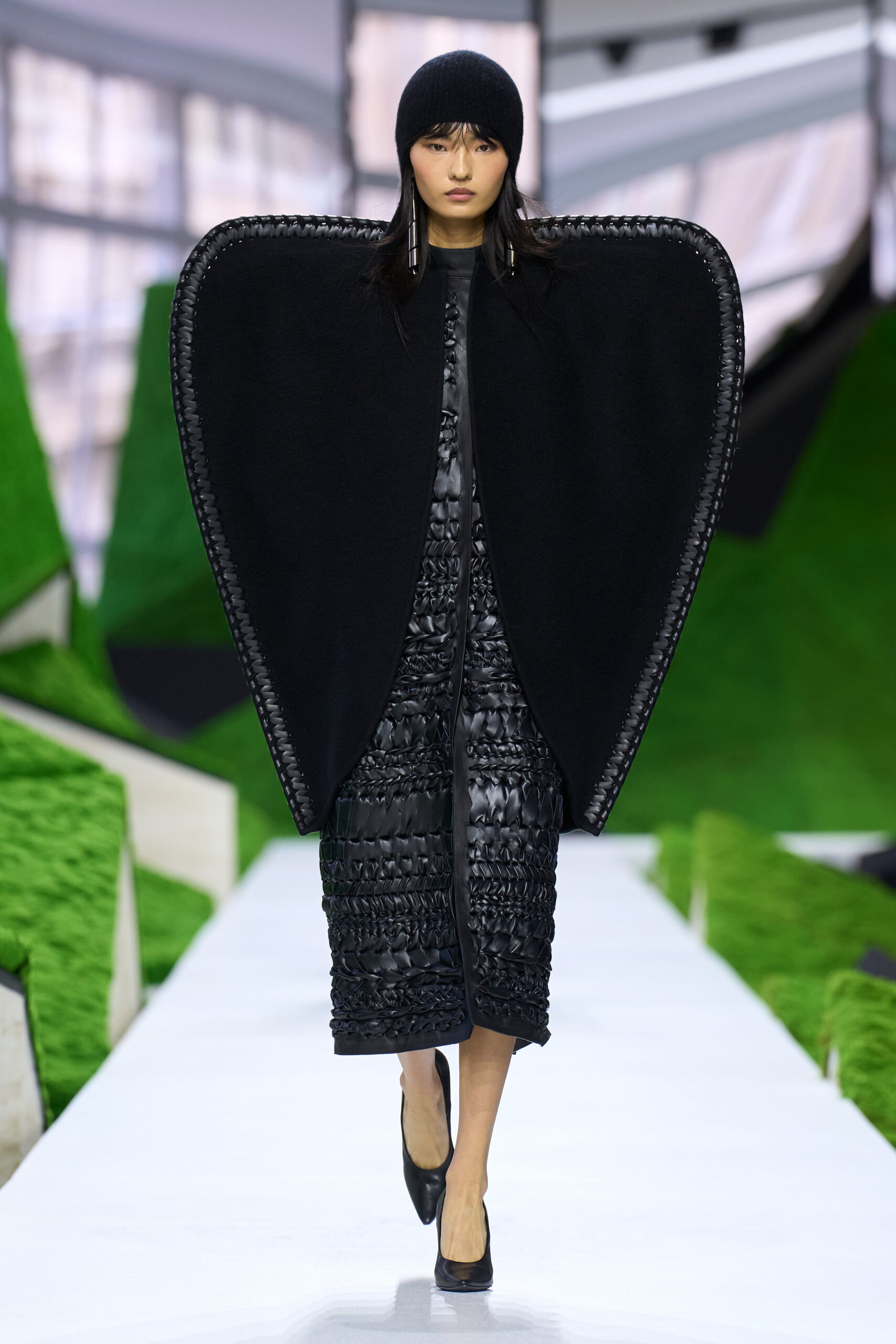
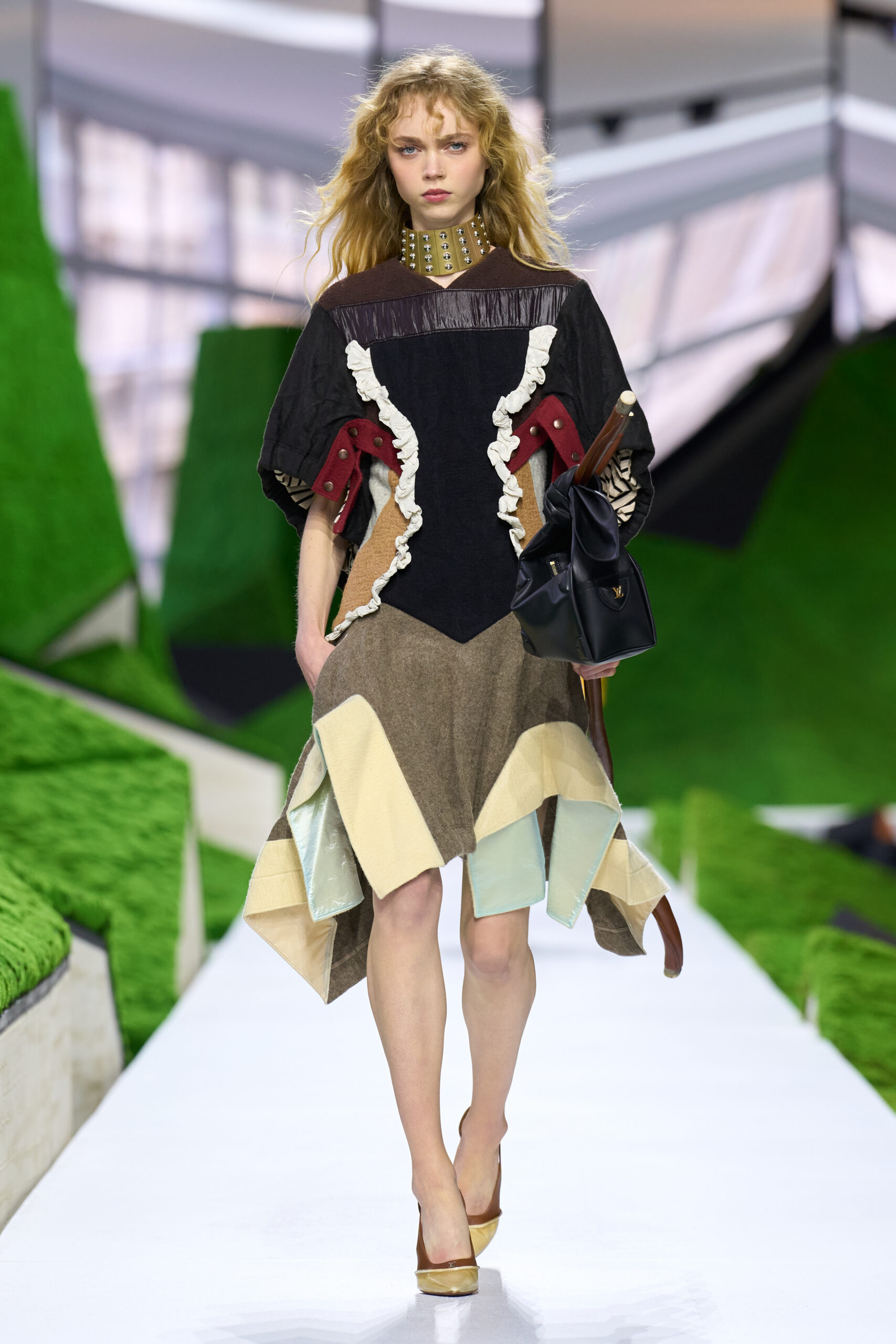
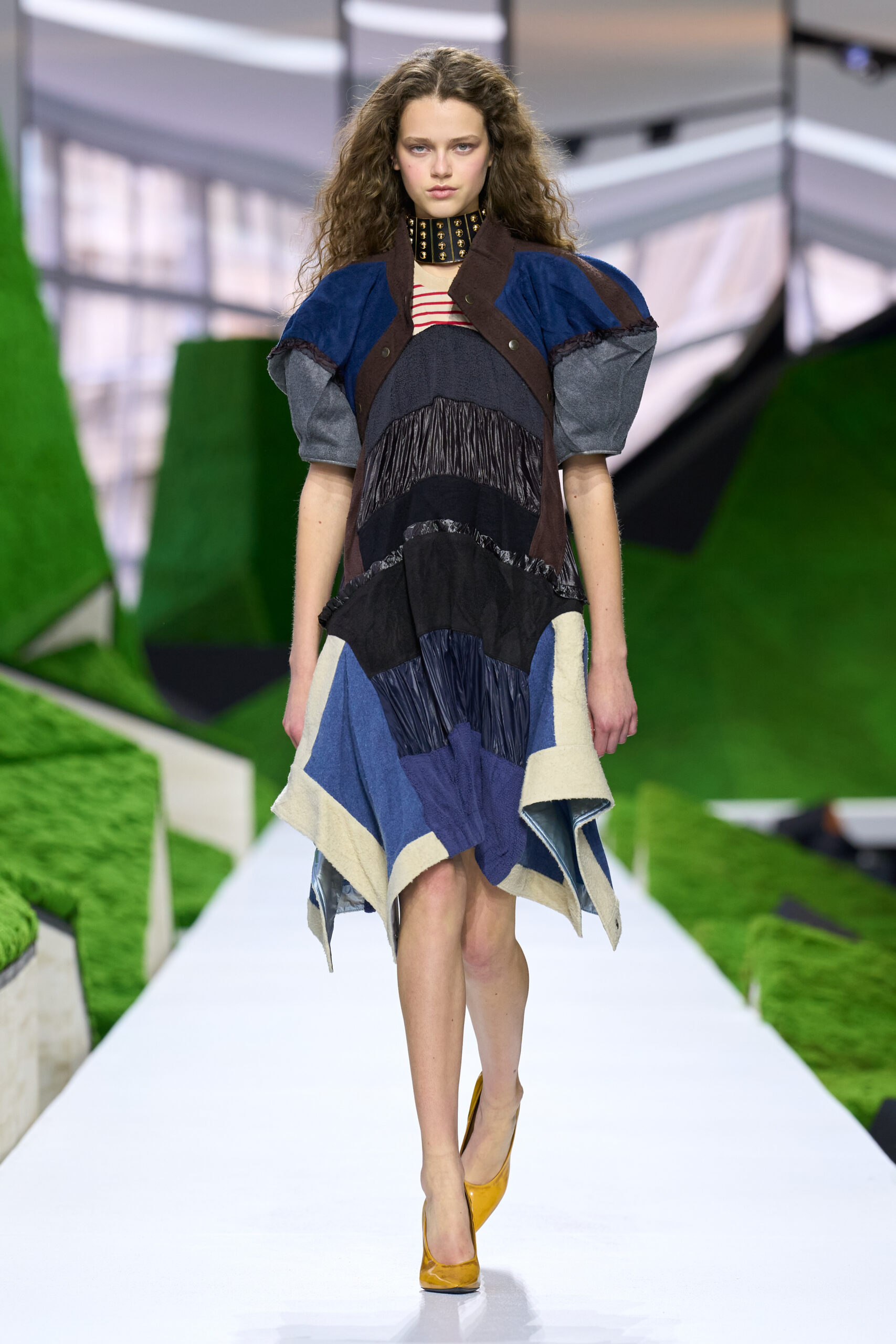
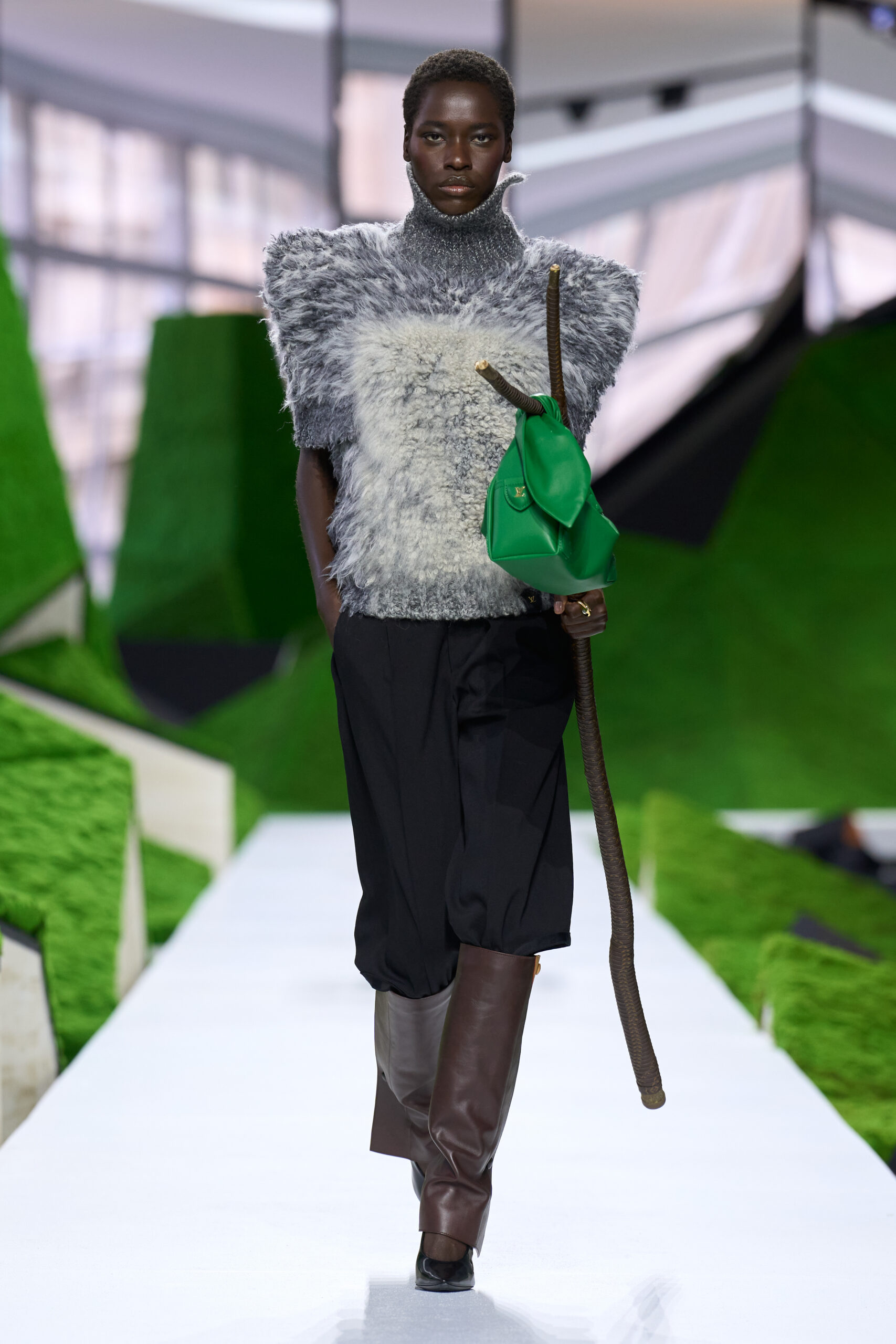
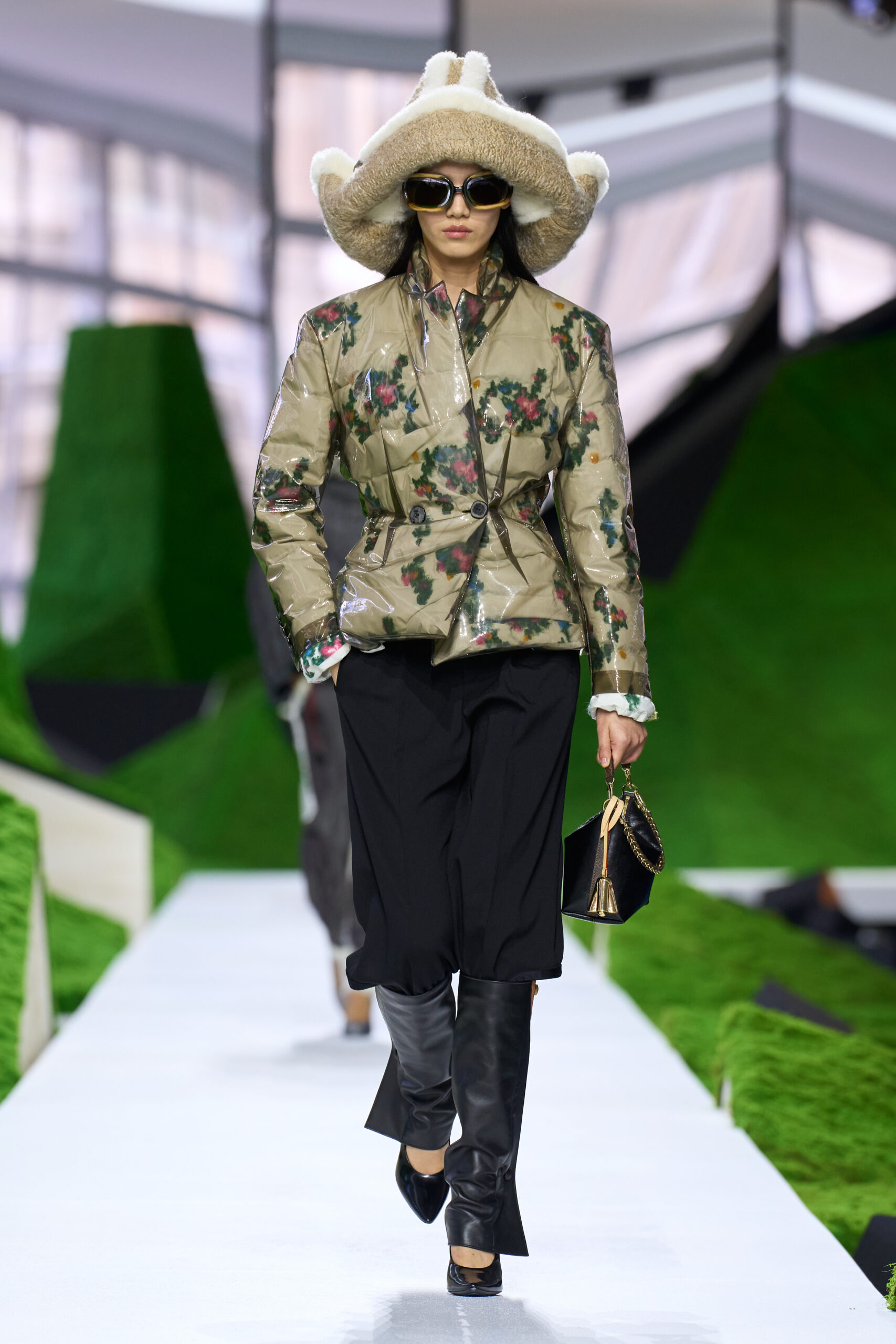
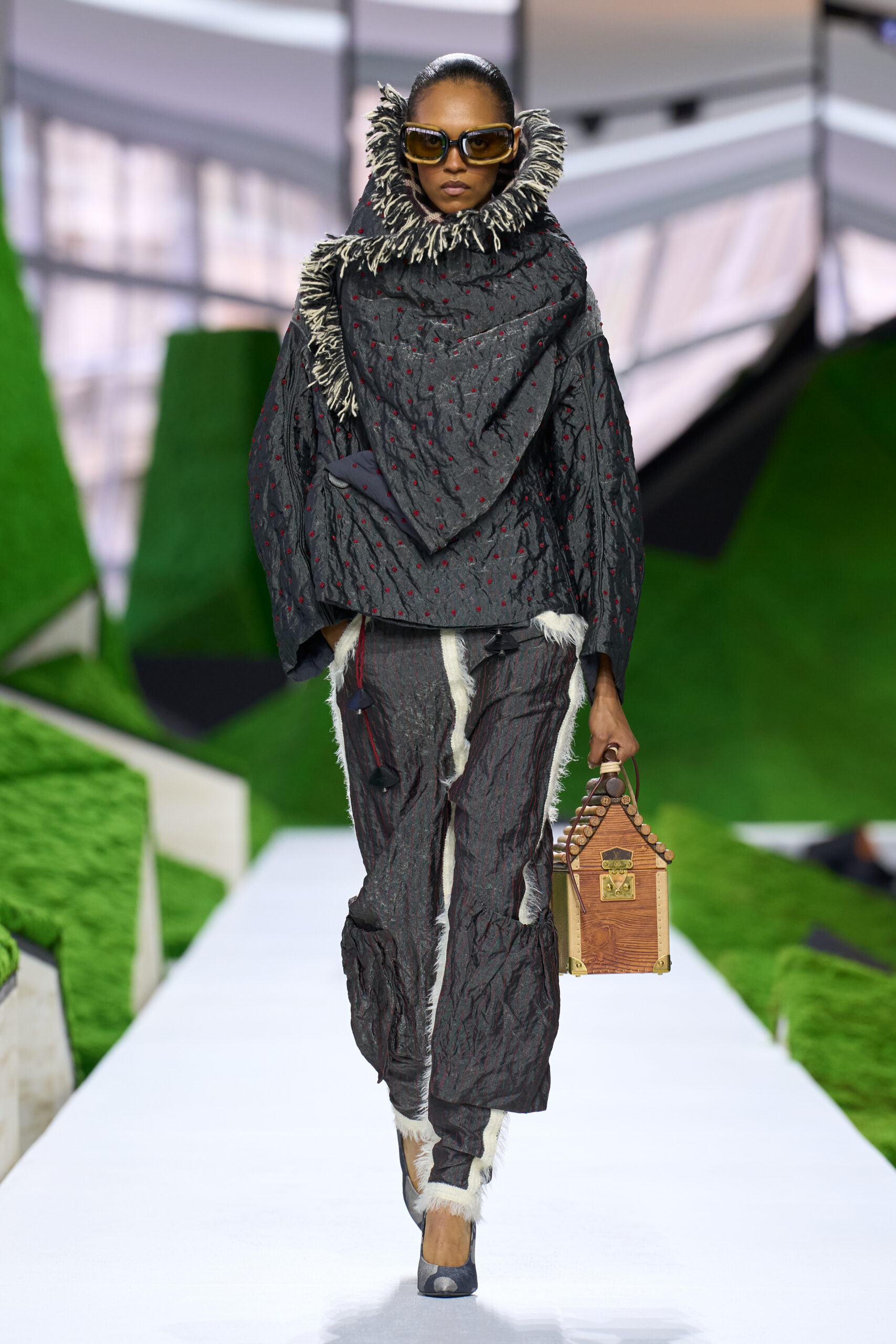
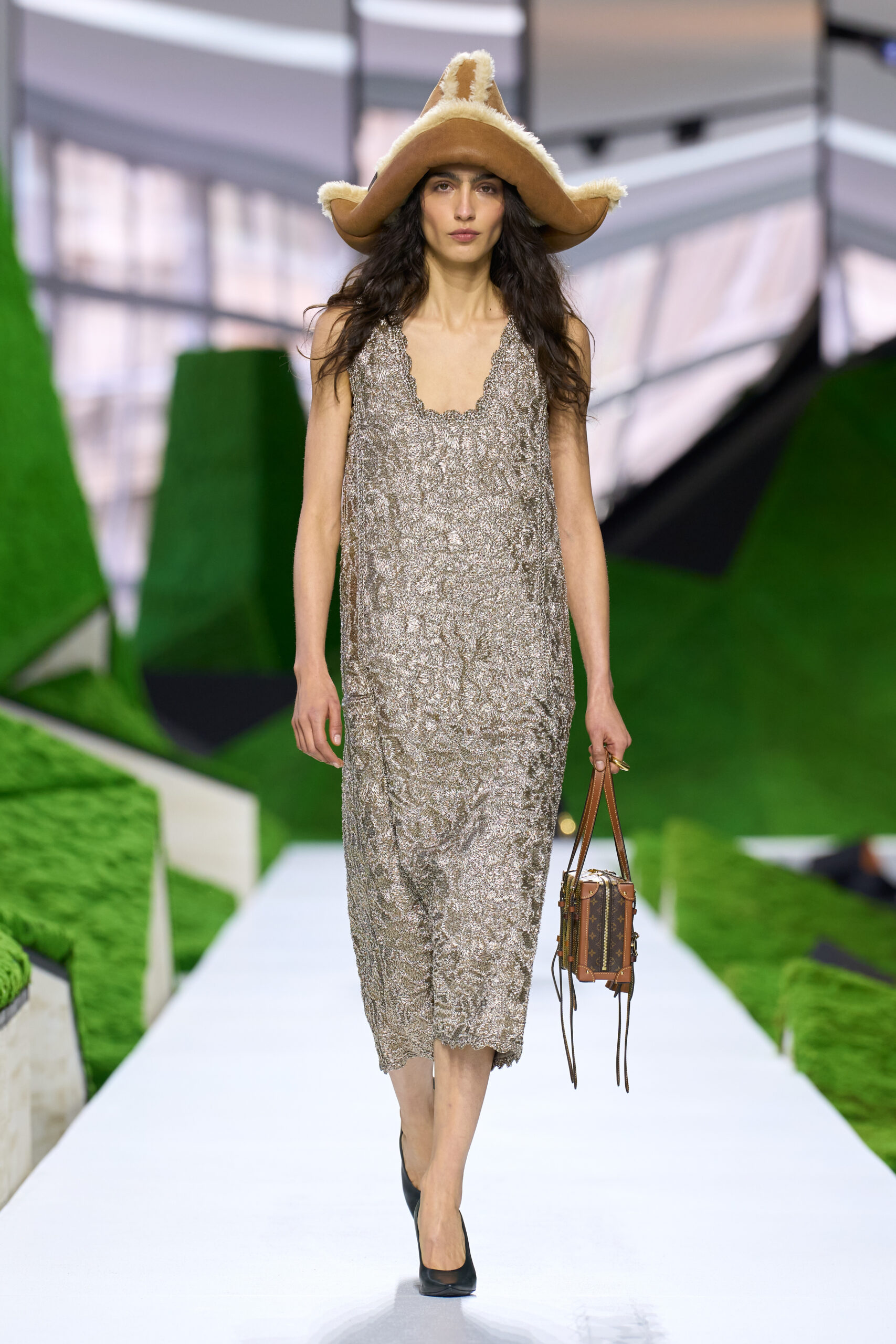
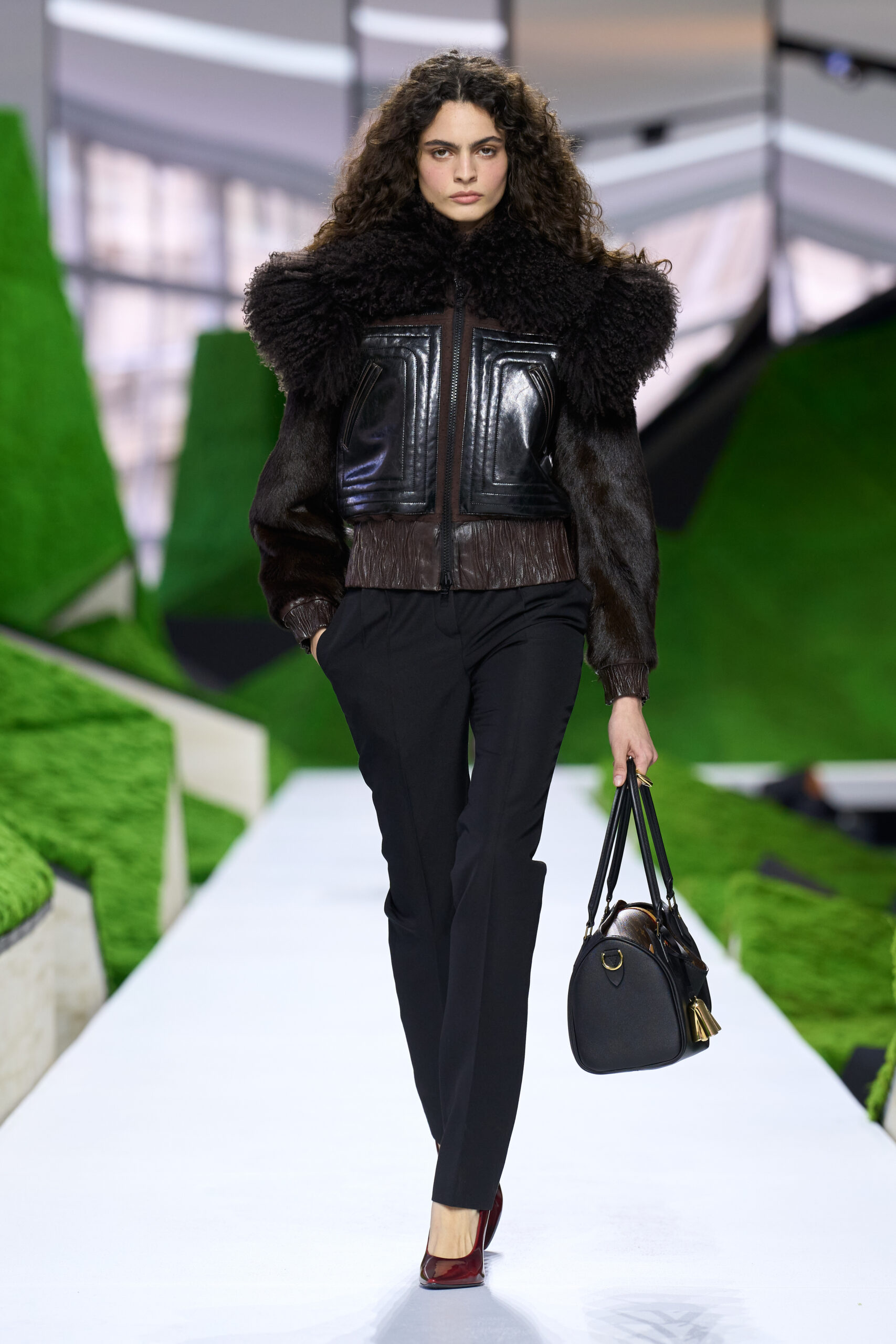
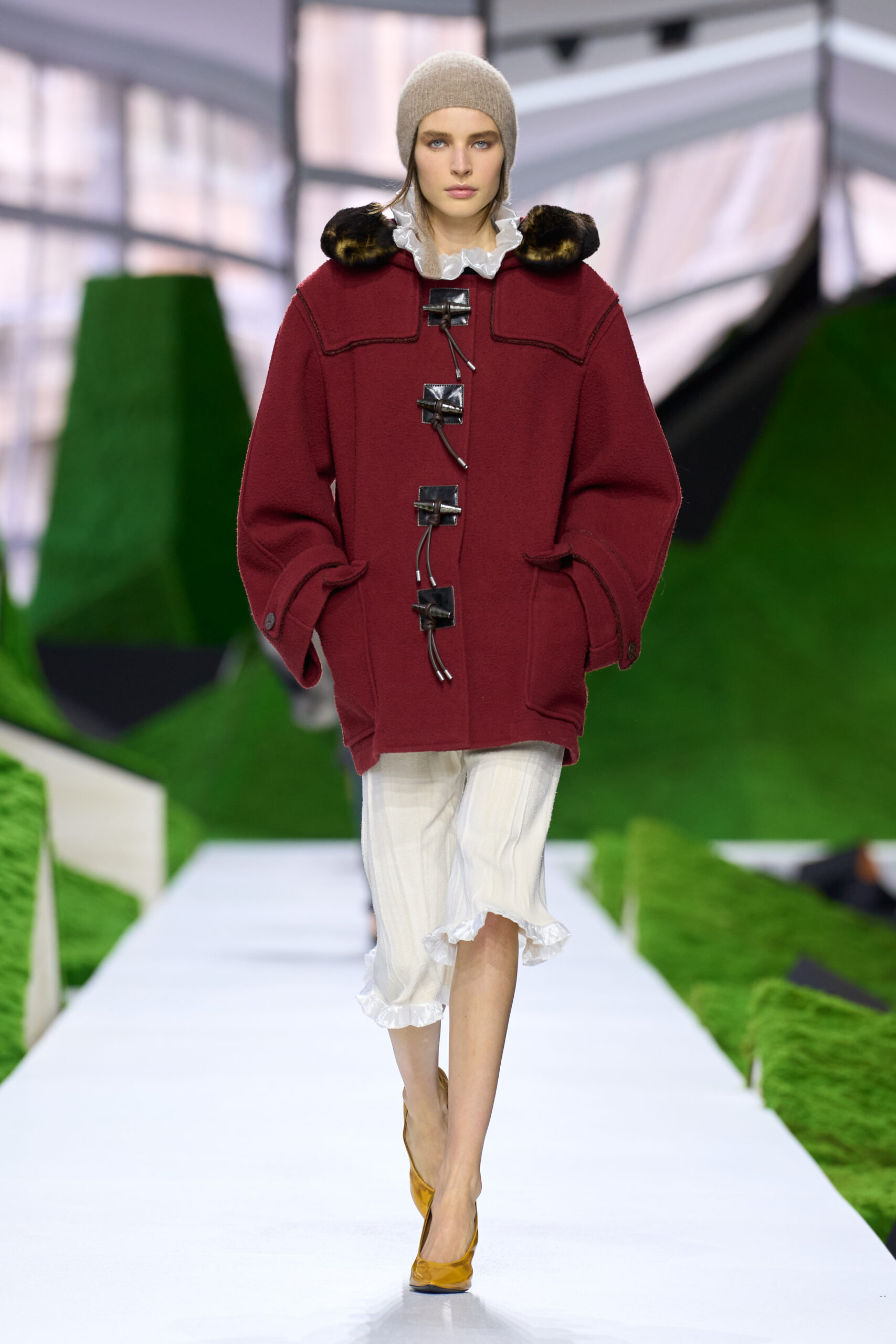
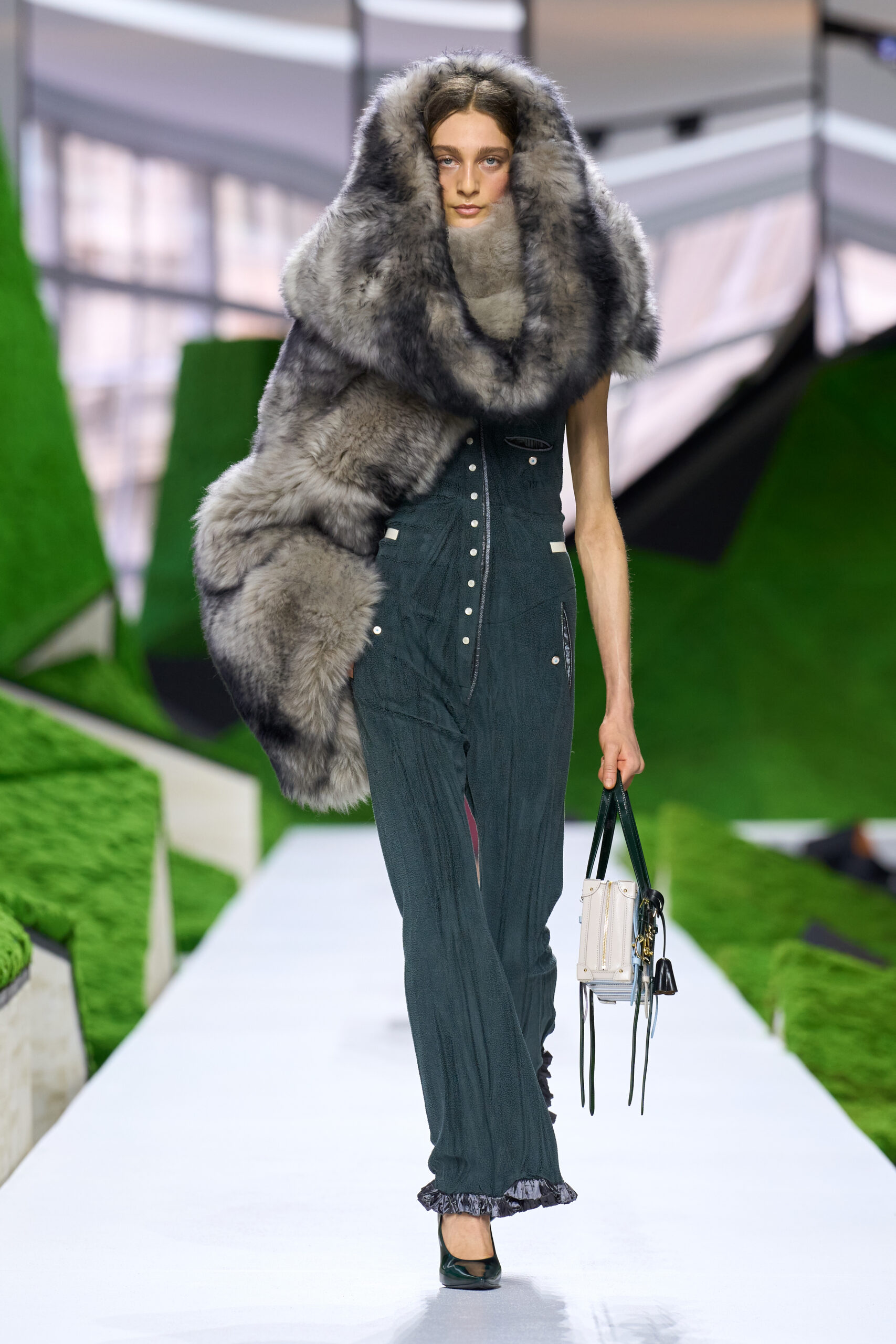
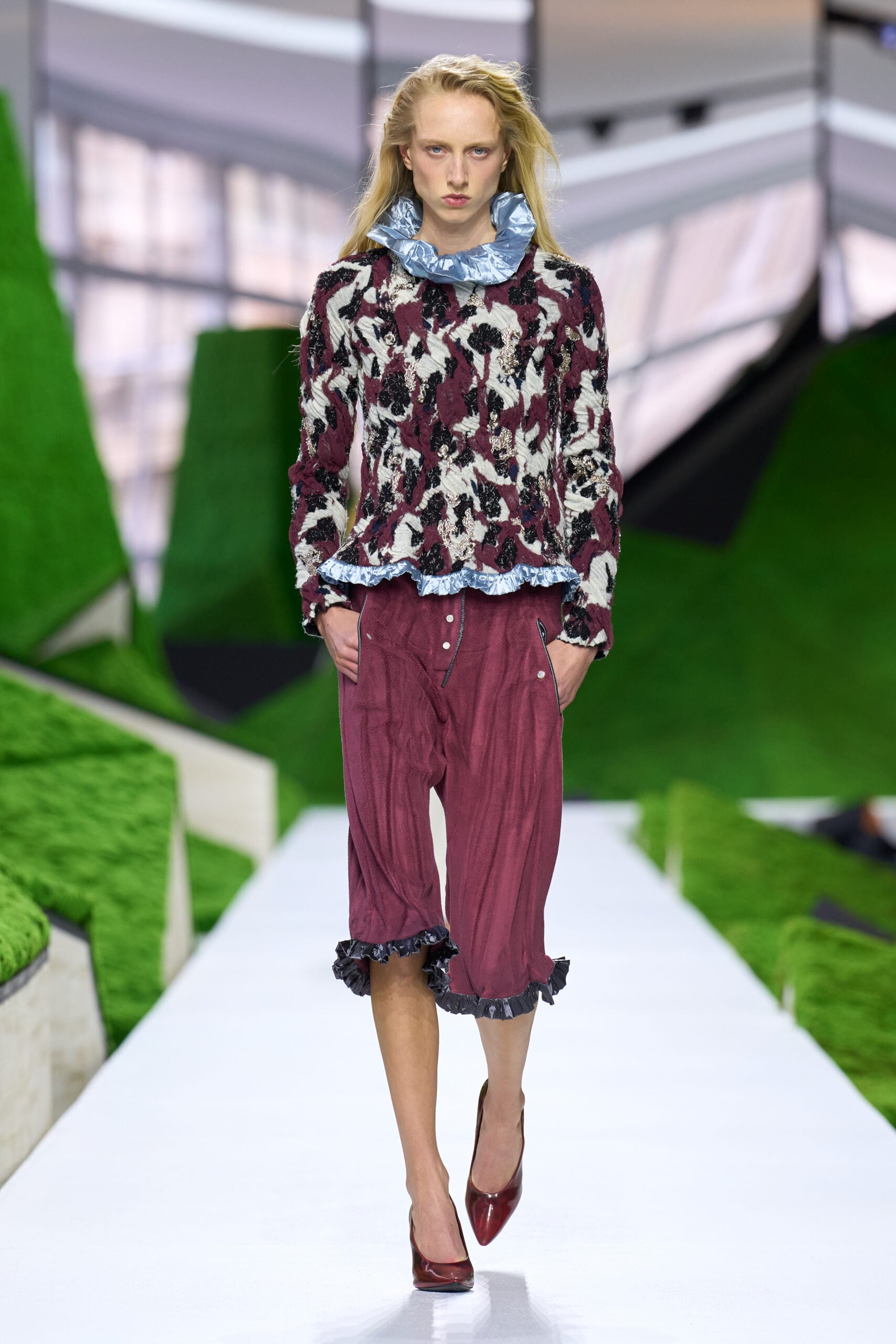
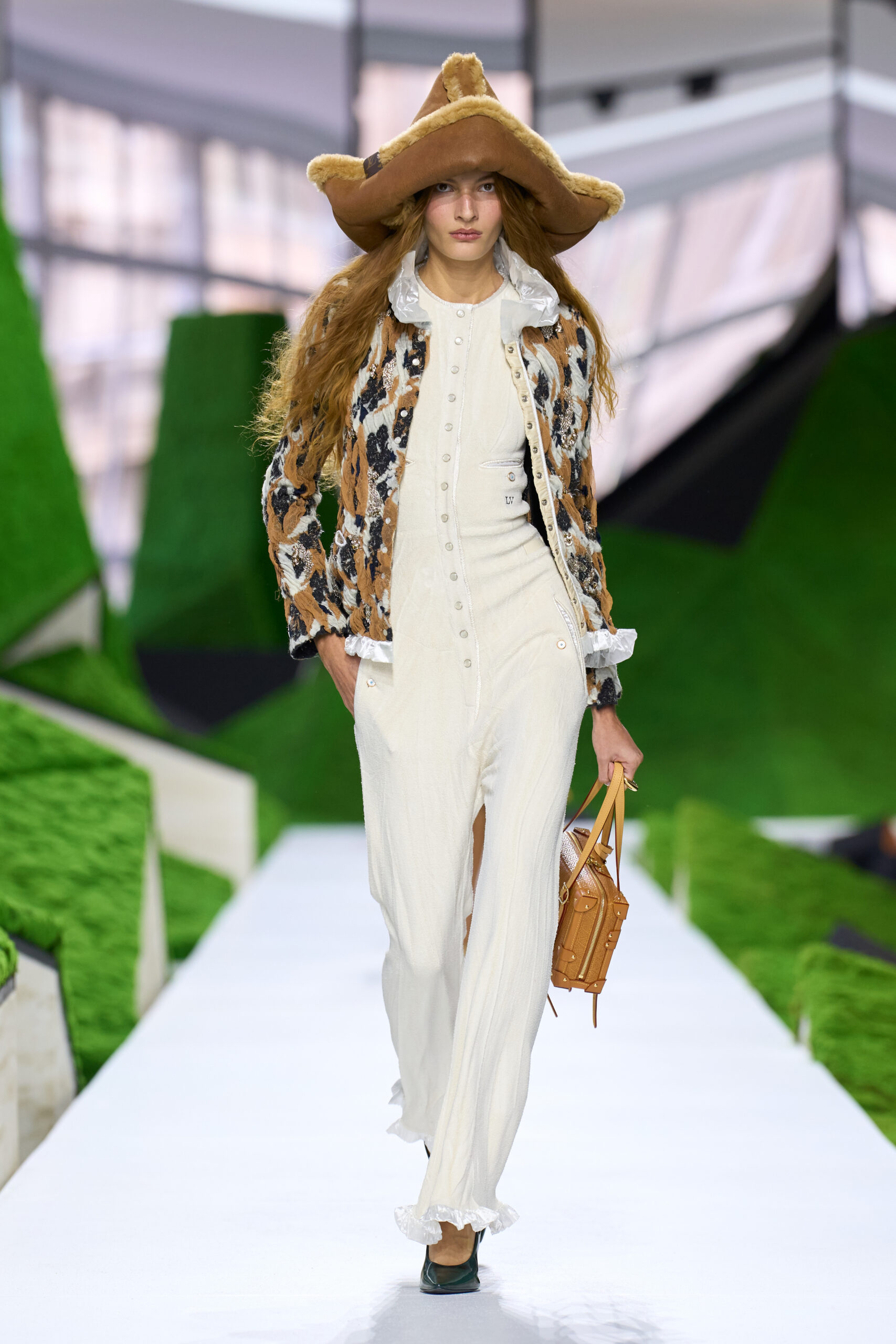
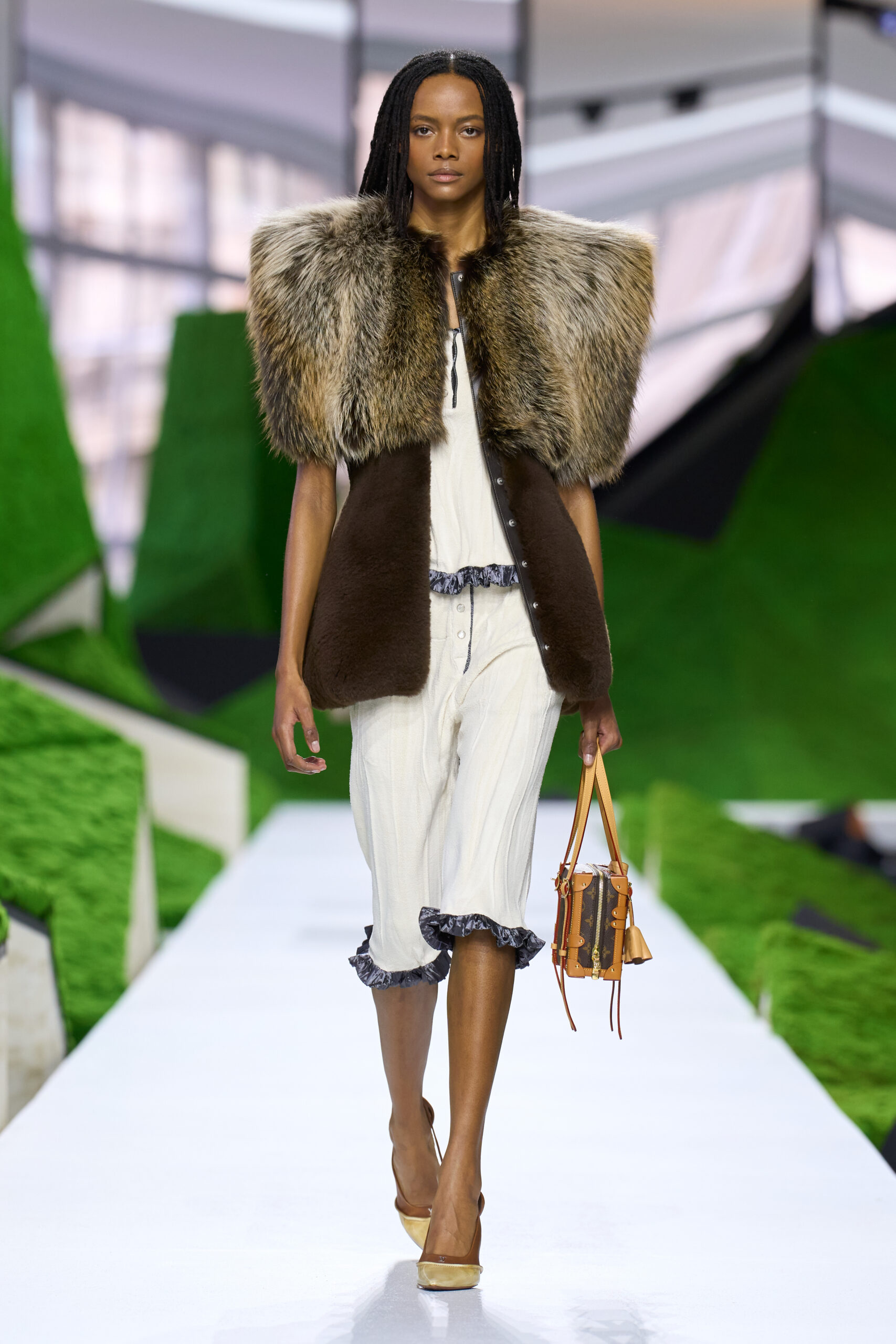
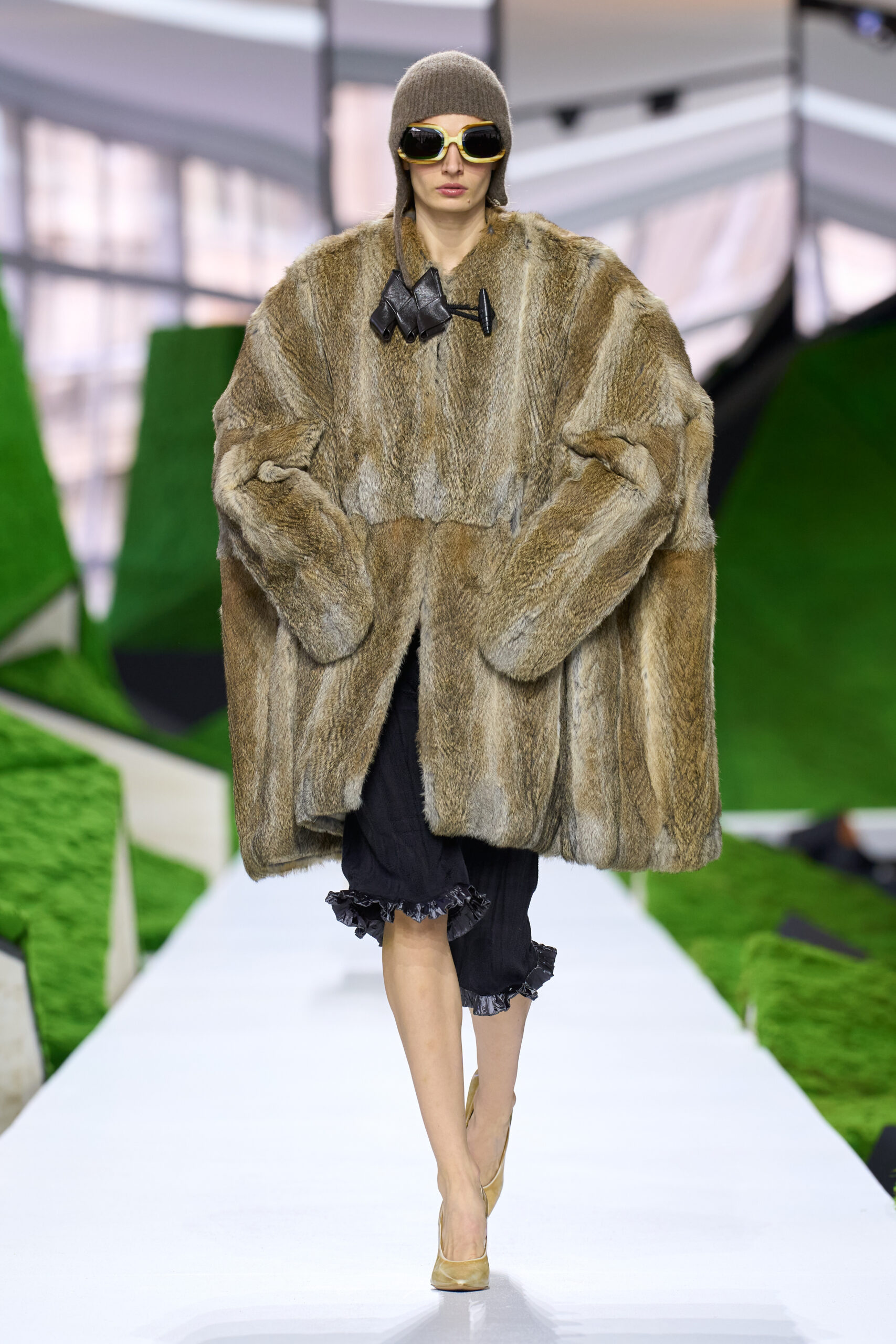
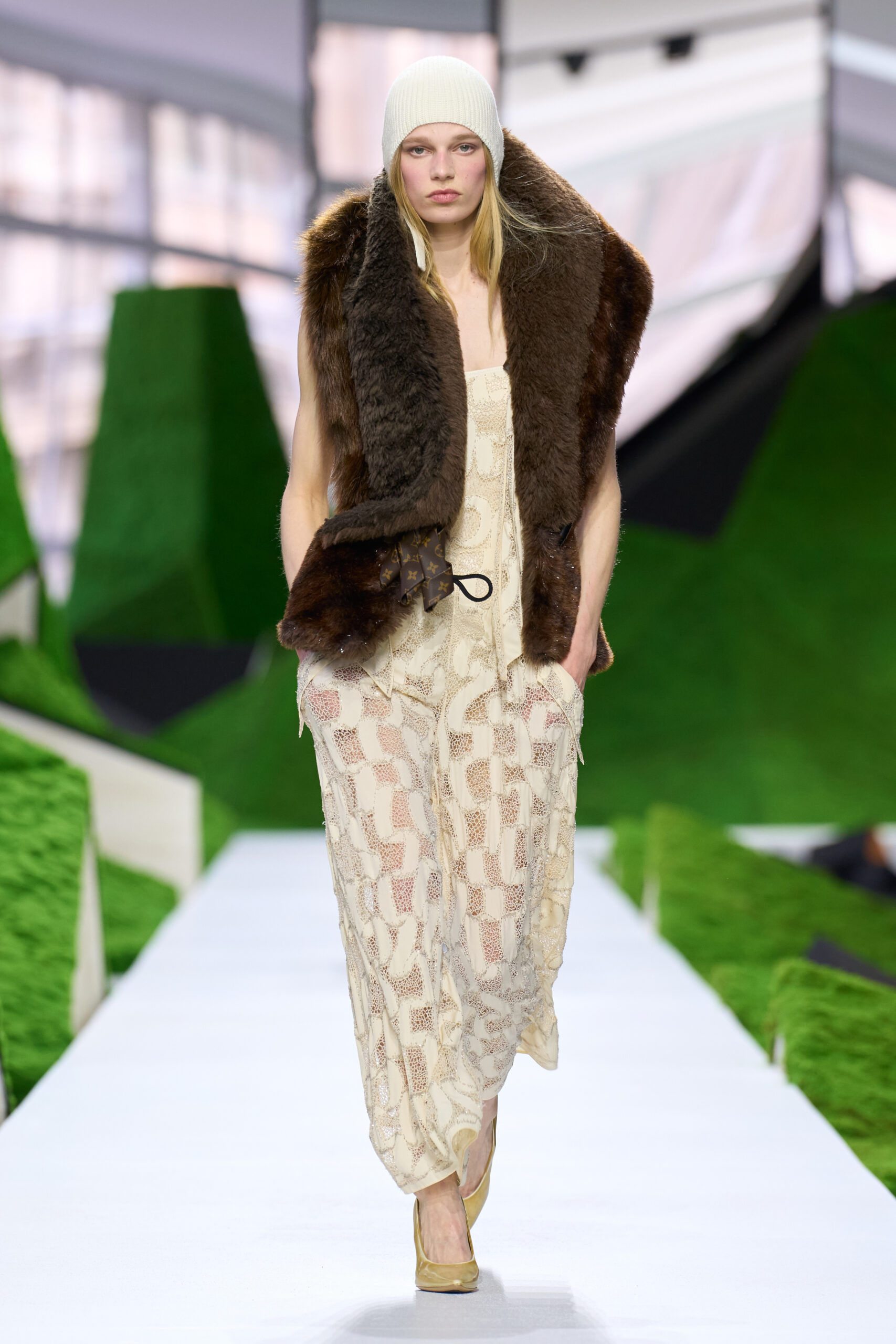
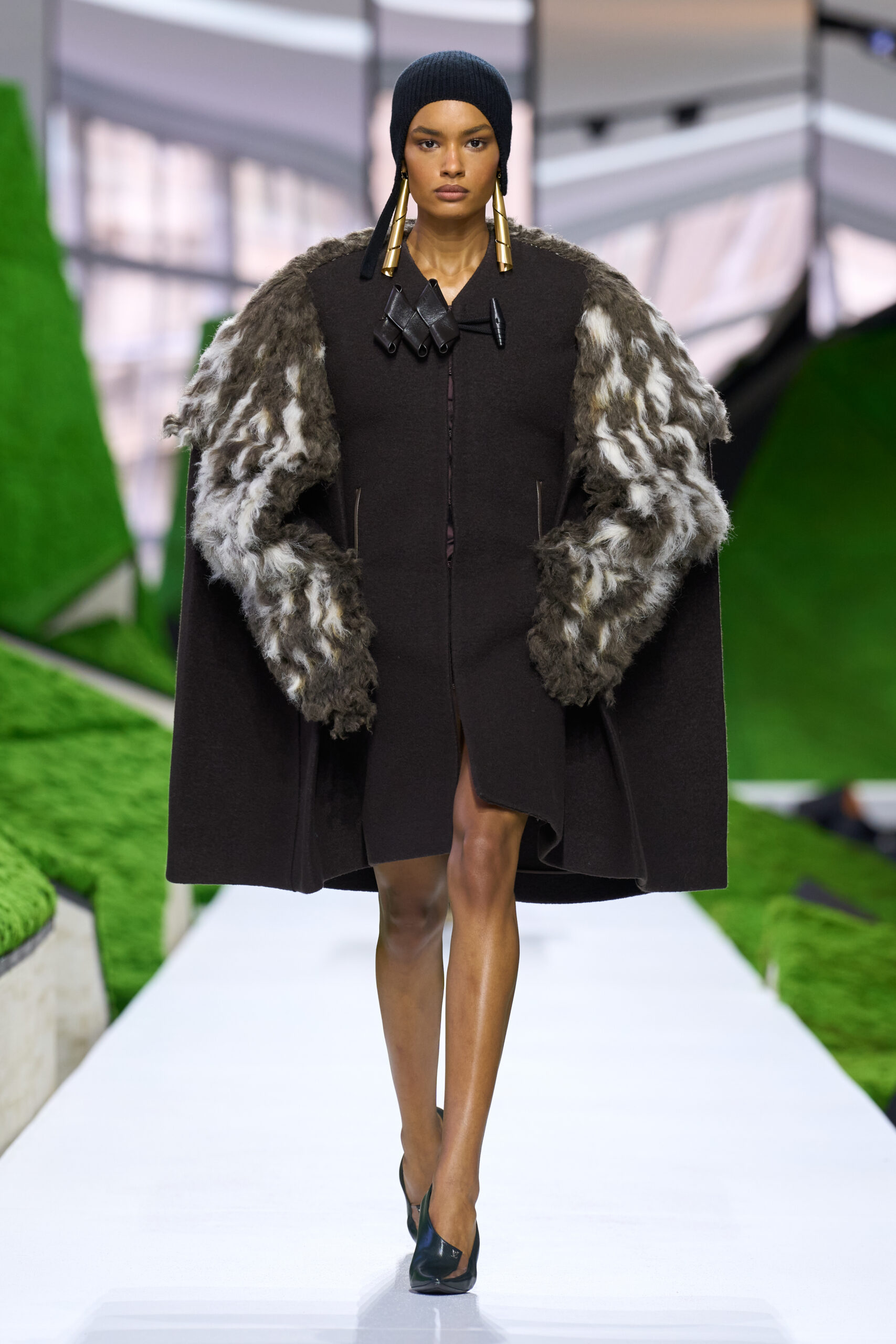
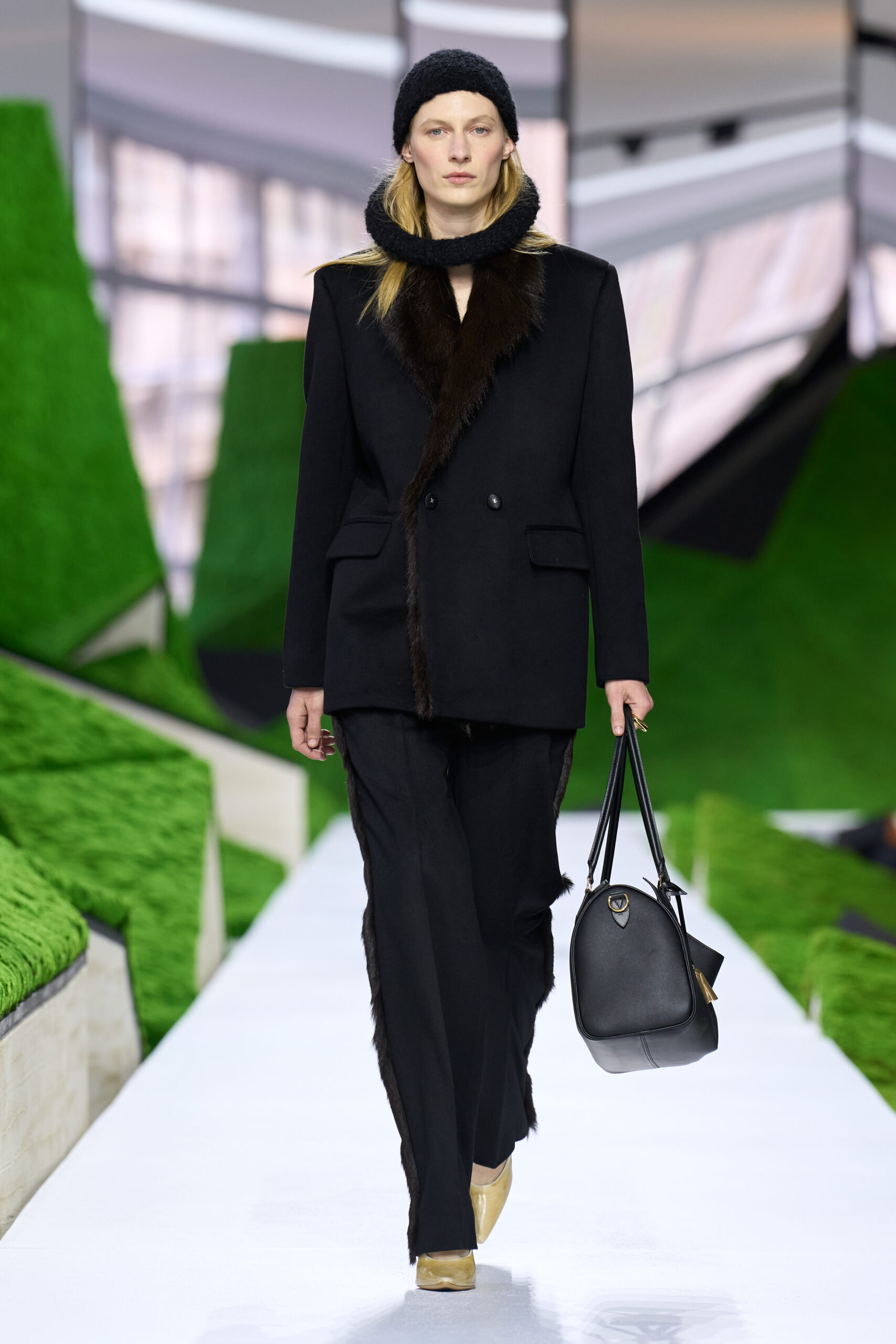
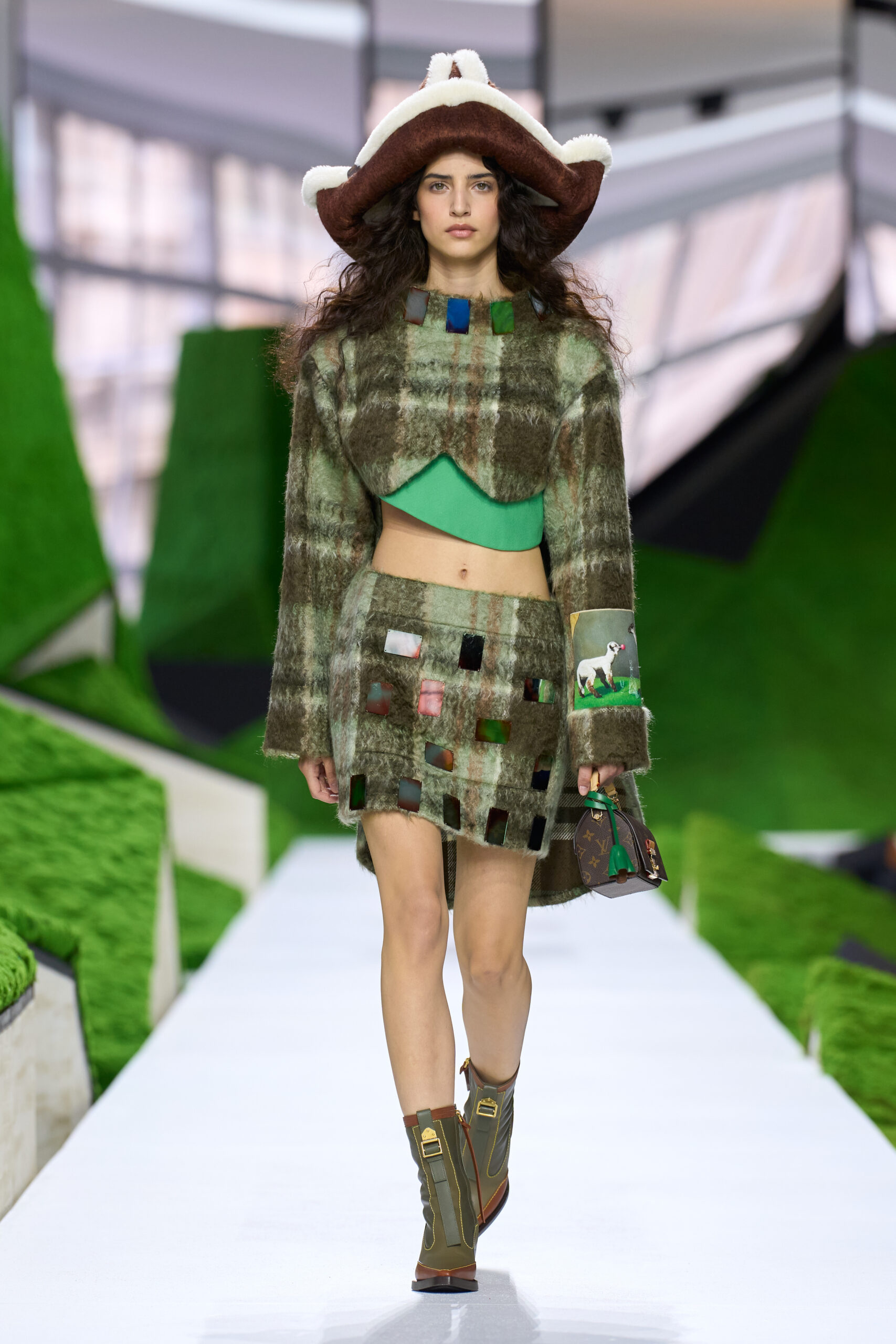
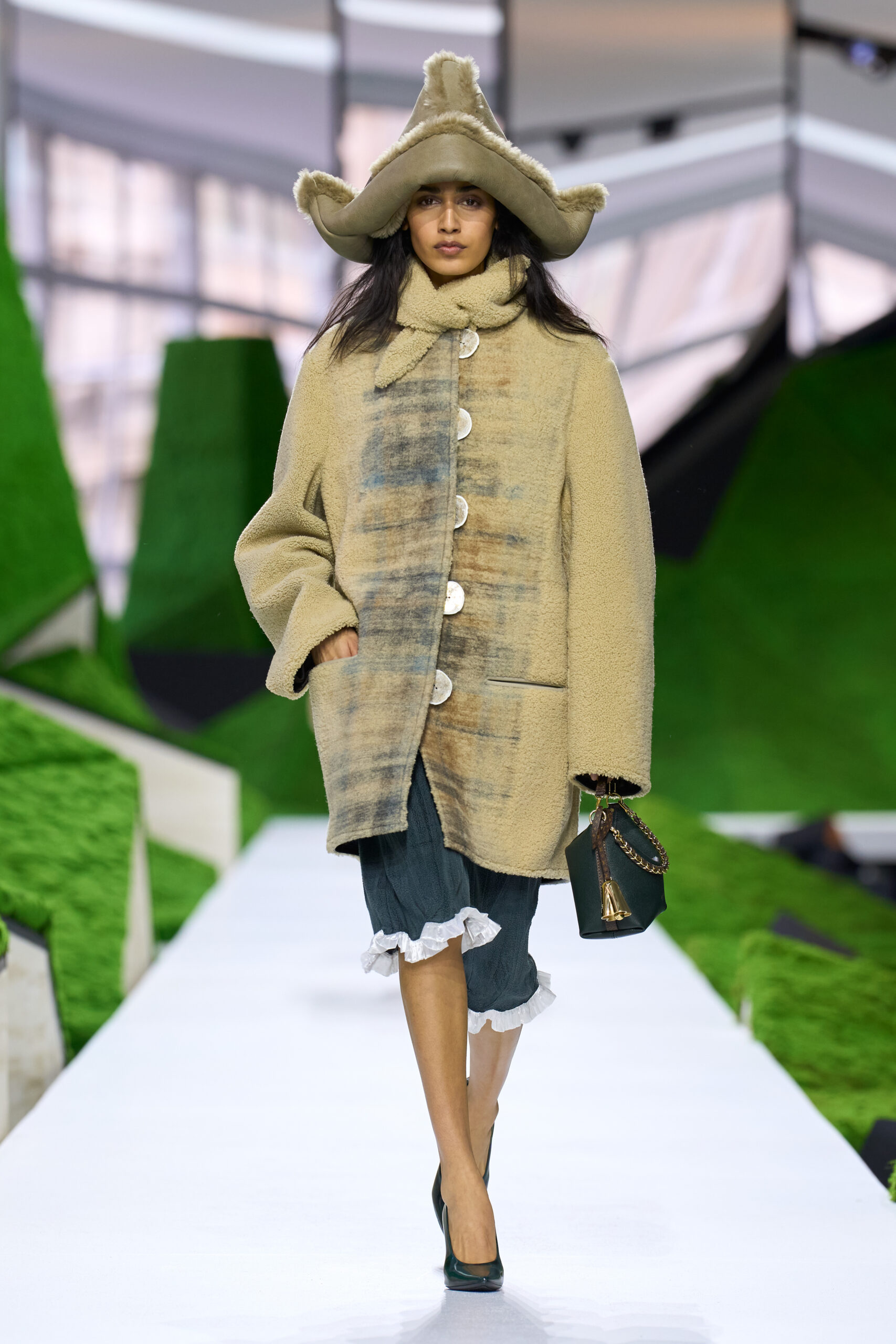
In the courtyard of the Cour Carrée, Louis Vuitton staged a landscape that felt both of this earth and something else entirely. Conceived by production designer Jeremy Hindle, the set transformed the historic square of the Musée du Louvre into a futuristic pastoral, part forest clearing, part sci-fi tableau, setting the scene for Nicolas Ghesquière’s Fall/Winter 2026 meditation on fashion and the natural world.
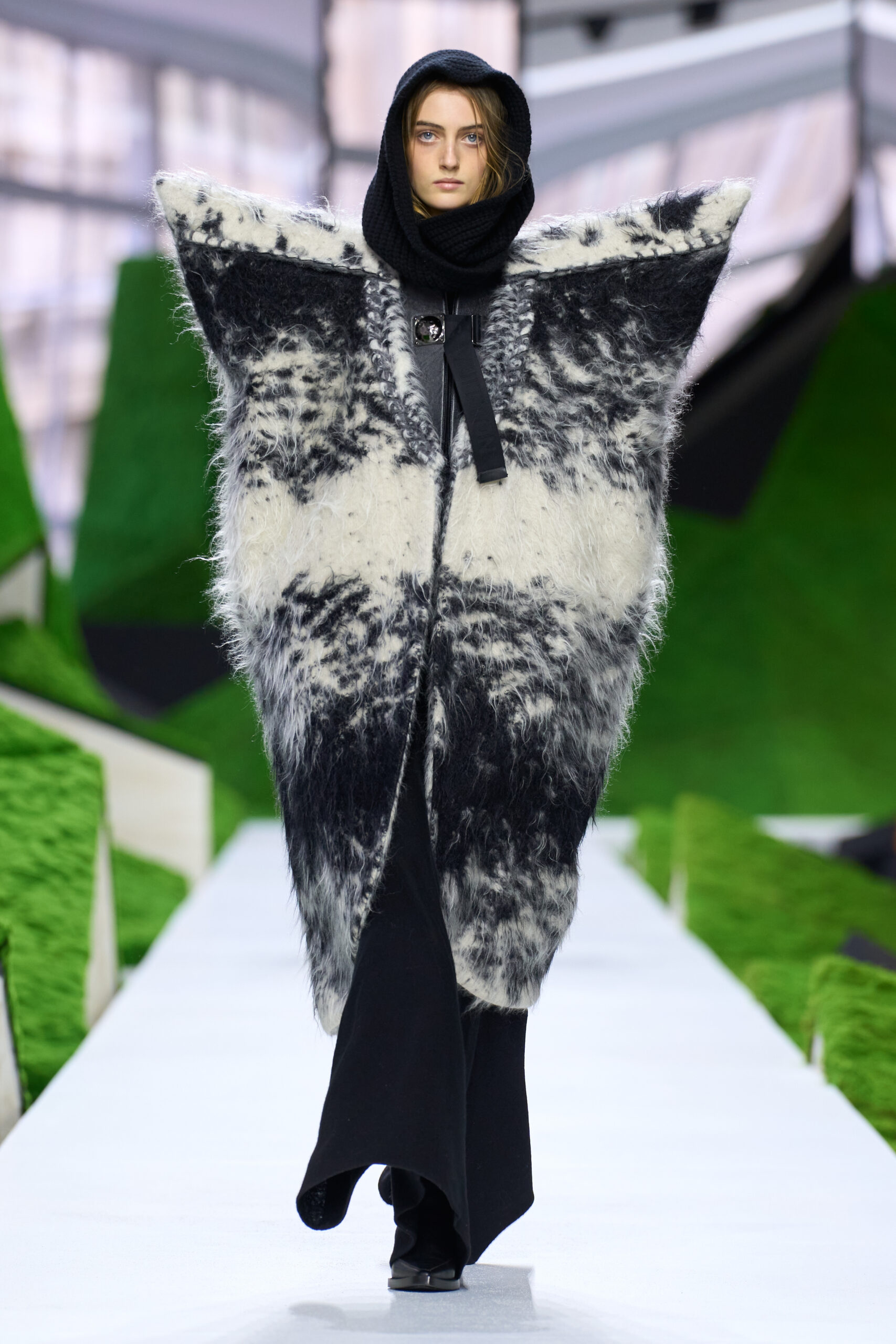
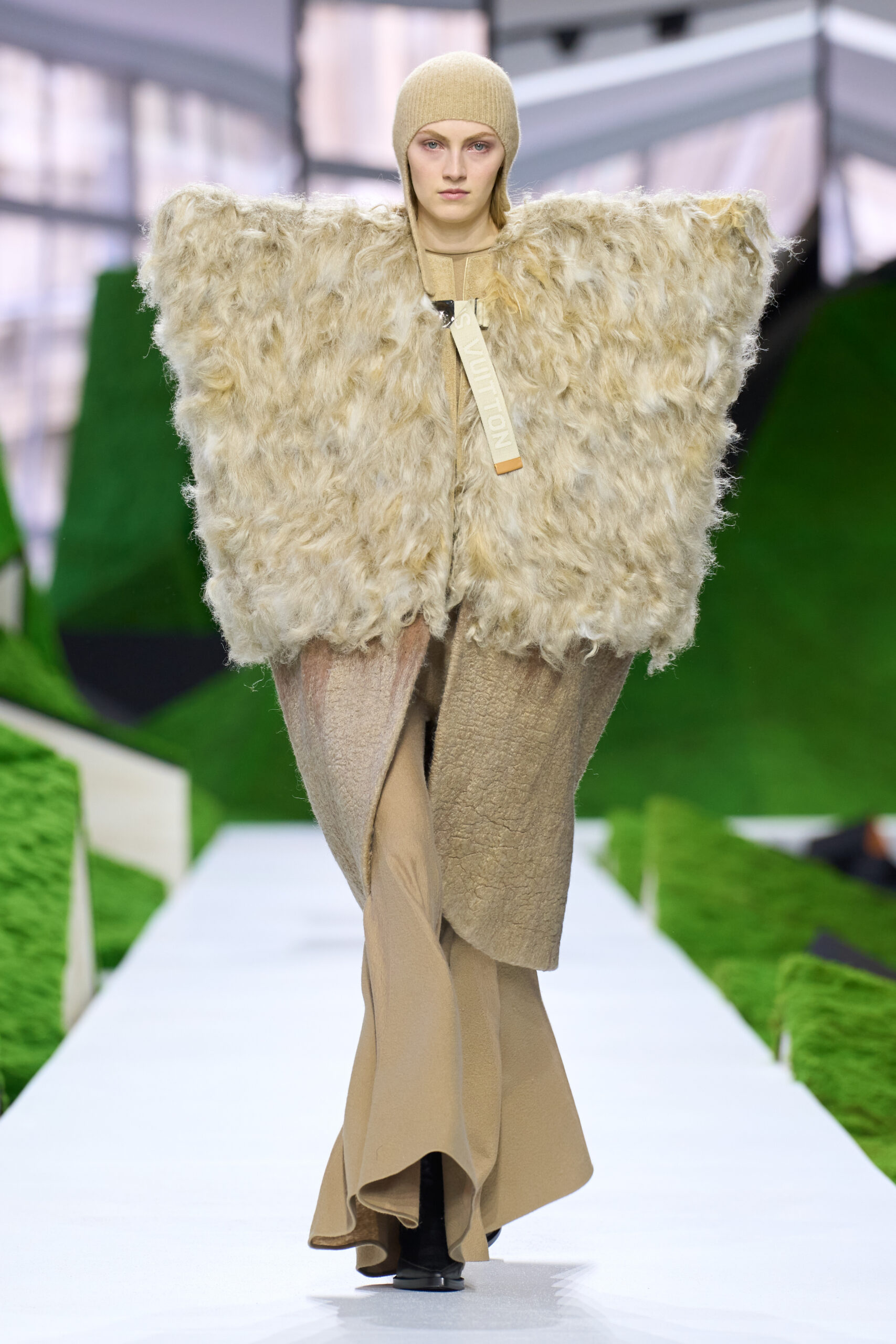
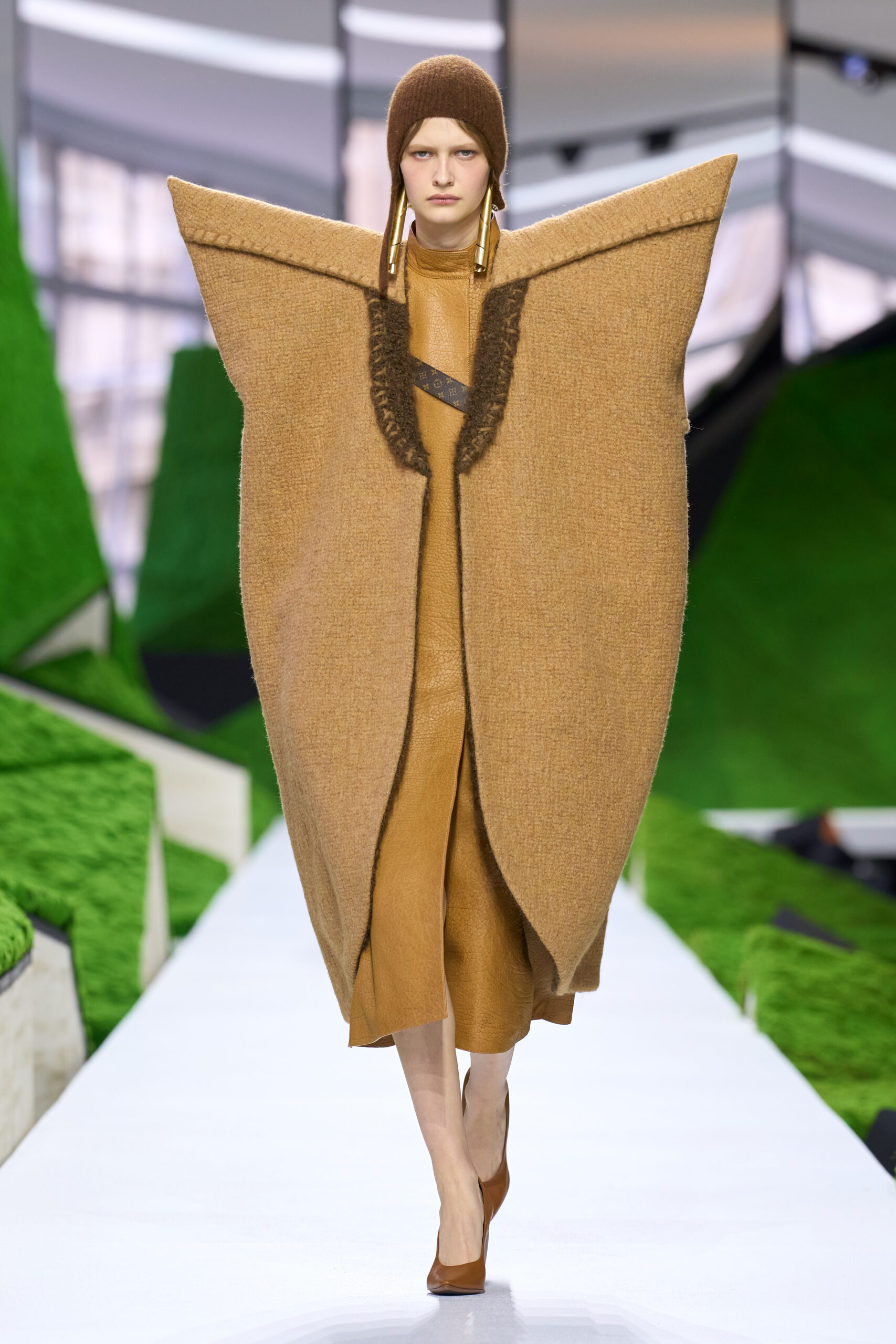
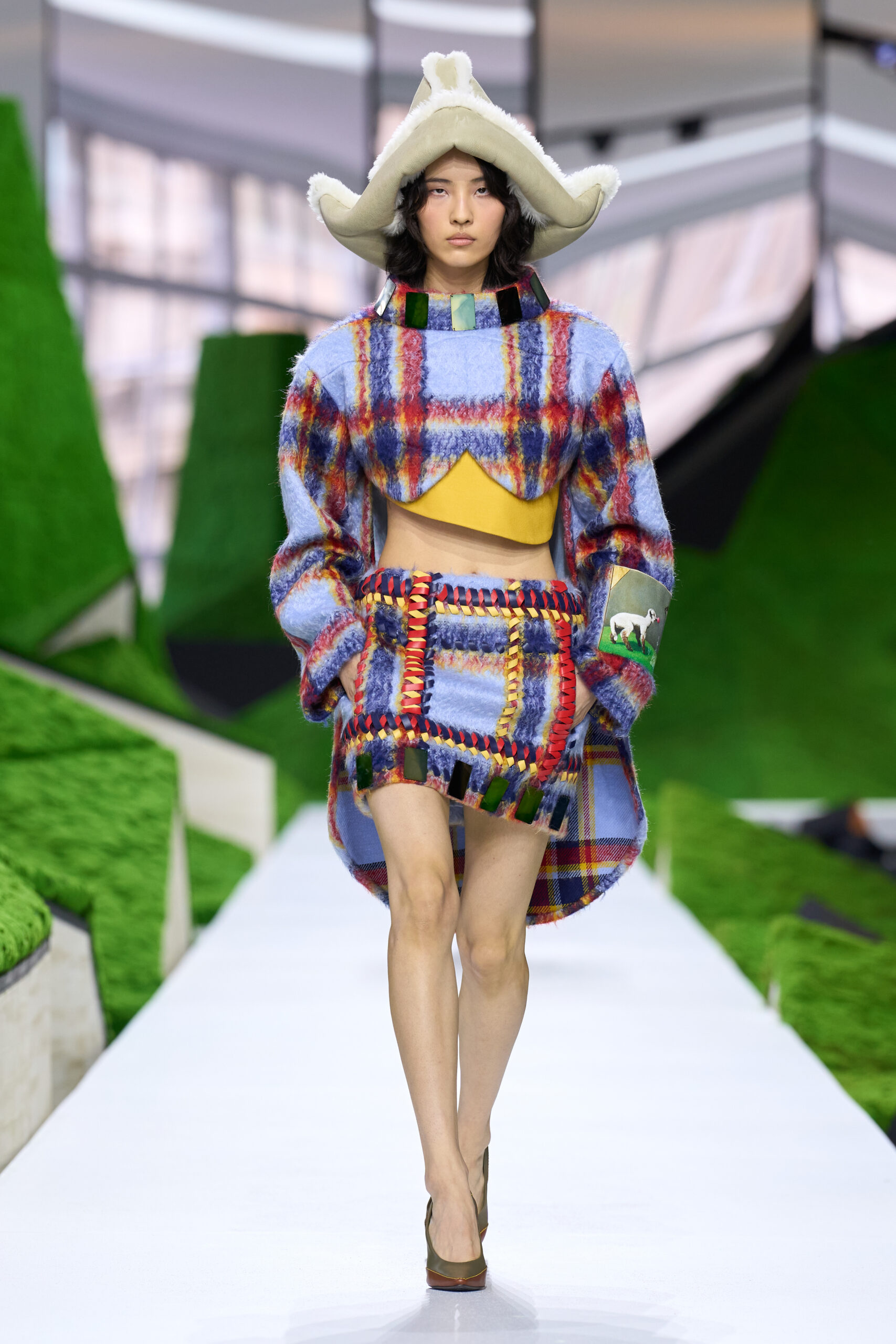
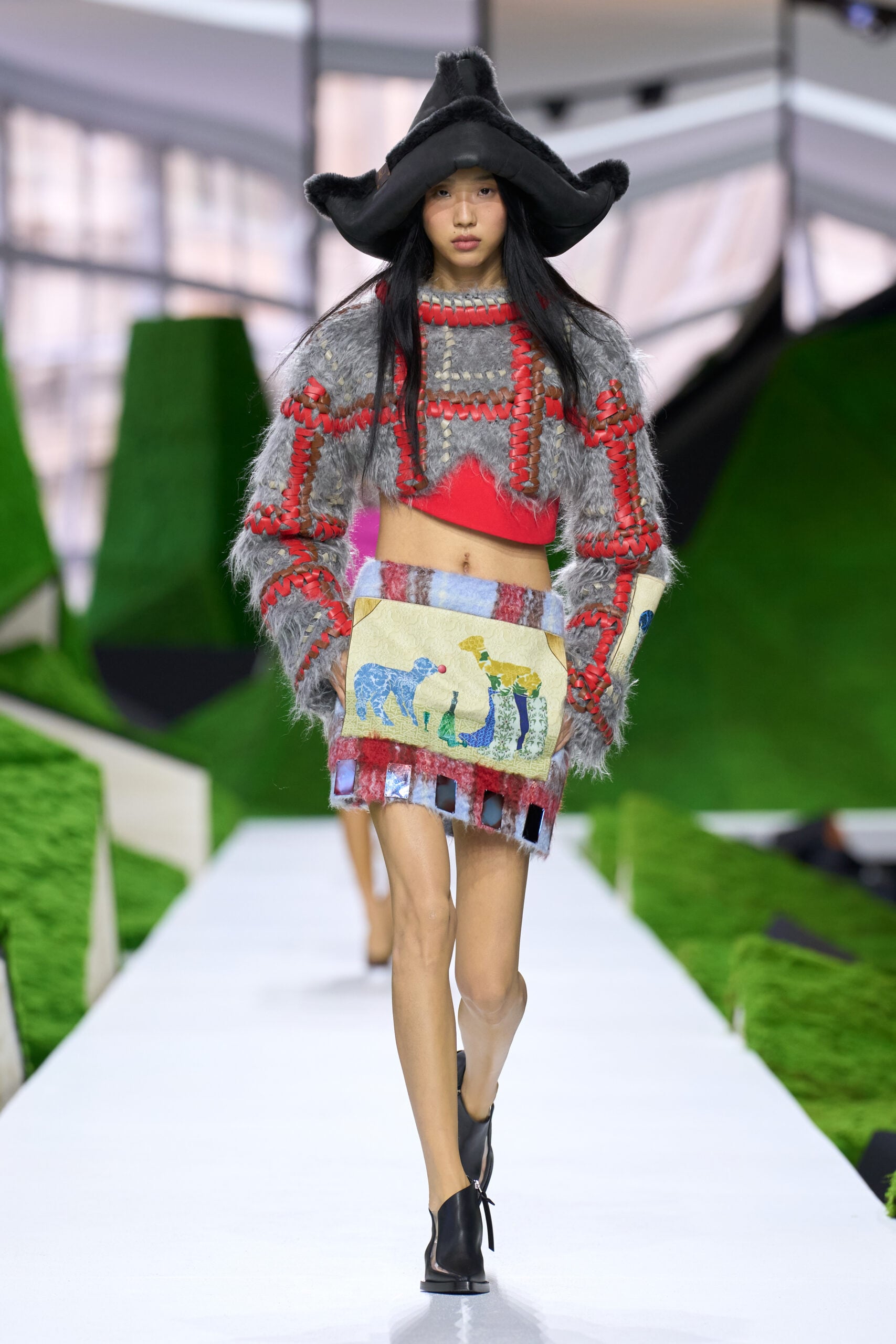
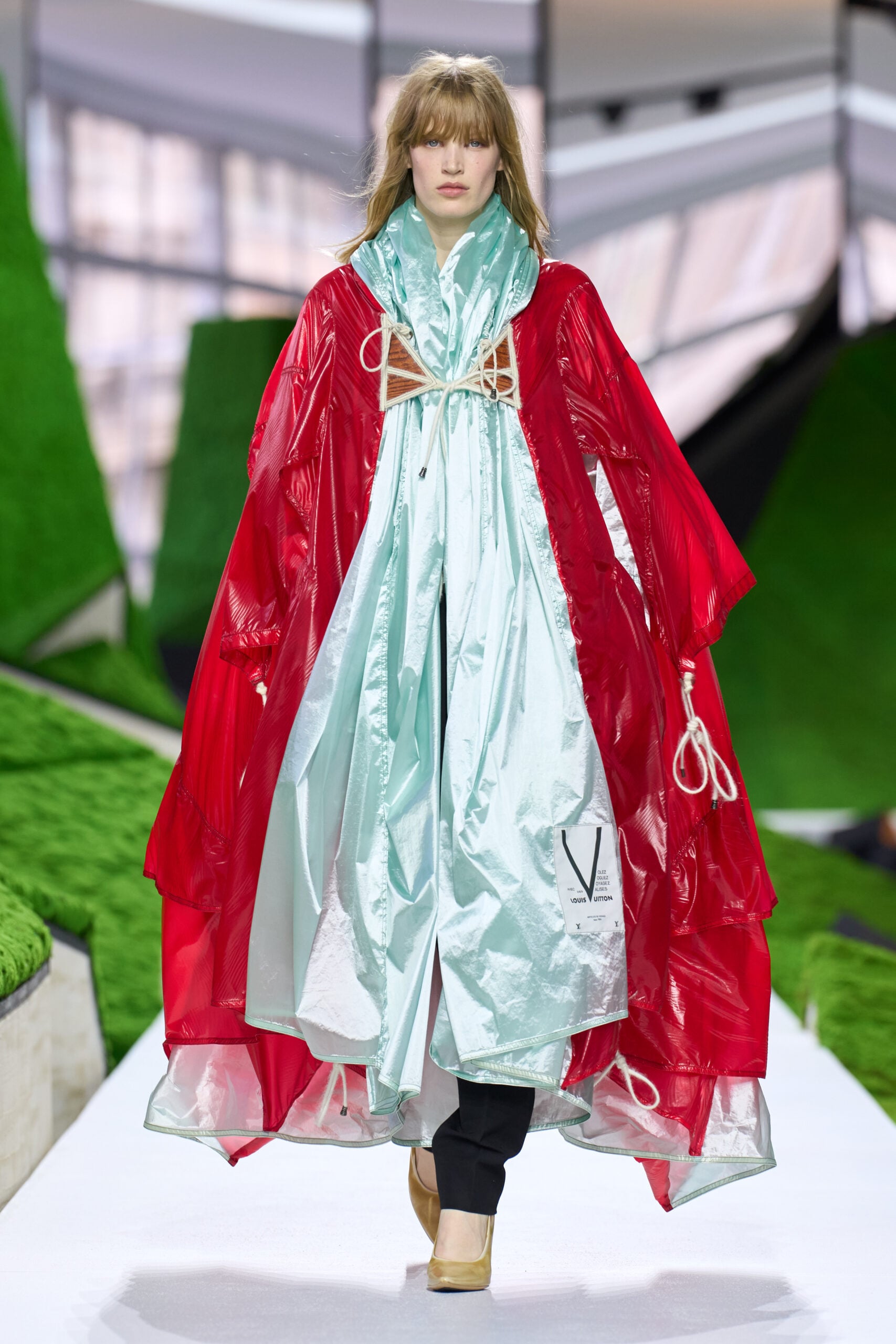
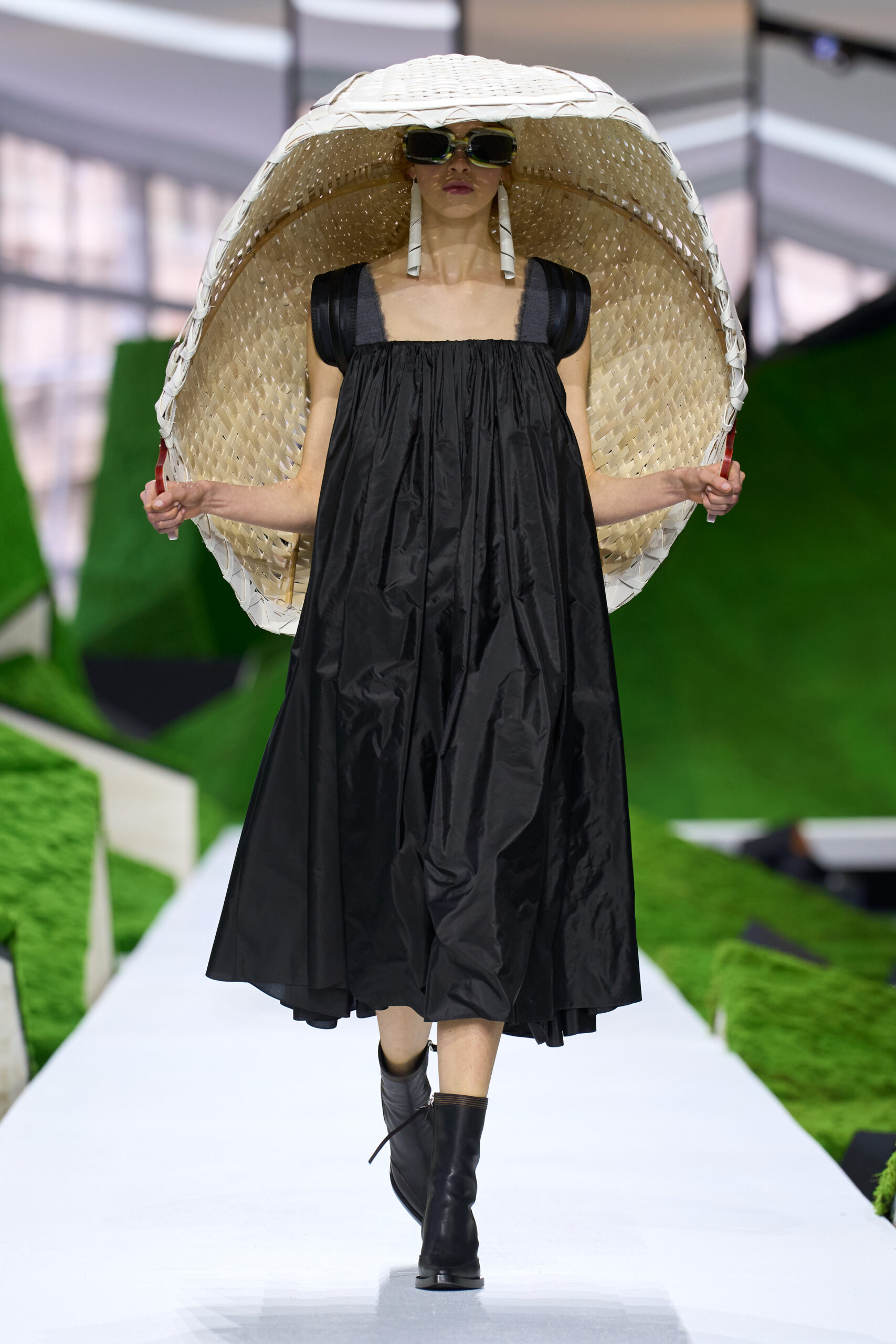
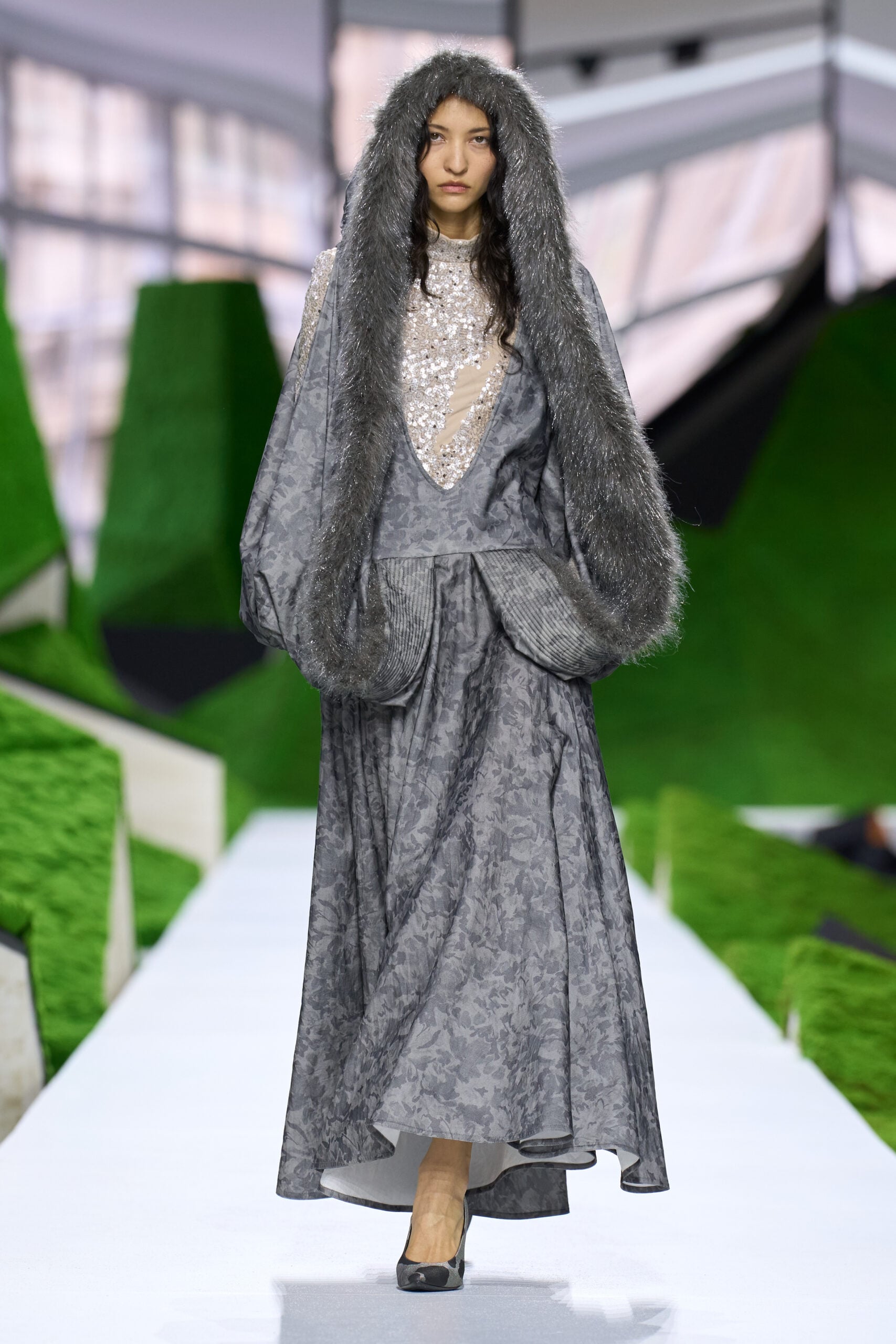
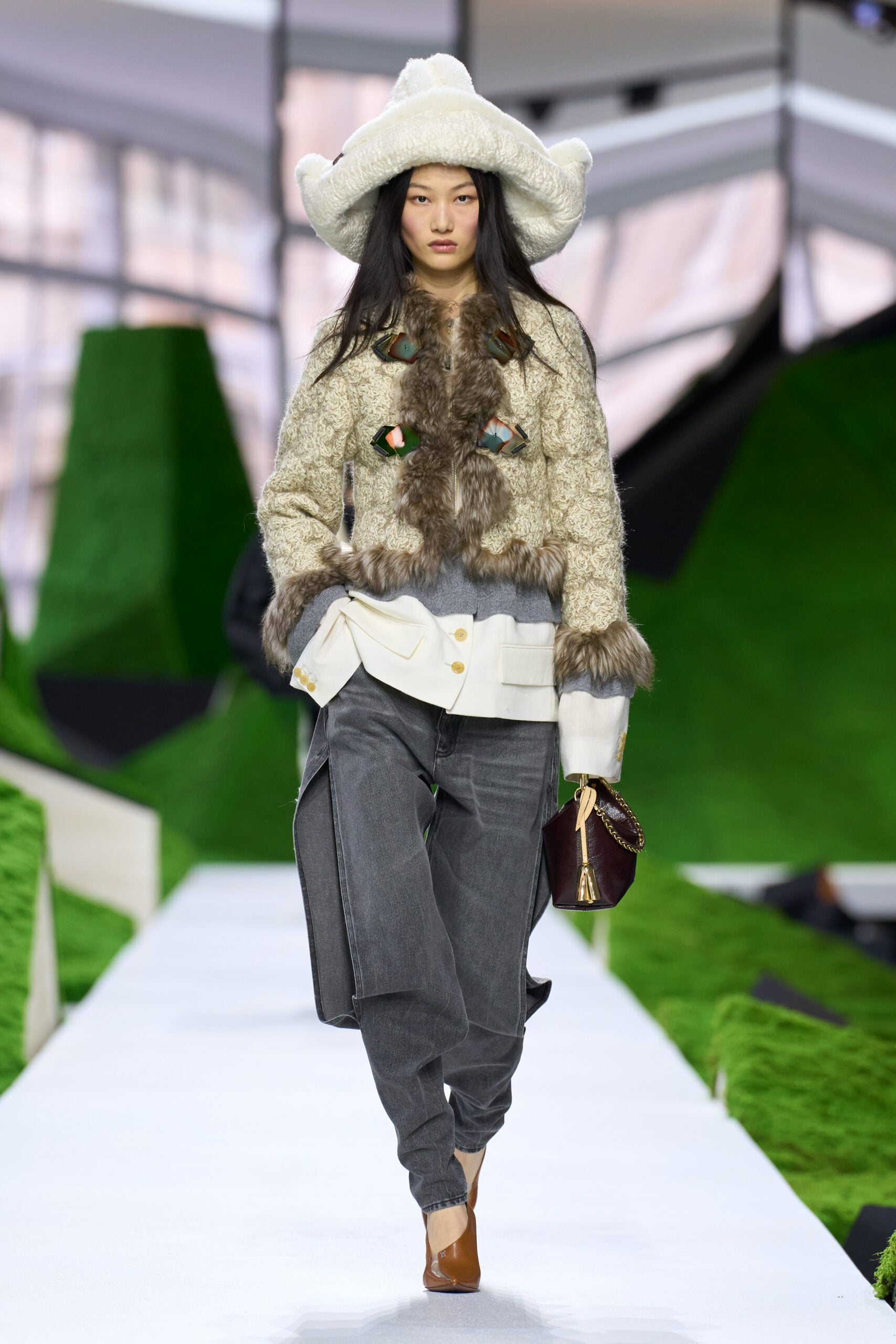
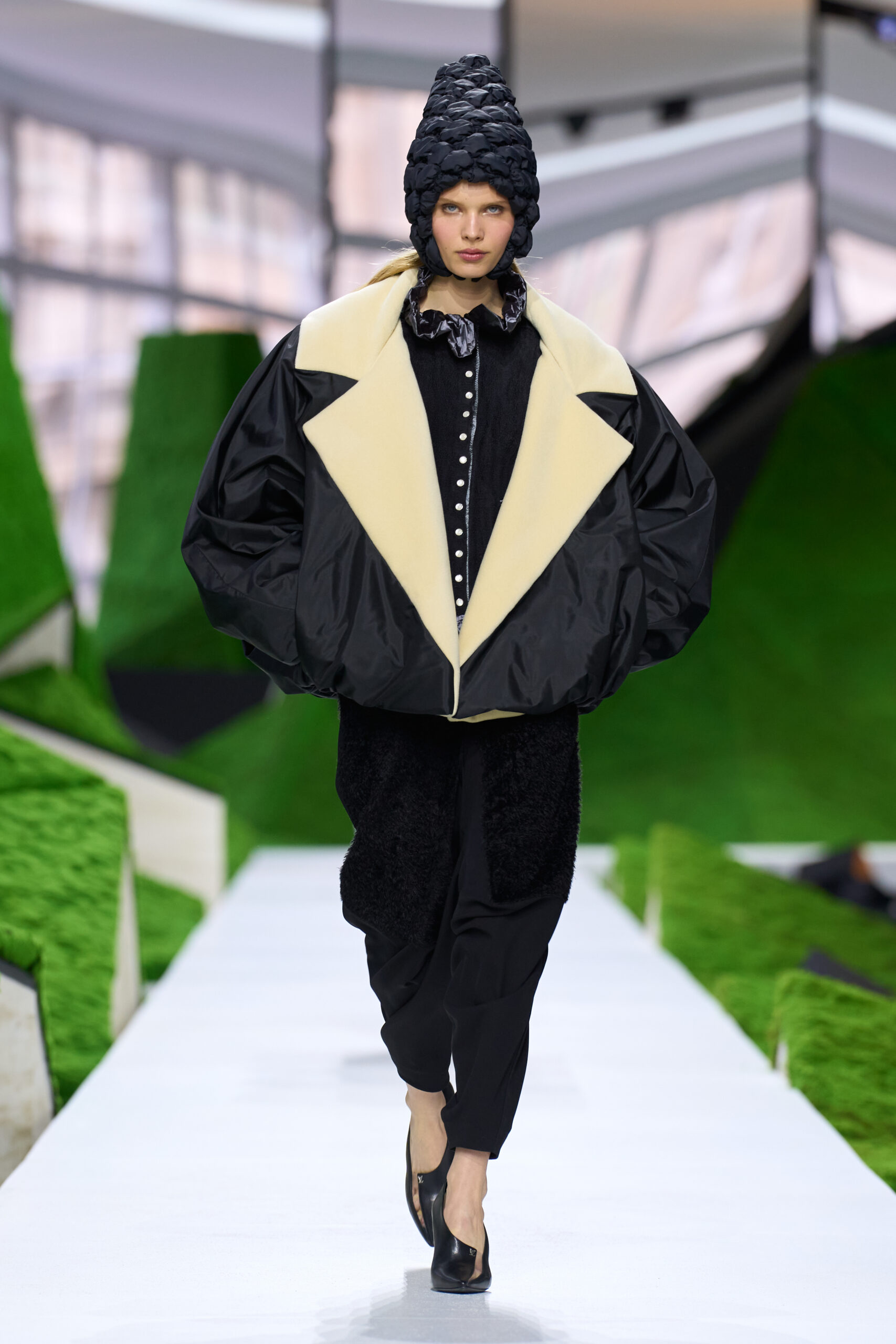
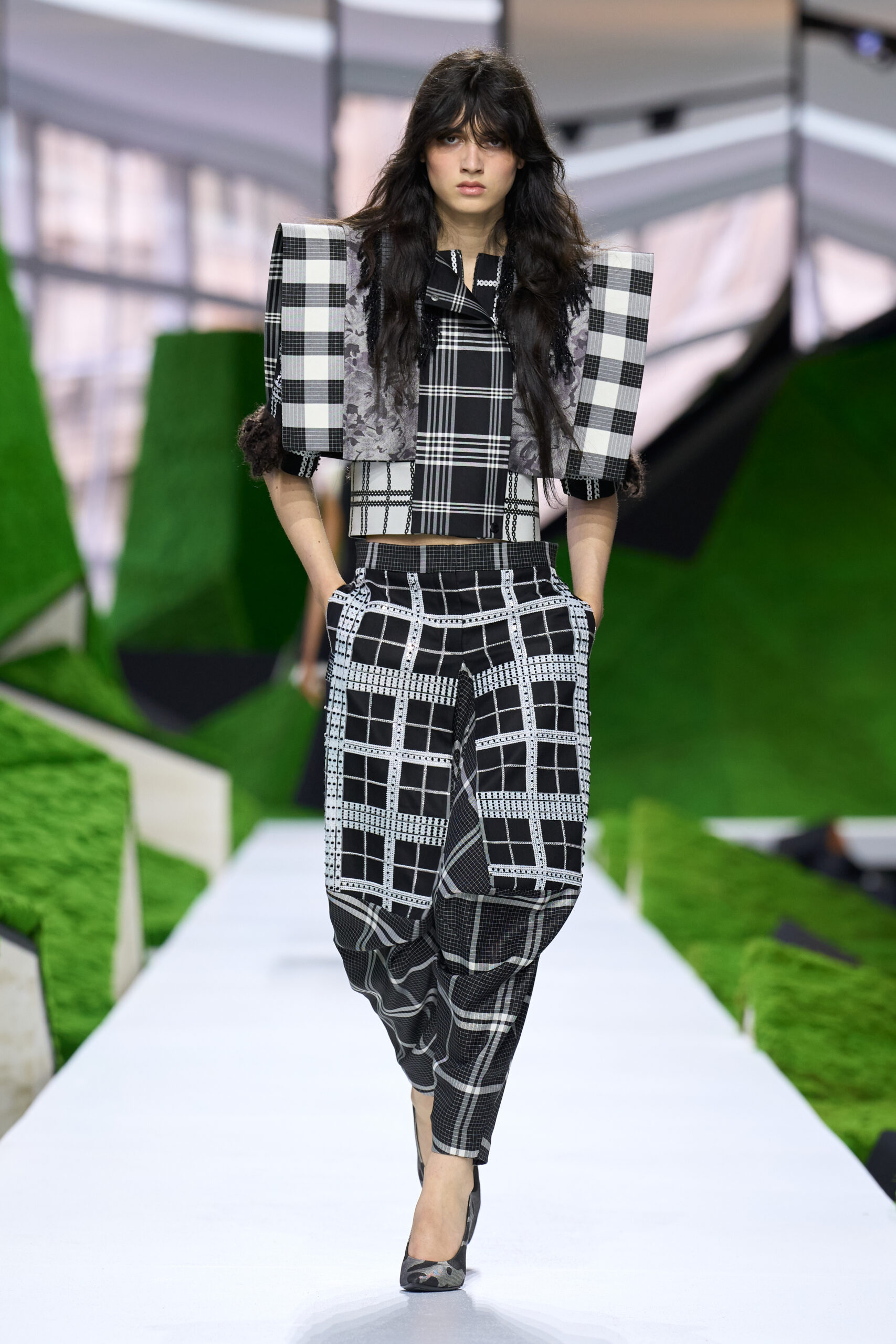
Ghesquière has long been a designer who looks forward by looking sideways, and here he turned his attention to nature, probing it not just for its beauty, but appreciating it as a design system in its own right. Mountains, plains and forests became metaphors for shape and structure, with silhouettes that appeared moulded by wind, rain and sun. The result was clothing that felt instinctive yet boldly futuristic, as though unearthed rather than constructed.
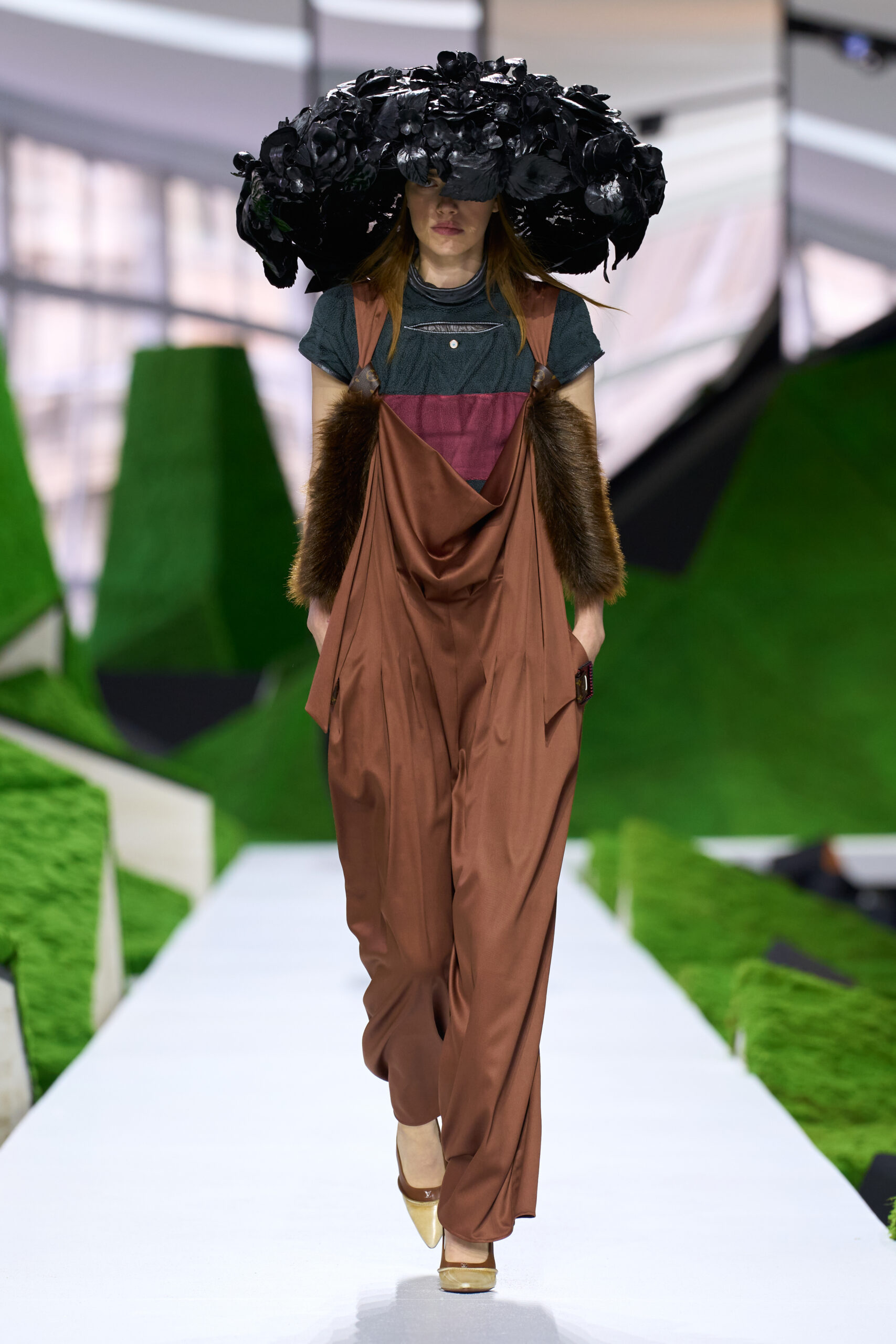
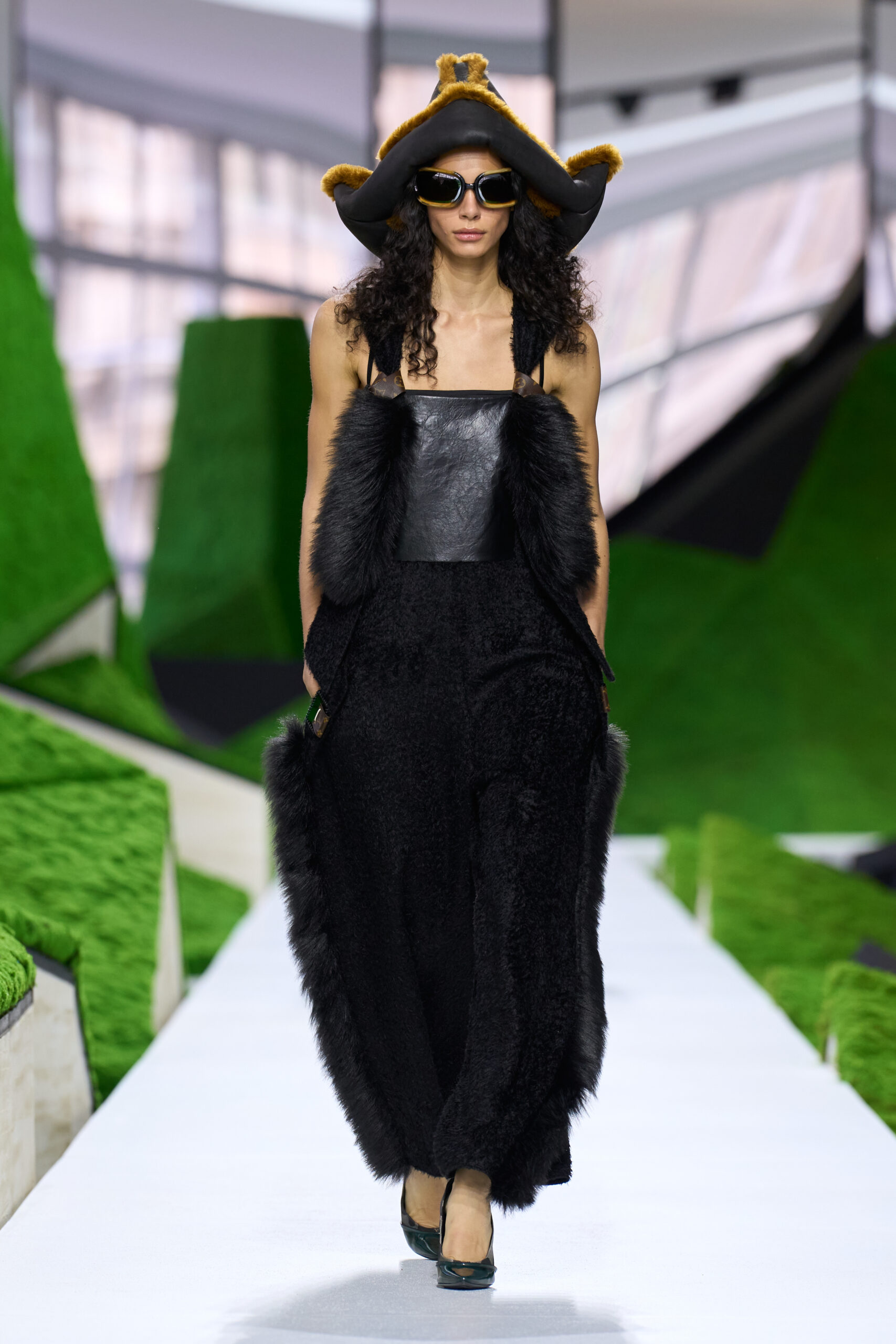
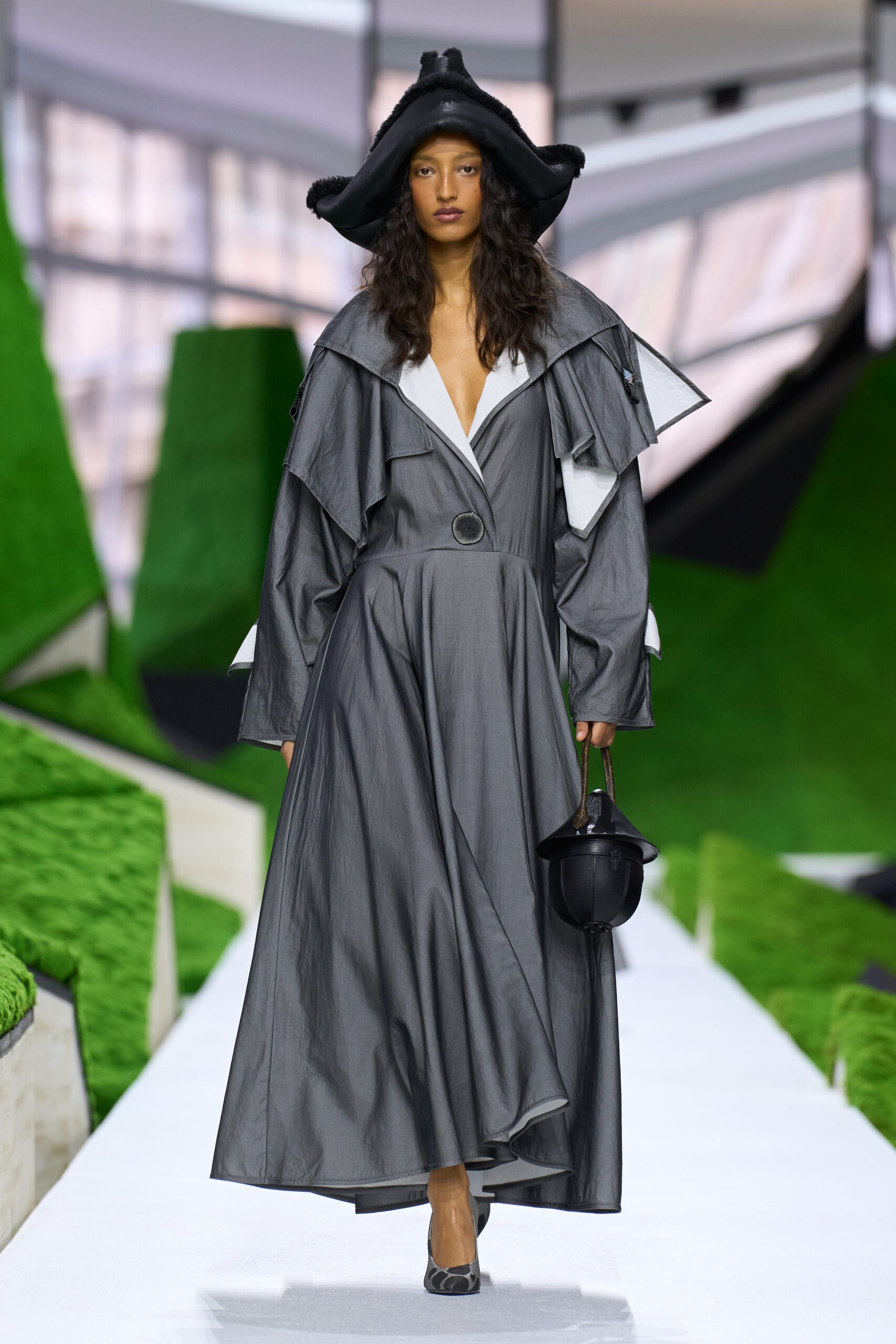
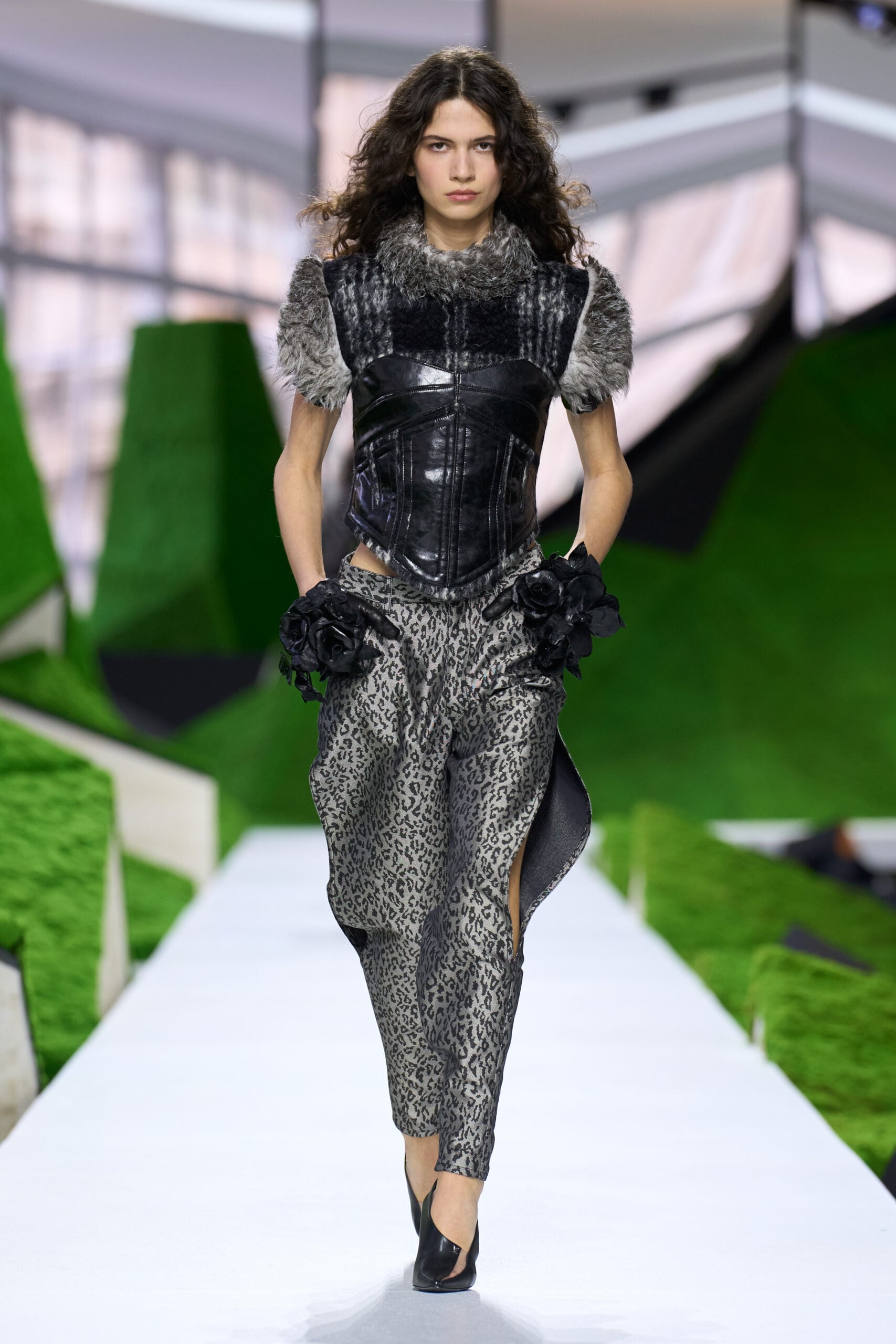
There was an intriguing sense of collage throughout, too. Animal-inspired motifs appeared on canvas and denim, while leather florals bloomed across coats and dresses, serving as sculptural appliqués. Some pieces evoked traditional dress, the kind shaped over generations by climate and labour, though translated through Vuitton’s crafted lens.
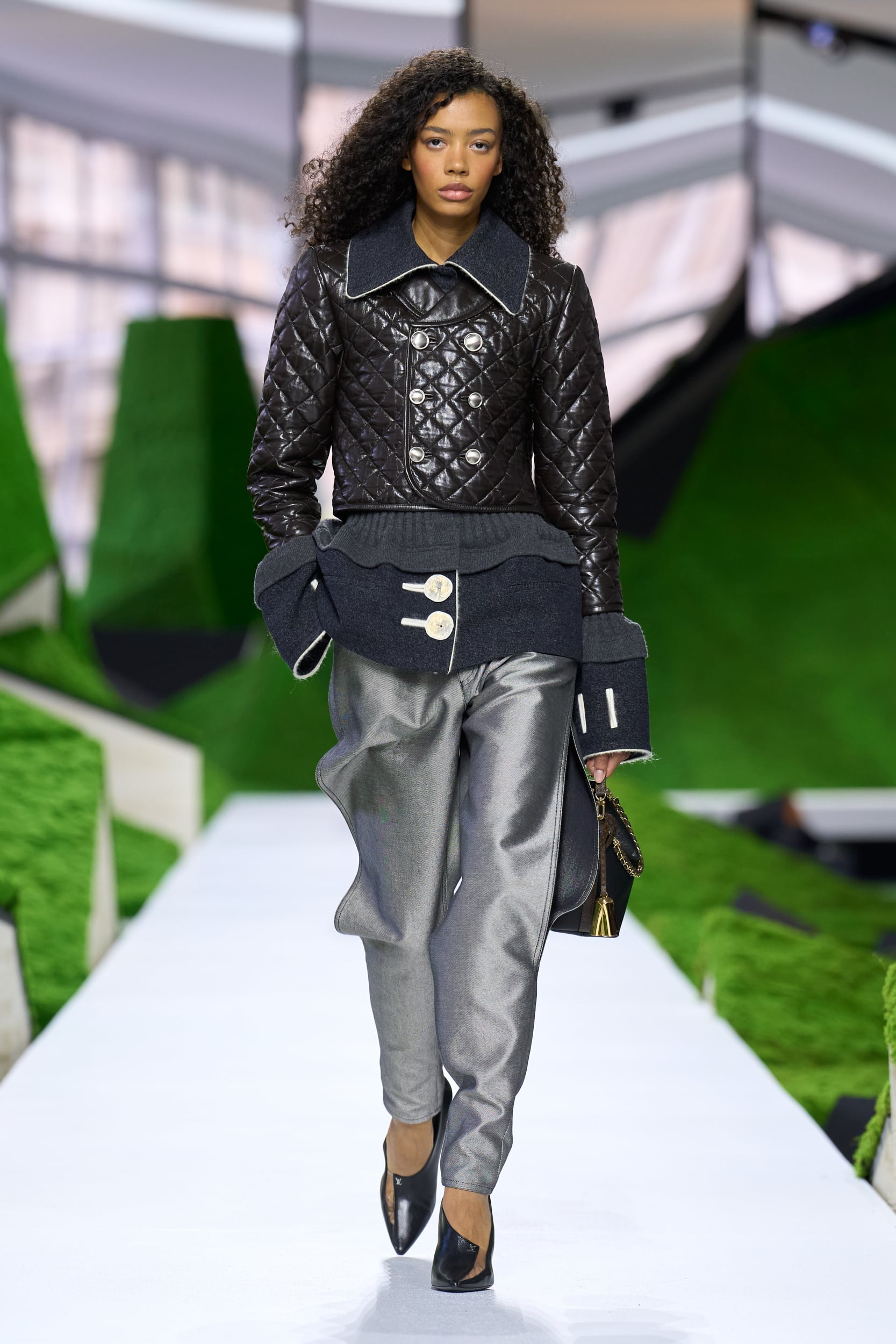
As we’ve come to expect from the Maison, craft and technology, past and future, walked hand in hand this season, with organic matter anchoring the vision. Buttons resembled polished stones; heels curved like antlers; surfaces were grooved and grained to mimic wood, but moved with surprising softness.
Accessories, naturally, bolstered the collection. The House’s heritage as a trunk maker came through in bags designed for movement and curiosity. A highlight was the return of the Louis Vuitton Noé bag, revived in its original proportions and colourway from 1932, cementing exploration as a part of Louis Vuitton’s DNA.
This story first appeared on GRAZIA International.
READ MORE