

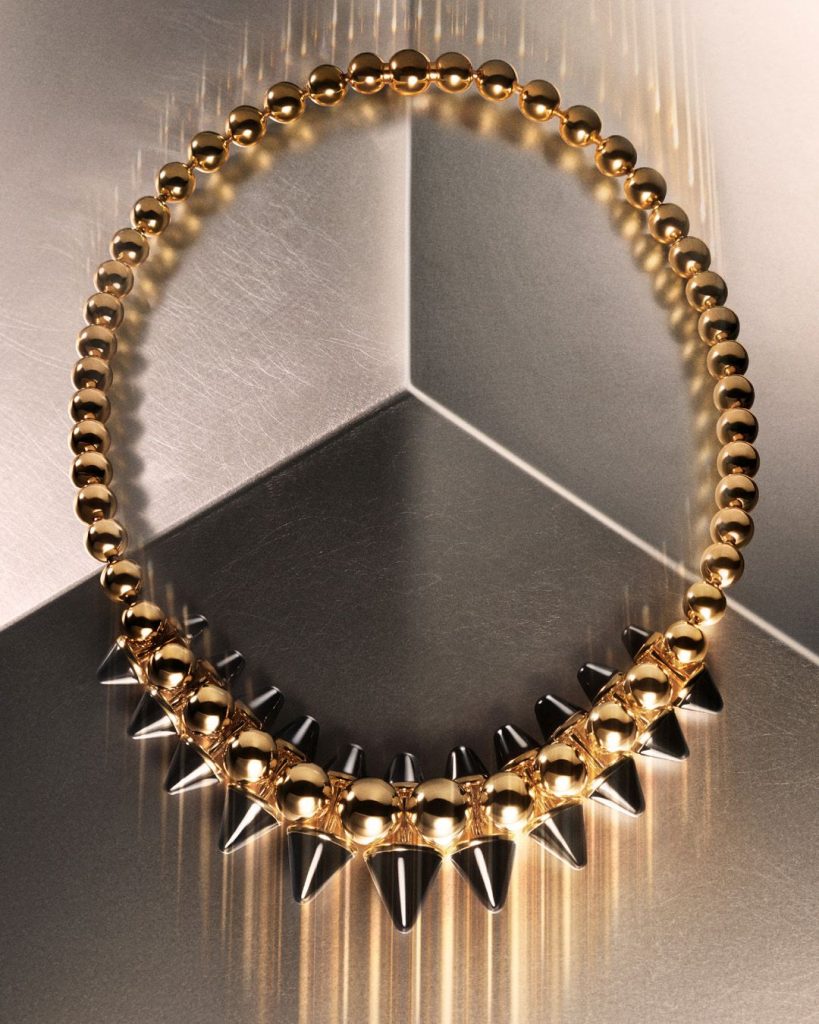
Somewhere in Cartier’s workshops, a ring is being shaken. Not to test it—it has already passed that—but to listen. The sound it makes, a small, considered rattle of gold against gold, was refined over the course of development until it arrived at something the maison felt was right: delicate enough to be private, present enough to be felt.
That a house would spend that kind of attention on a sound most wearers will hear only when alone, only in motion, tells you something about how Clash de Cartier is made—and what, precisely, it is made for. The ring in question is a three-finger piece in onyx and yellow gold, one of the new extra-large Clash de Cartier creations that mark the collection’s most ambitious expansion to date.
But to understand what makes it significant, it helps to go back to the beginning—or at least to the beginning of this particular evolution. Clash de Cartier has always been built on a productive contradiction. Sharp studs and soft, rounded contours. Architectural rigidity and subtle, living movement. A collection that looks hard and feels intimate.
The new pieces don’t resolve that tension so much as press further into it, asking how much more the language can carry—how much colour, how much scale, how much engineering—before it becomes something else entirely. The answer, as it turns out, is more than you’d expect.
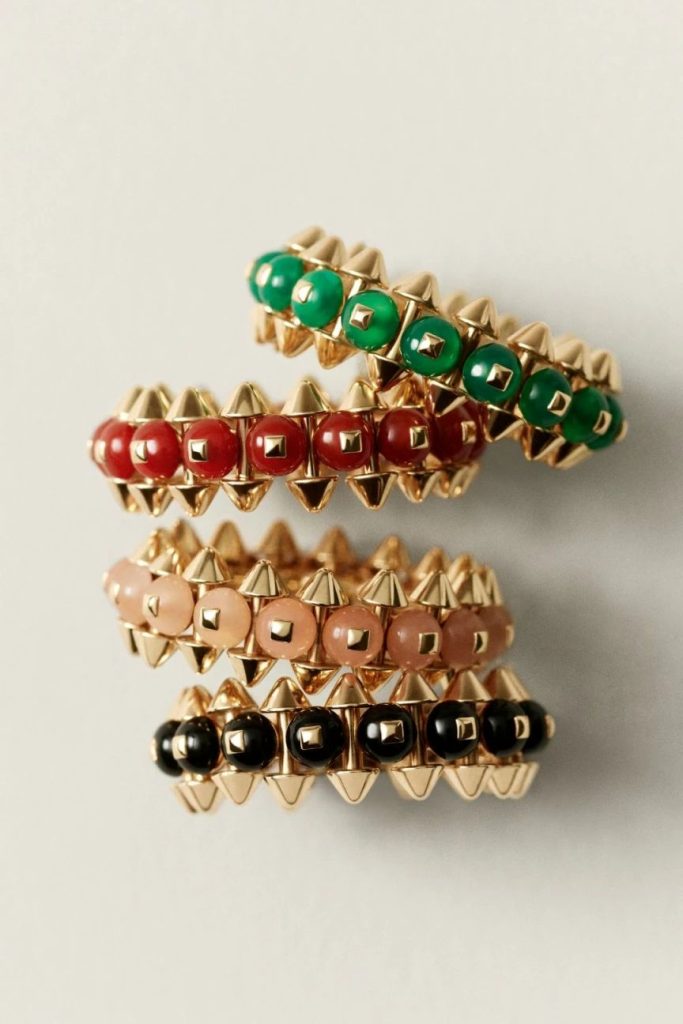
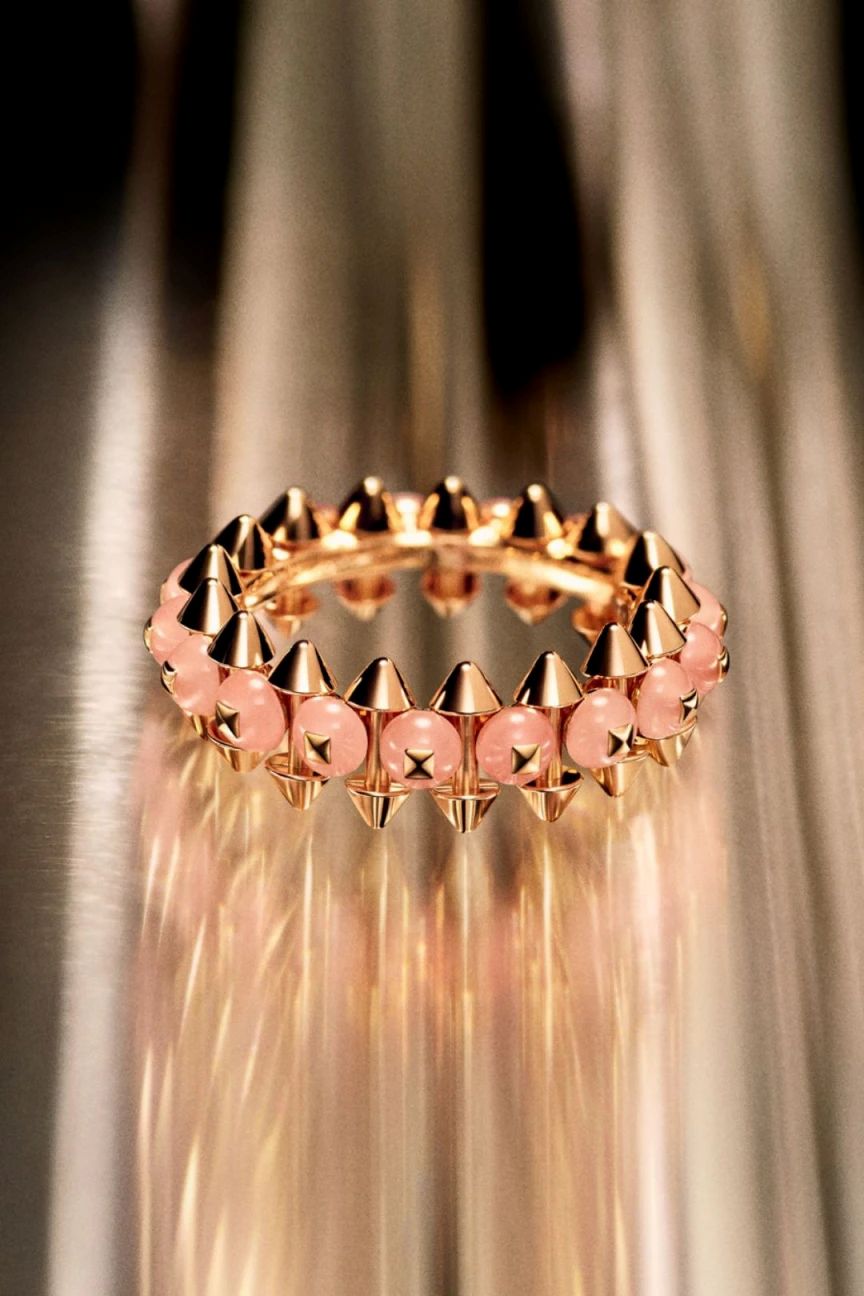
The first change is chromatic. Red- and green-dyed agate, pink chalcedony, and onyx enter the collection’s vocabulary, introducing a warmth that the all-gold versions never quite had. The agates are dyed eight times. This is not an approximation—each immersion is deliberate, the repetition building depth of colour the way a painter builds a glaze, layer over layer, until the surface holds the light differently. The target, Cartier says, is the saturated intensity of its Tutti Frutti high jewellery: those legendary pieces where rubies, emeralds, and sapphires pressed together in chromatic abundance.
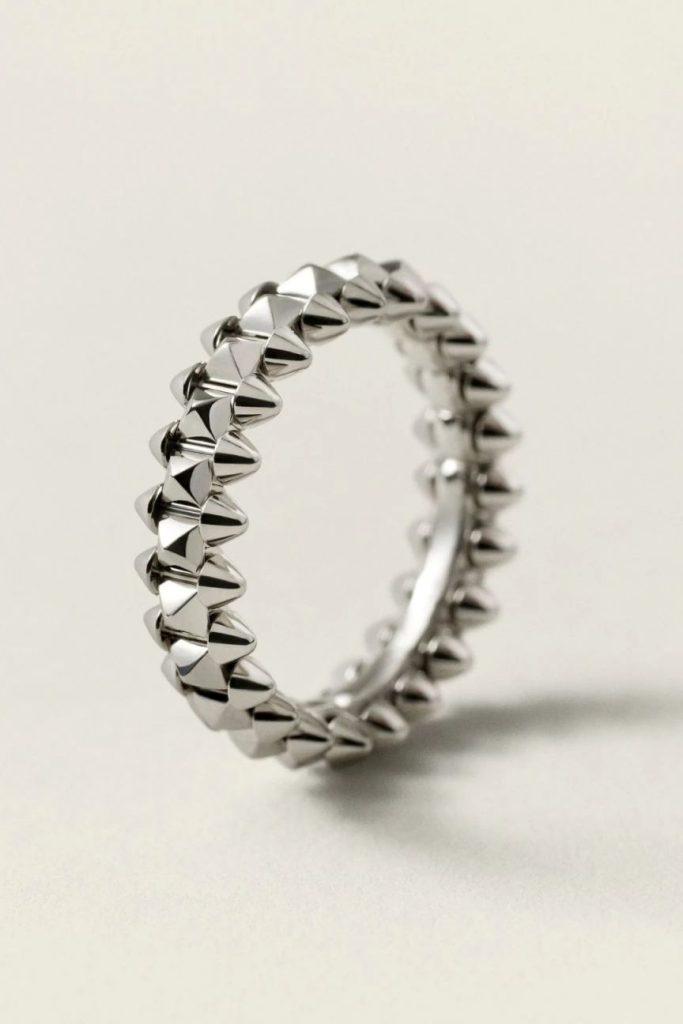
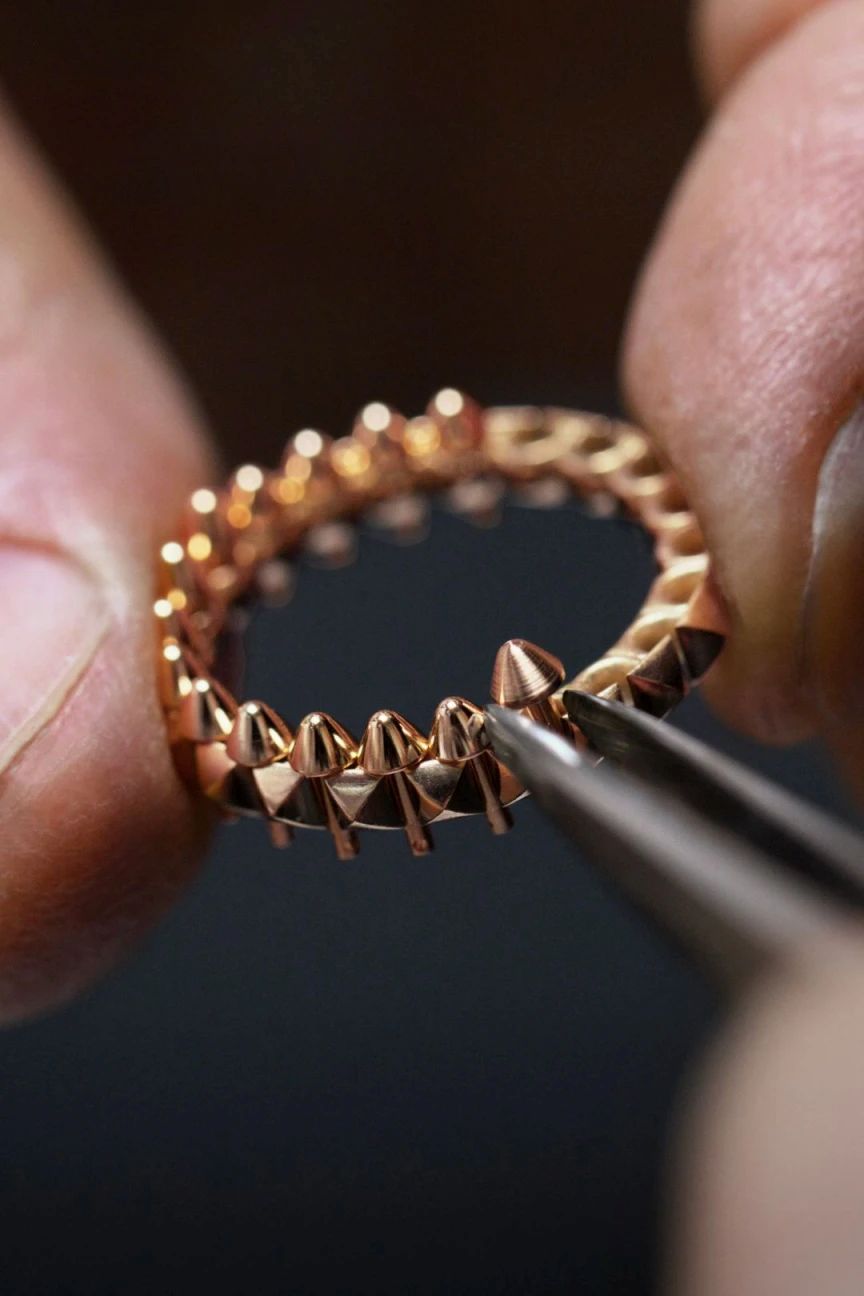
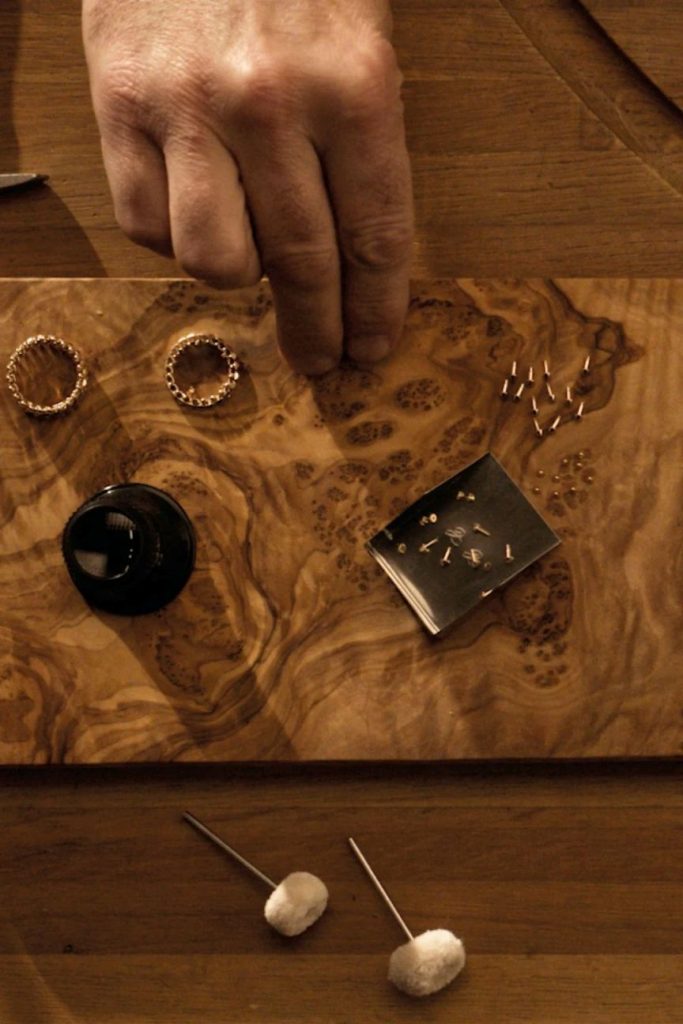
Accommodating those stones within Clash de Cartier’s existing architecture required its own reckoning. The collection’s signature construction—studs, beads, and clous carrés interlocking into a kinetic geometric mesh, each bead pierced and secured by a clou de Paris nail—was already among fine jewellery’s more technically demanding.
The coloured stone versions contain twice as many components as their allgold counterparts. Each additional element requires its own tolerances, its own finishing, its own place in the assembly sequence. The pieces that result—rings, pendants, earrings—carry their complexity lightly, which is, of course, the point.
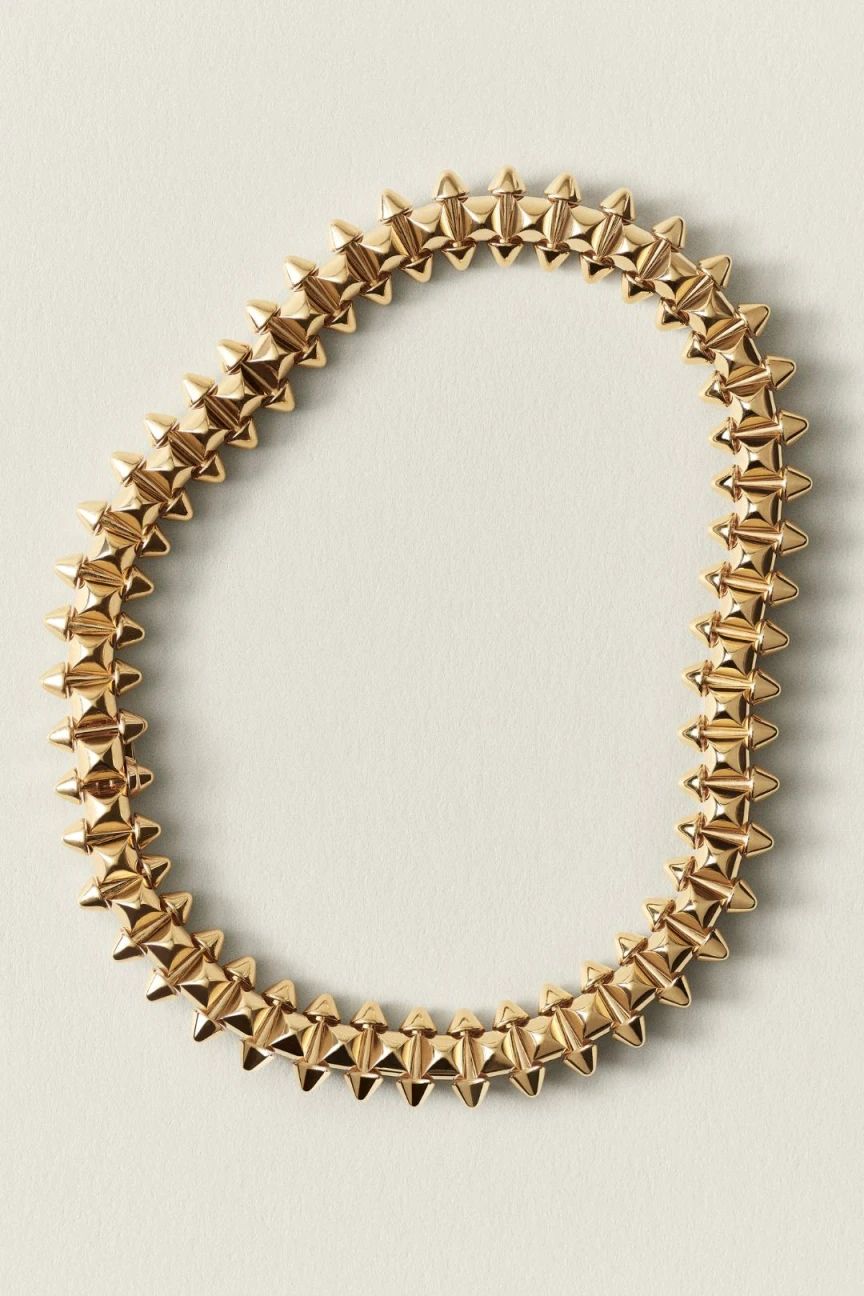
Scale introduces a different set of problems. The extra-large bracelets, necklaces, and the three-finger ring push Clash de Cartier into territory where presence becomes structural—where a piece must hold its form across a wider span, move with a body rather than against it, and carry weight without announcing it.
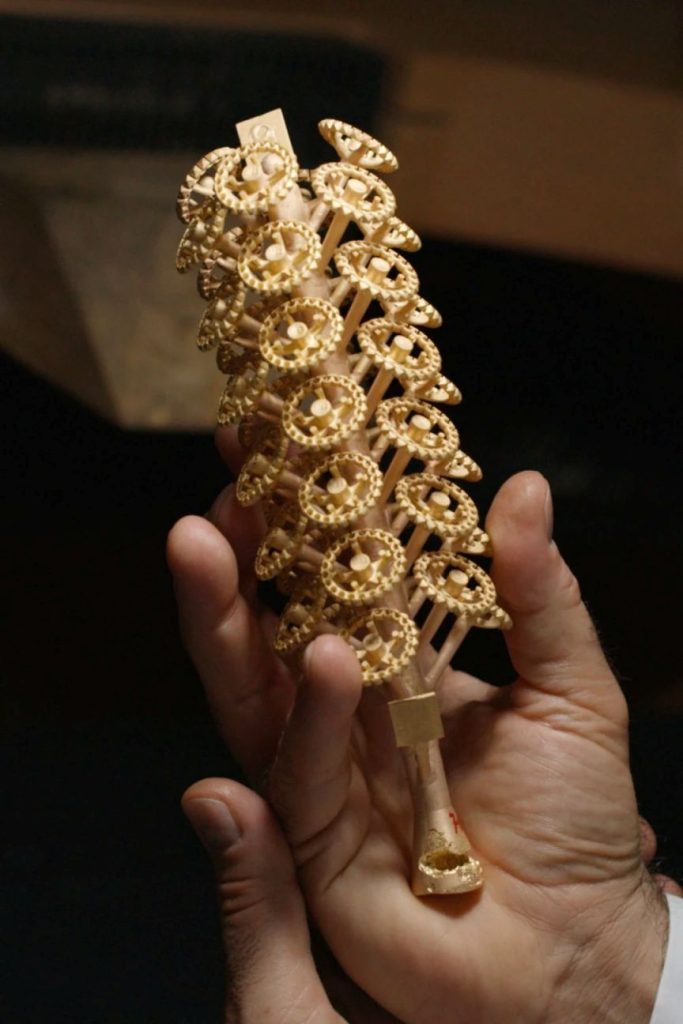
Cartier’s solution draws on what it describes as a duality of savoir-faire: lost-wax casting, one of jewellery’s oldest techniques, working in concert with advanced machining. In some pieces, up to 600 individual components are assembled, each articulated element hand-polished, then linked so that the whole remains connected yet entirely free to move. Against the neck or the wrist, the result yields—fluid, moulding itself to the body with a suppleness that reads as almost implausible given what it took to build.


And then there is the sound. The three-finger ring, when moved, produces something between a chime and a whisper—a sound the development team returned to repeatedly, adjusting until it felt proportionate to the piece: neither too present nor too absent.
In the context of high jewellery, where so much attention is paid to what is seen and almost none to what is heard, this kind of precision is unusual enough to warrant a pause. It speaks to a particular idea of what a finished piece of jewellery is—not a static object to be looked at, but something that remains in dialogue with the person wearing it, even in an empty room.
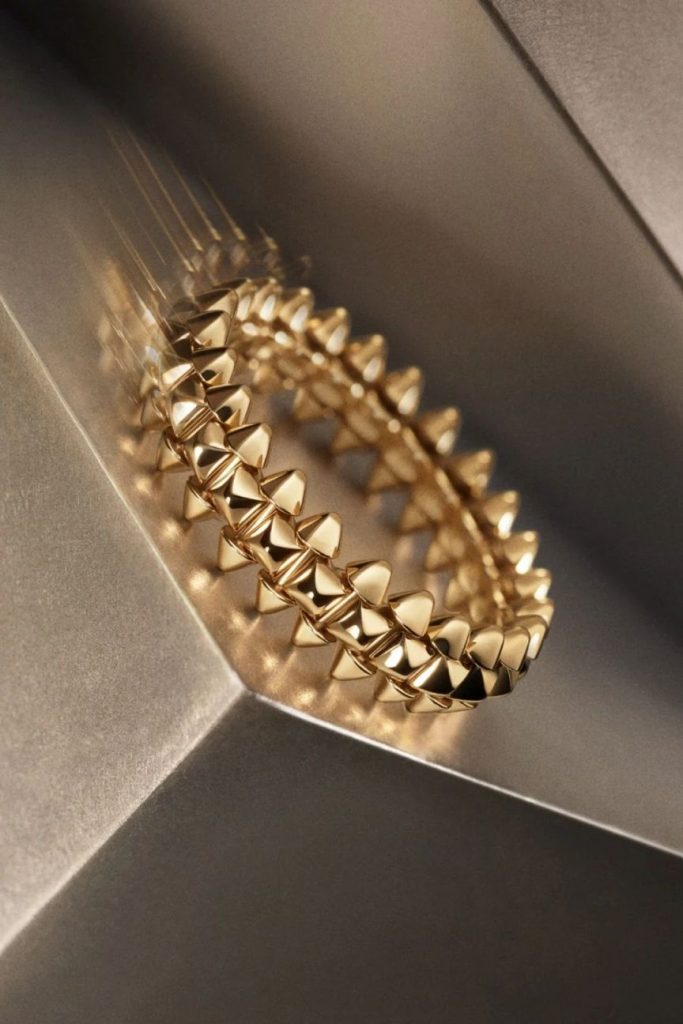
The new Clash de Cartier earrings extend this logic into something quieter. Two flexible lines in rose gold or white gold wrap the ear differently depending on how they are worn—both lines together, front and back, for a fuller presence; or a single line on the front alone for something more restrained. The same piece, two different registers. It is a small detail, but it speaks to the same thinking that runs through everything here: that how a piece behaves on the body matters as much as how it looks off it.
What emerges across all of it is a portrait of a collection being pushed past its own edges—through colour, through scale, through a flexibility that borders on the structural—and holding. The rough draft, in this case, involved eight rounds of dyeing, 600 components, and a sound tuned for an audience of one. The finished piece is what you wear. The thinking behind it is something else: a record of how far a maison will go when no one is watching, in pursuit of something only the wearer will ever know is there. And that is a clash worth leaning into.
This story first appeared on GRAZIA Singapore.
READ MORE