
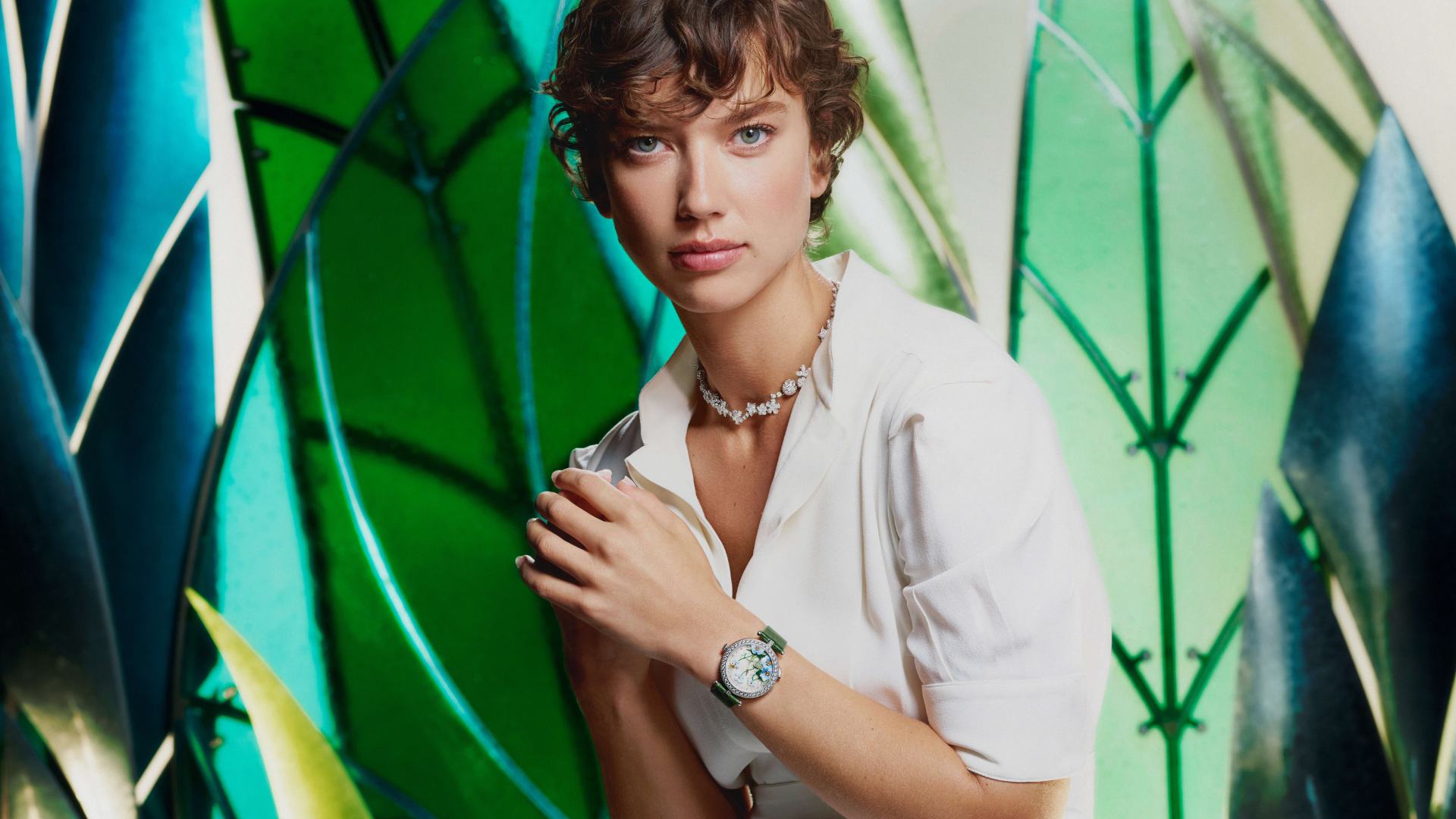
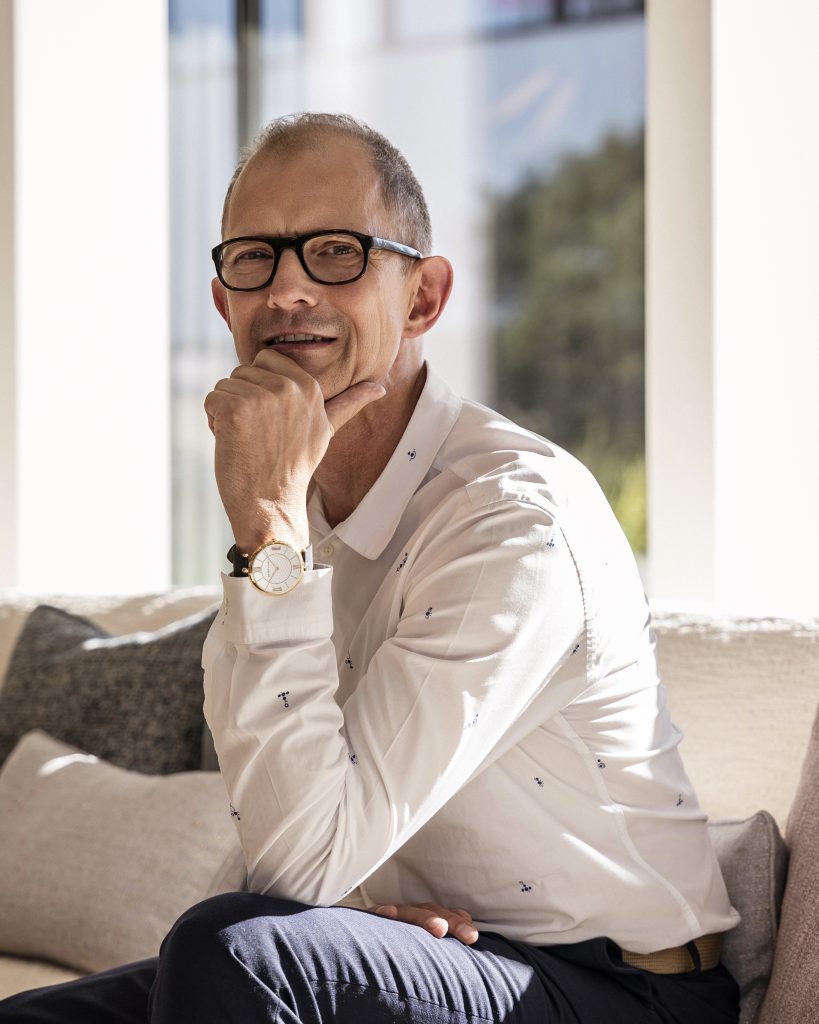
In the world of high watchmaking, complications are typically measured in mechanical prowess. At Van Cleef & Arpels, they are measured in emotion. For the maison’s Head of Research & Development for Watchmaking, Rainer Bernard, a Poetic Complication does not begin with gears or bridges. Instead, it begins with a story.
From a technical R&D perspective, what defines a Poetic Complication?
A Poetic Complication is a watch where time is part of the story. It’s not indicated in a separate way; it’s indicated through the story. The first Poetic Complication, introduced in 2006, featured a dial where half remained still while a disc behind it rotated so slowly it took one year to complete one tour. On that disc, we painted the changing seasons in enamel, nature evolving almost imperceptibly. You couldn’t see the movement at a glance; that slowness became the poetry.
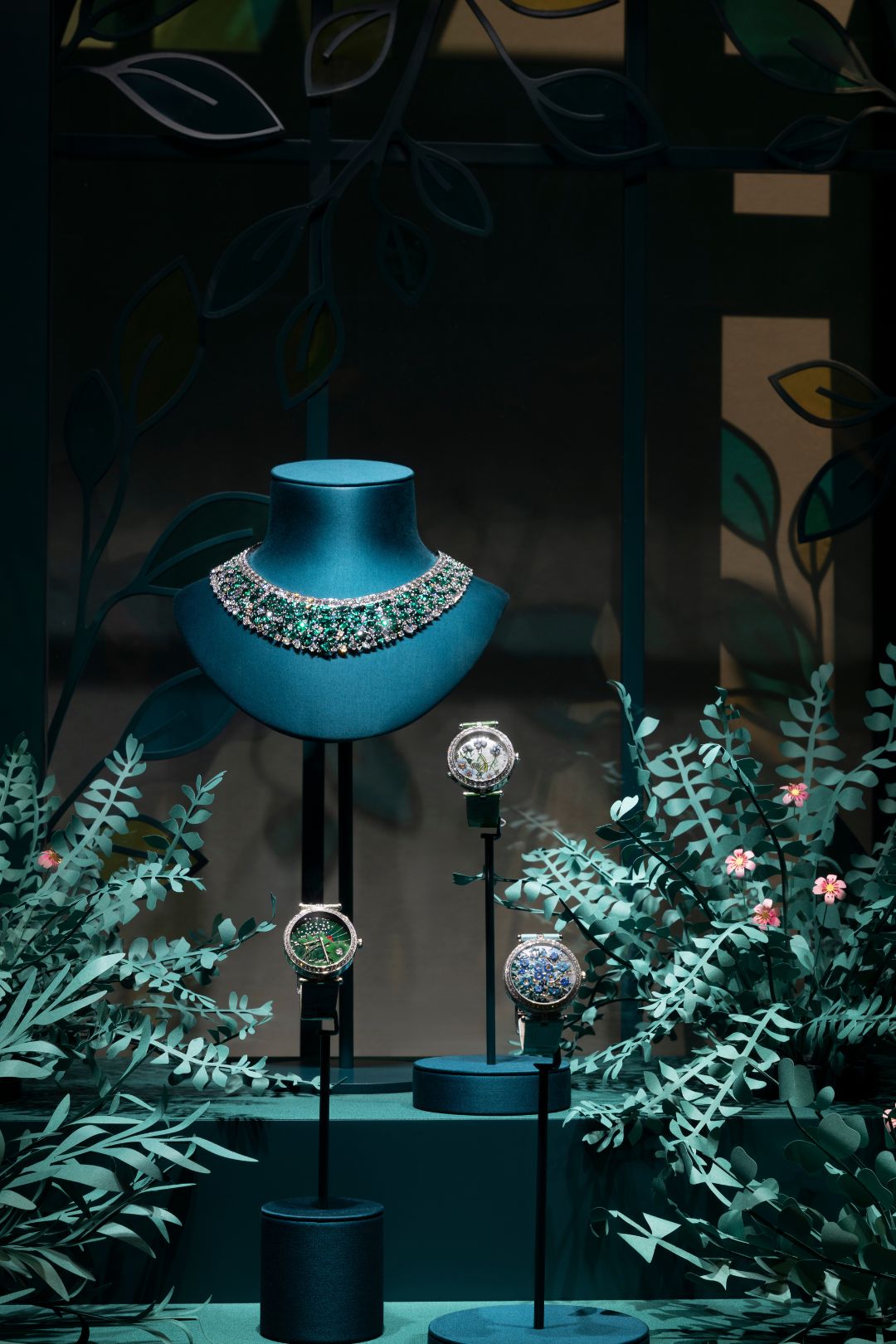
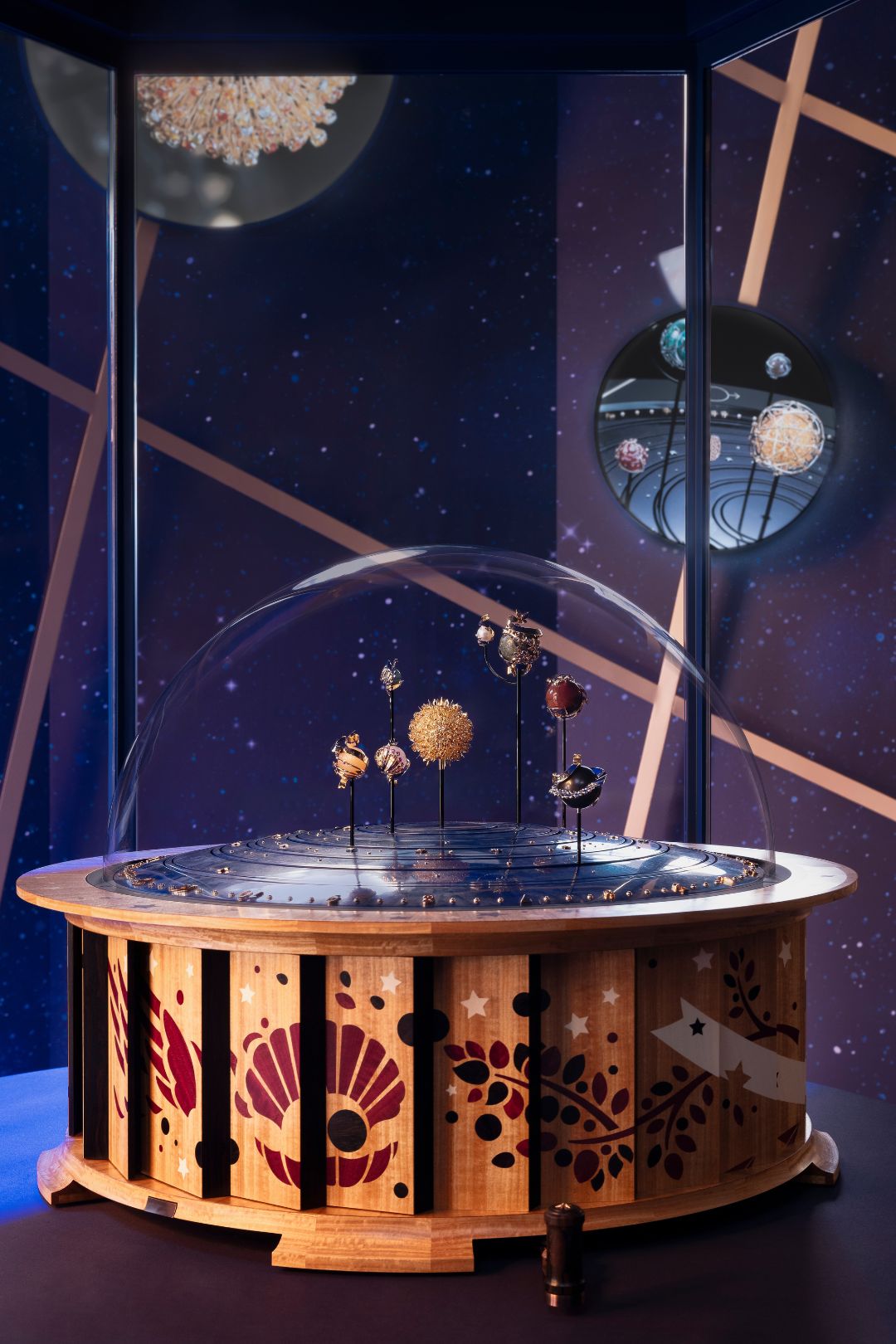
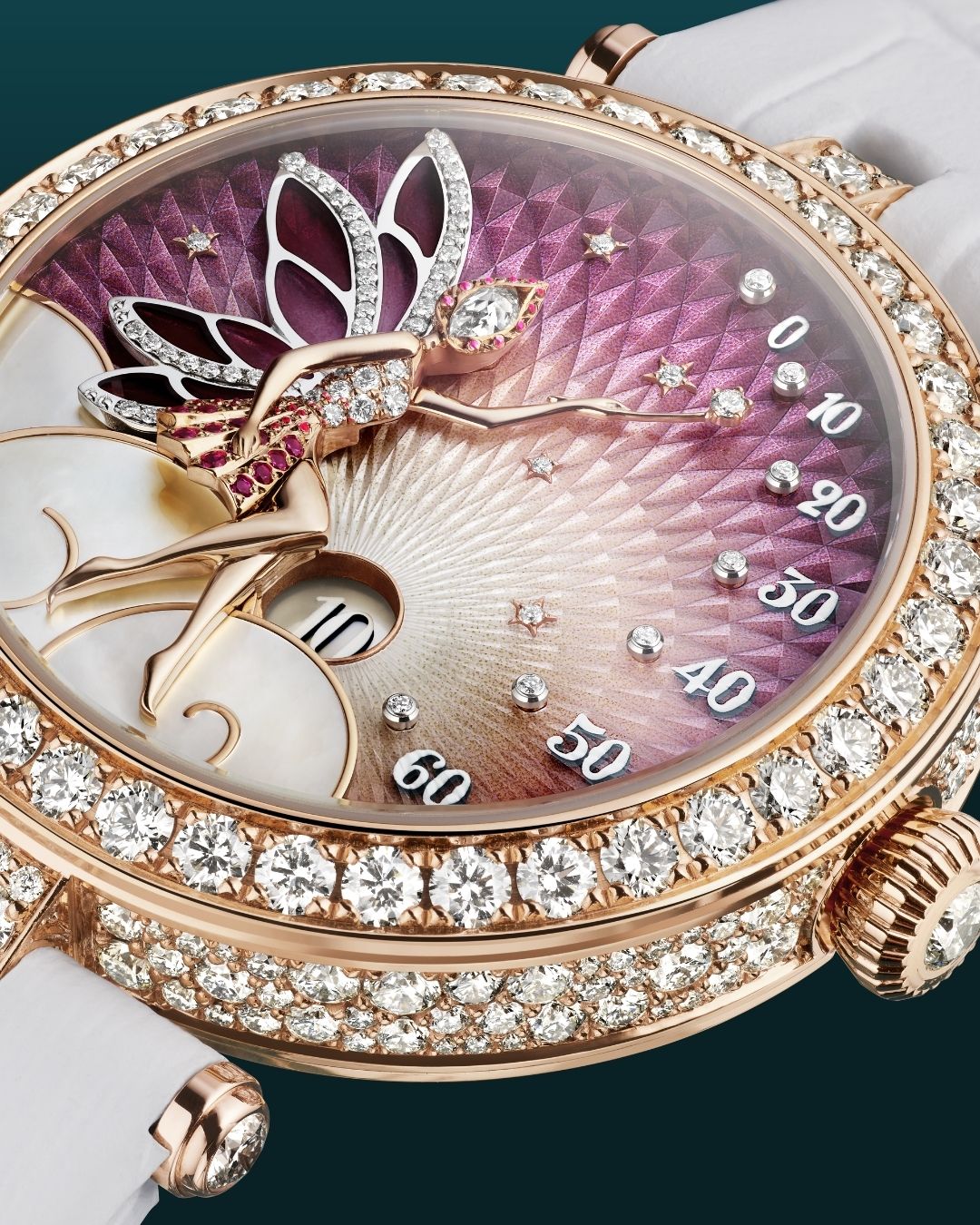
Since then, we’ve continued to express time through storytelling: flowers opening and closing, butterflies drifting through a garden, lovers walking across a bridge and meeting for a kiss. The technique behind it always depends on the story we want to tell. So, it’s not a technique defining whether it’s a Poetic Complication or not, it’s the story. Sometimes the mechanism is complex; sometimes it is technically simple. The only true criterion is that there is a story, and we animate it through a movement created specifically for it.
So, does the technicality always serve the story?
Yes, because at the centre, when we start developing a piece, we talk about the story. There is no technique yet, nothing. We never do technical development beforehand. We sit together, the creative studio in Paris, the engineers, and the métiers d’art artisans, and say, “Wow, this story is cool. It’s awesome.” From there, the idea is born.
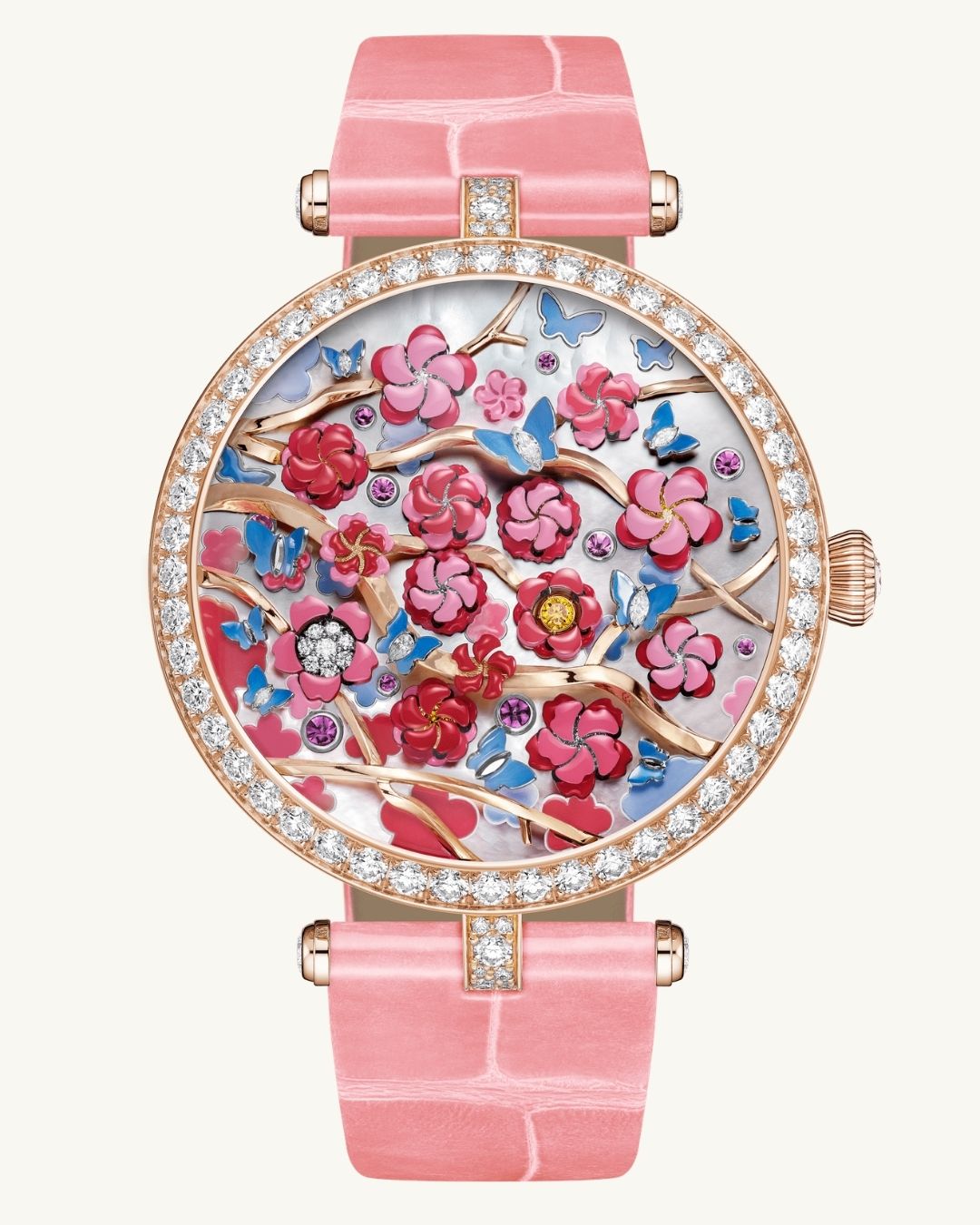
For example, with Brise d’Été, we have a summer garden with summer flowers; it’s bright, and you see the flowers. You also have a butterfly or two indicating the time. Then we have a breeze flowing through that garden so that you can see the effect of the wind on it. That was the idea, no technical blueprint, just an intention, and it took four years to transform that idea into a watch.
Do you ever adjust the story during development?
Yes, all the time. We have to adjust because the initial story is cloudy. You don’t know exactly how it looks, right? It’s an intention. It’s just a line, a phrase. Then we have to fill it with life. Throughout the development process, we don’t normally change the story, but we change how the story looks.
The creative studio in Paris does the drawings, the aesthetics, the colours, and together we create the symphony of what goes where, how we can do this, and how we can animate it. We love that. We love the process.
Which recent complication was the most technically daring?
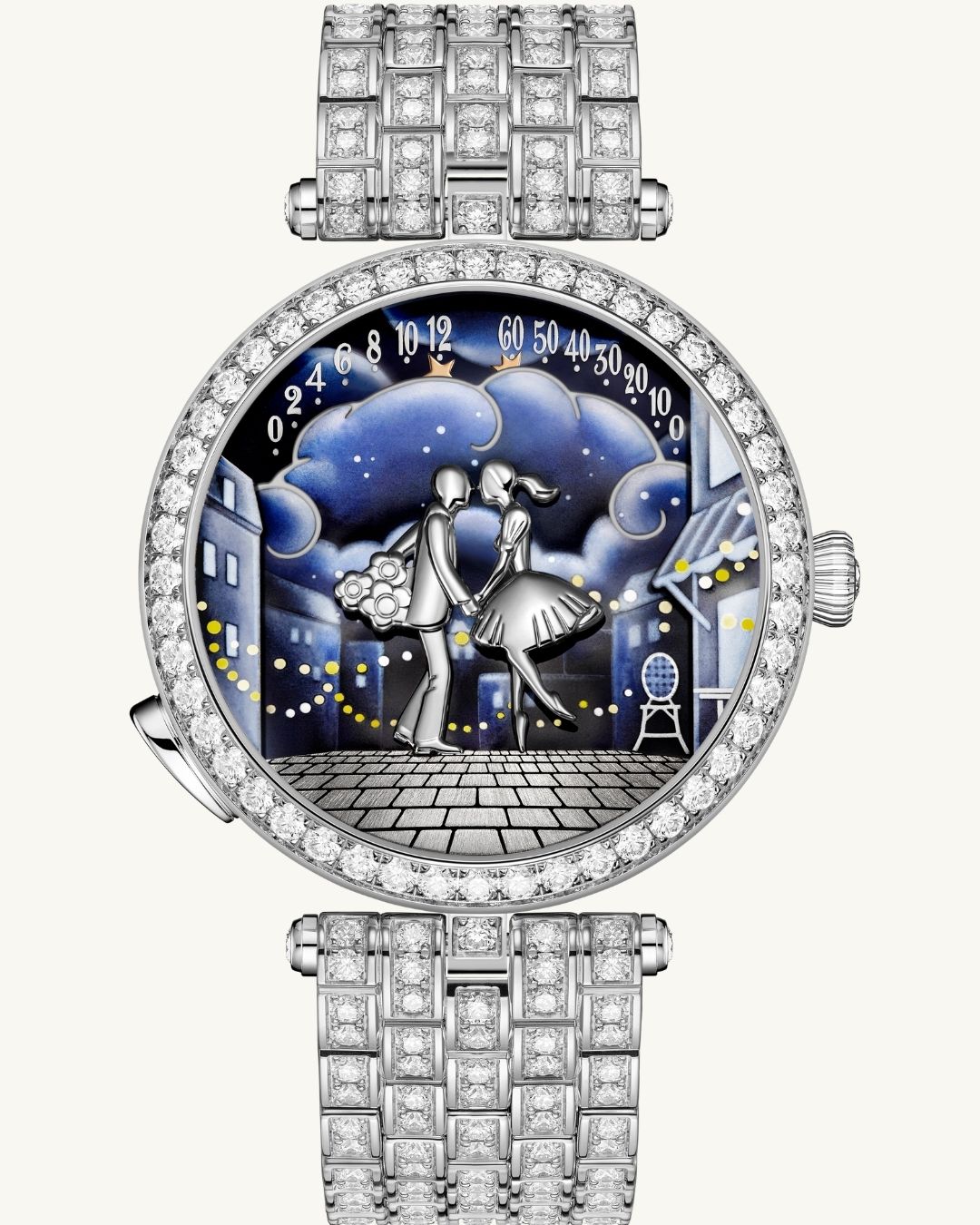
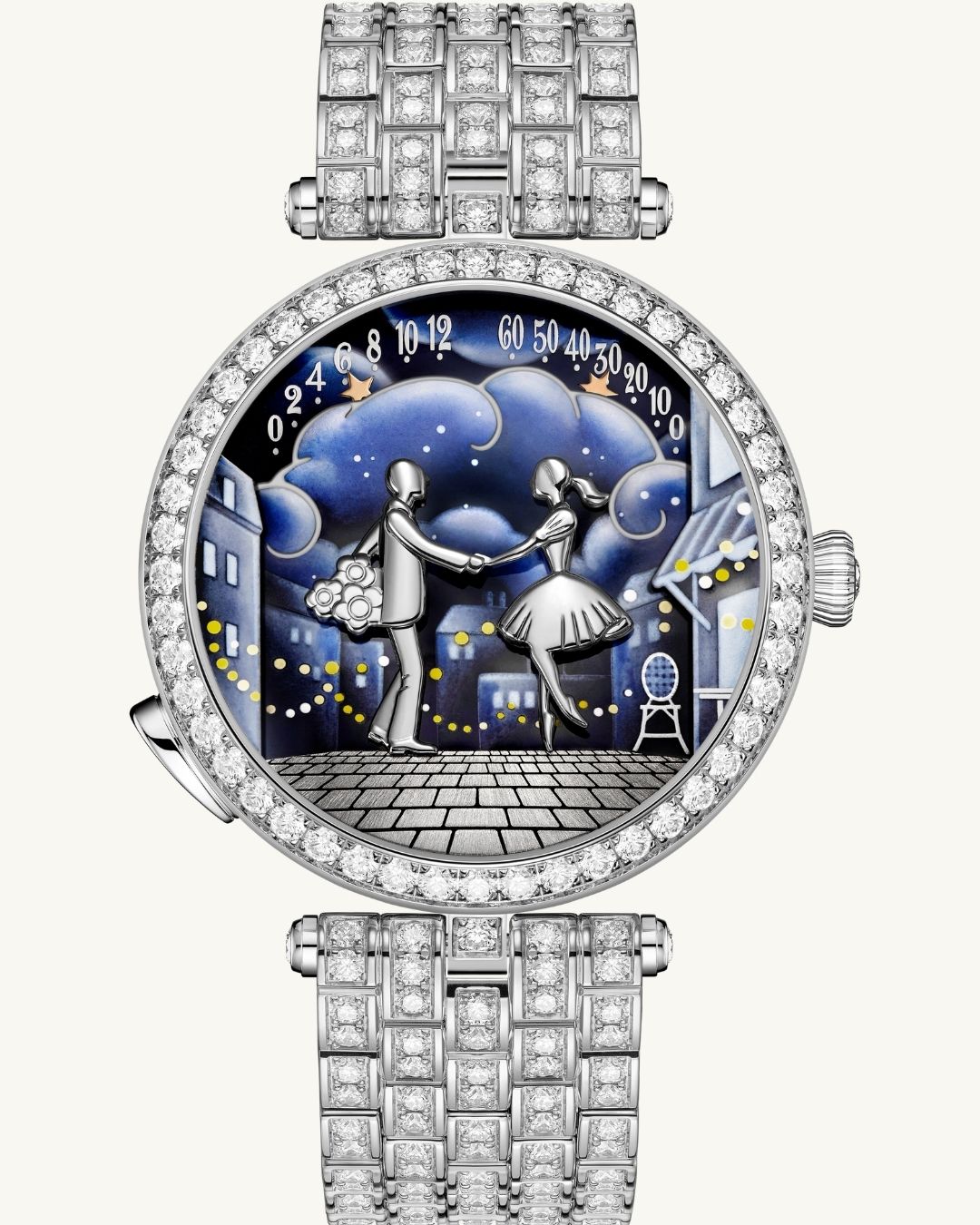
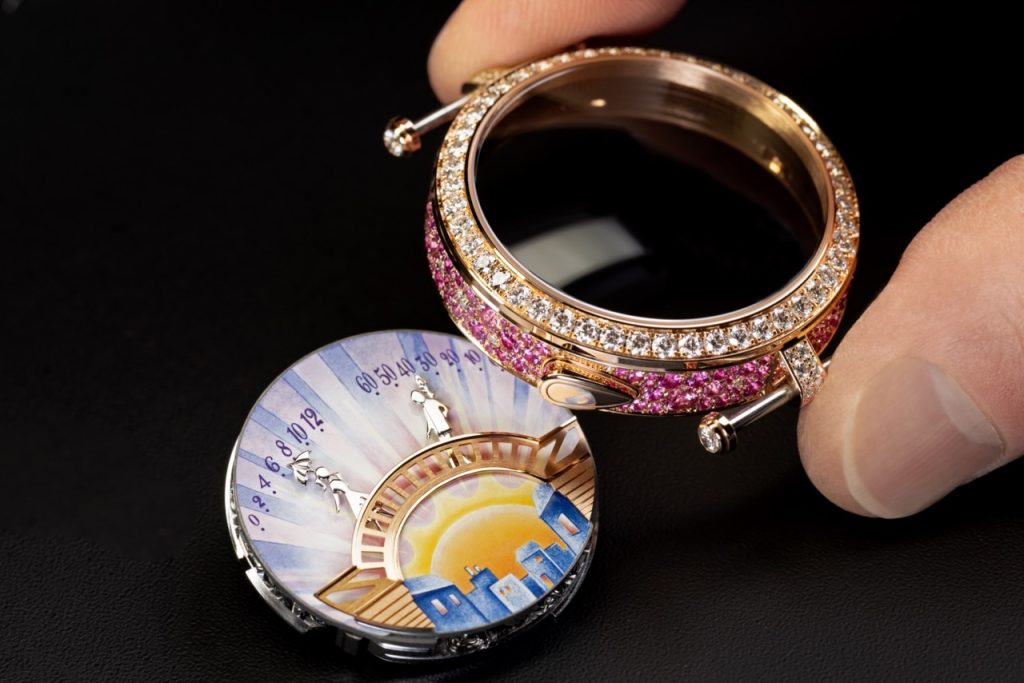
When I look at the recent developments, I would say one very technically complex story to realise is the Bal des Amoureux. The idea was a guinguette scene in Paris where you have tables outside, music, people dancing, and two lovers from the Pont des Amoureux meeting again, kissing at noon and midnight. The time is indicated by two stars at the top of the sky.
Technically, it required three major challenges. First, synchronisation: a double retrograde display combined with an automaton. When the stars align, the lovers must move and kiss automatically. Second, the movement. In watchmaking, rotation is simple, but translation or sliding motion is far more complex. We managed to combine translation and rotation so they glide together and lean in naturally, without vibration. Third is the articulation. Unlike earlier pieces, these figures hold hands, so it required three tiny articulations, hand, arm, hip, so small they are nearly invisible. It took months to come up with a technical solution for how to make it look really beautiful. So, three complications at once for this watch.
How do you balance the spontaneity of nature with Swiss precision?
Again, it goes back to the first idea, the centre of the story. Then we try to engineer it together with the craftsmanship, which means the movement has to be fluid. But how do you create fluid movement? This is what we know. This is our expertise.
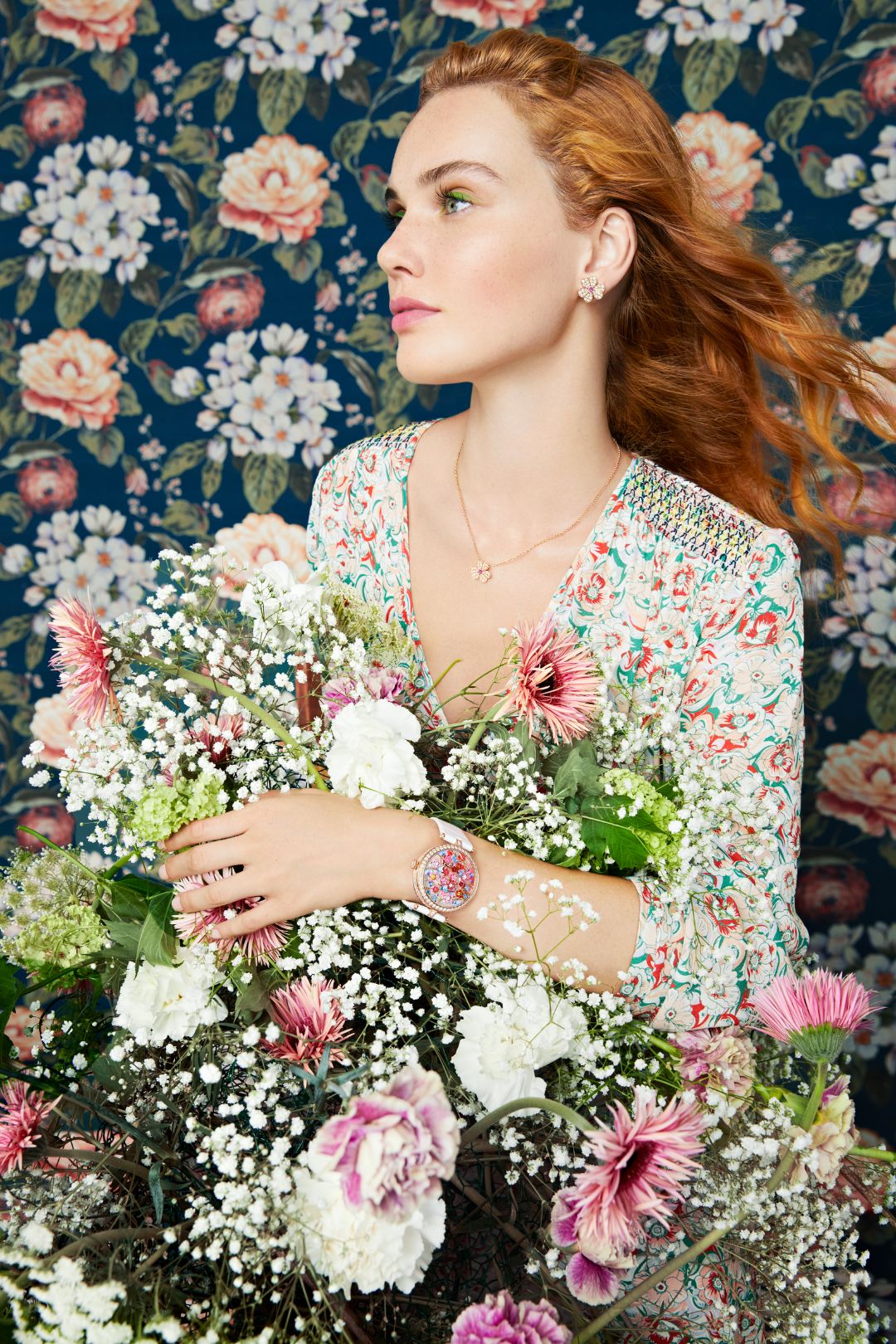
For example, with the Heures Florales watch, we don’t want the flowers to open and then close, so we use two different speeds. For the lovers, we do that with a centrifugal regulator, an additional system to control the speed perfectly. We know technical solutions, and if we don’t know them, we create them.
It’s like a language. We know the language, the letters, the words, the grammar. Sometimes we change the grammar to do what we want. Sometimes we invent new words. When that’s not enough, we even invent letters to create new words, to create new poems. With Brise d’Été, we had to invent wind. There is no book for that. We write the book.
Is there something you wish people understood more about these pieces?
We are a maison based on craftsmanship. The movement is really a means to animate the craftsmanship. Also, if you think about it, watchmaking itself is craftsmanship, and it’s incredibly difficult to do, more difficult than maybe a lot of people think.
There’s another thing I would love people to know. Today, a lot of people wear watches, but there are also people who don’t. Once you wear a watch, many people say, “I really like to wear a watch. I really love it, not only to tell the time, but just as a piece of jewellery, as a piece of living mechanics that works. I give energy to my watch.”
This is a hand-wound watch. In the morning, this is the last thing I do before I leave the house. I wind my watch. This is a moment just for me, between me and my watch and nobody else. Winding the watch is like winding myself, and whenever the watch is wound, I’m ready to go for a whole day. This is something you cannot experience if you don’t have a watch. I think what I’d like more people to know is the beauty of owning a mechanical watch and the feeling attached to it that many people don’t yet know.
What’s next for R&D? New materials?
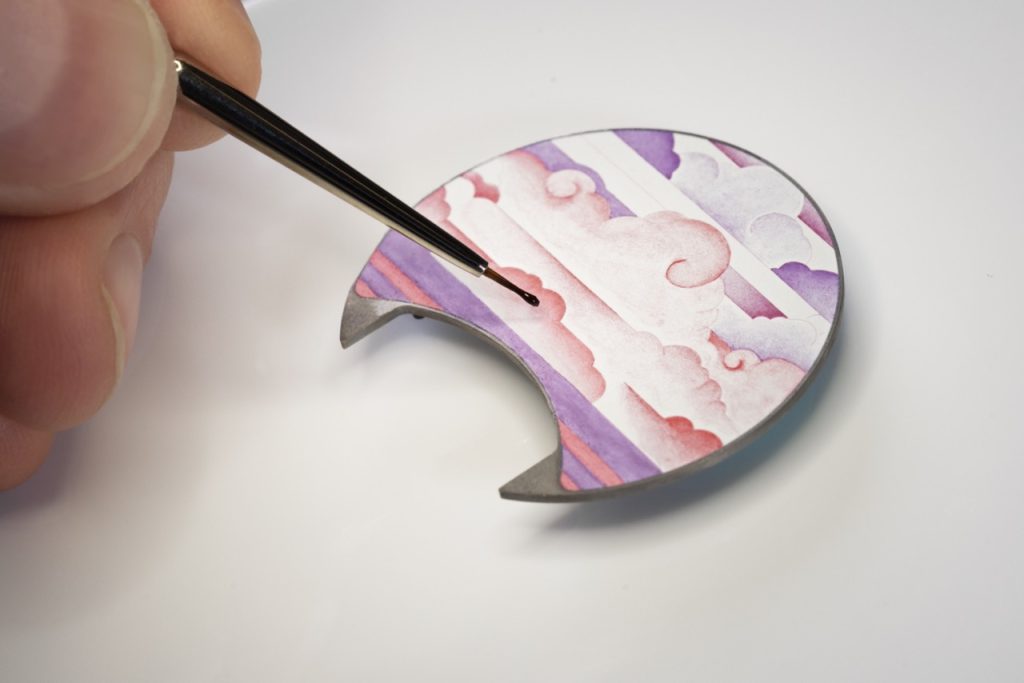
New frontiers may simply be new stories. We can tell new stories when we fully explore the techniques already available to us. Take enamelling, for example, an art that has existed for more than 6,000 years. Jewellery itself dates back 2,000, even 4,000 years. You might think that in all that time, everything has already been discovered, but that is not true.
Just two years ago, we developed a new procedure, something we like to compare to a spa treatment. When enamel is taken out of the oven at 800 degrees and you attempt to sculpt it, it breaks because it is filled with internal tension. To sculpt it, you must first release that tension. So we created a technical “spa” for enamel. It takes weeks, not just an afternoon. After this treatment, the enamel can finally be sculpted. We invented this process because we wanted to sculpt flowers out of enamel, and now we can.
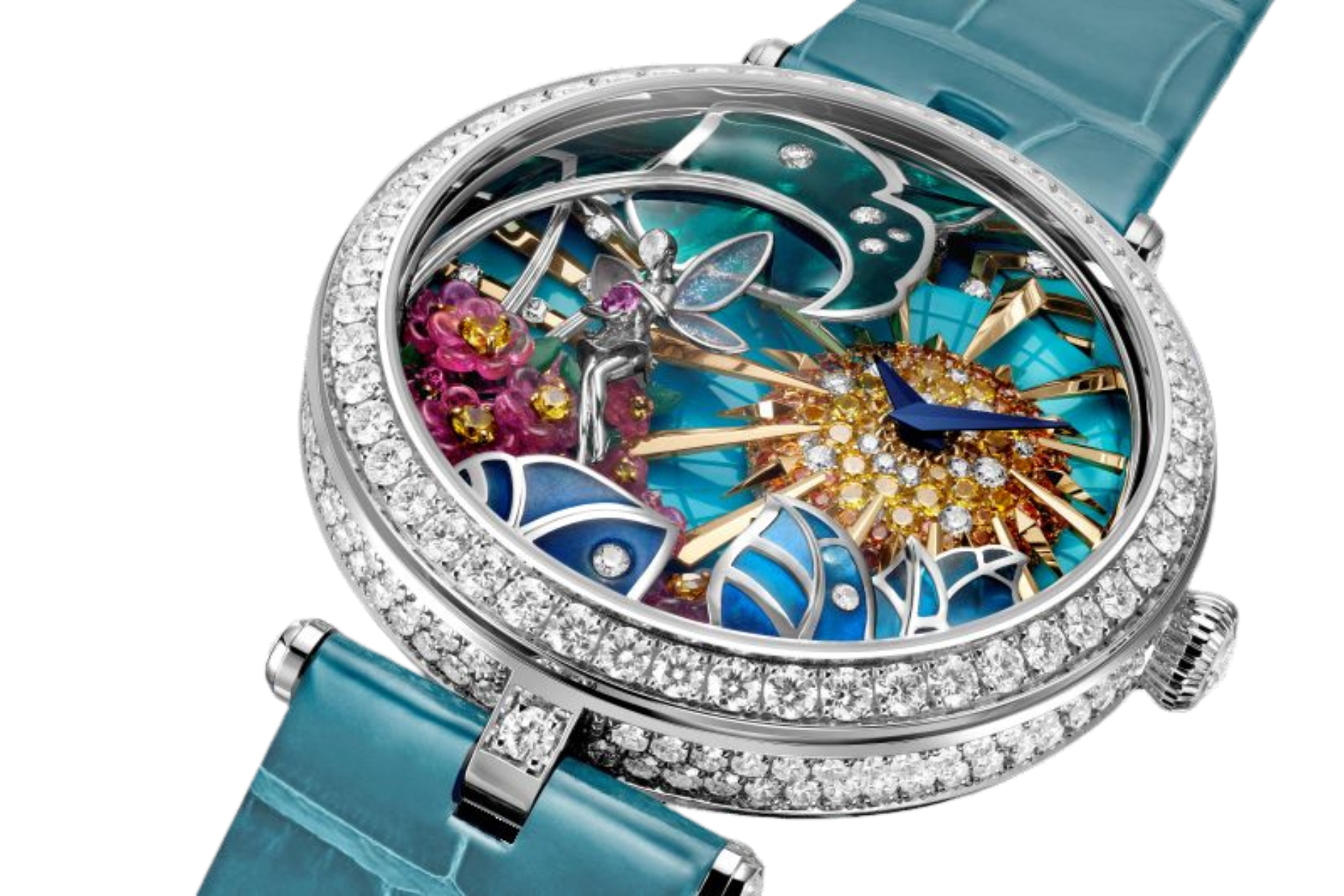
There was another challenge: setting a diamond into plique-à-jour enamel. Normally, drilling a hole to set the stone would cause the enamel to crack. With our “spa” treatment, we can now drill the hole, but that alone does not secure the diamond. To achieve that, we had to invent another procedure: creating a perfectly formed, slightly conical opening rather than a straight one; positioning the diamond at the exact height; returning the piece to the oven at a precise temperature for a precise duration. The enamel begins to flow subtly over the edge, and the diamond gently pushes into place. When it comes out, the diamond is perfectly set.
We developed this method to create diamond dew drops on an enamel leaf. Once again, it is the story that drives the invention. We are very open to innovation, but only within the métiers d’art we cherish. We do not innovate for the sake of innovation. We innovate because we want to achieve something that seems impossible. We ask ourselves: how can this be done? It cannot be that it cannot be done. And so we begin. Sometimes it takes two years. That is how we move forward.
In this digital age, how will the maison continue to inspire?
I think craftsmanship is more valuable than ever. There are pieces that can be produced with machines, and that’s fine. But some creations should be made by hand because there is emotion attached to them. We call our artisans the Golden Hands.
We will continue to do that because we believe it’s important, and we believe people will continue to be interested. In Geneva, we have an engraving school and an enamelling school, and we see that young people are very interested in joining. Young people, 15 or 16 years old, want to learn these ancient techniques.
We are very happy about that, to keep working on it, to keep driving it, to keep innovating in techniques that might have been nearly forgotten a couple of years ago. In the ’80s and ’90s, everybody said everything had to be machines, and we were never attached to that. We always stayed very handmade, and we will always stay that way.
READ MORE
Van Cleef & Arpels Alhambra Watches Explained: From Jewellery Icon to Timepiece