

You should see my bottoms, says Ann-Sofie Johansson tipping her laptop camera south. This is in response to me telling her she looks very much like the woman in charge of a global fashion empire. To be fair, all I can see on my laptop is a tailored charcoal jacket, the kind that speaks to a person unfazed by corporate graphs and spreadsheets. Below, however? Enormously oversized cargo pants. On her hands, her signature rings the size of golf balls, ‘very battered now’. All of which speaks volumes: corporate leader and creative force rolled into one.
Johansson is 57 and has spent more than half her life at one company building a career that should be far more celebrated than it is. She could have gone to Paris. She could have had her own label with her name above the door. Instead, she worked her way up at H&M, helping to grow it from a relatively small Swedish retailer into a global behemoth that shapes the way millions of women dress—and feel—every day. Now the brand’s Creative Advisor and Head of Design Womenswear, the fact the fashion industry hasn’t made more noise about her says everything about where the industry chooses to look.

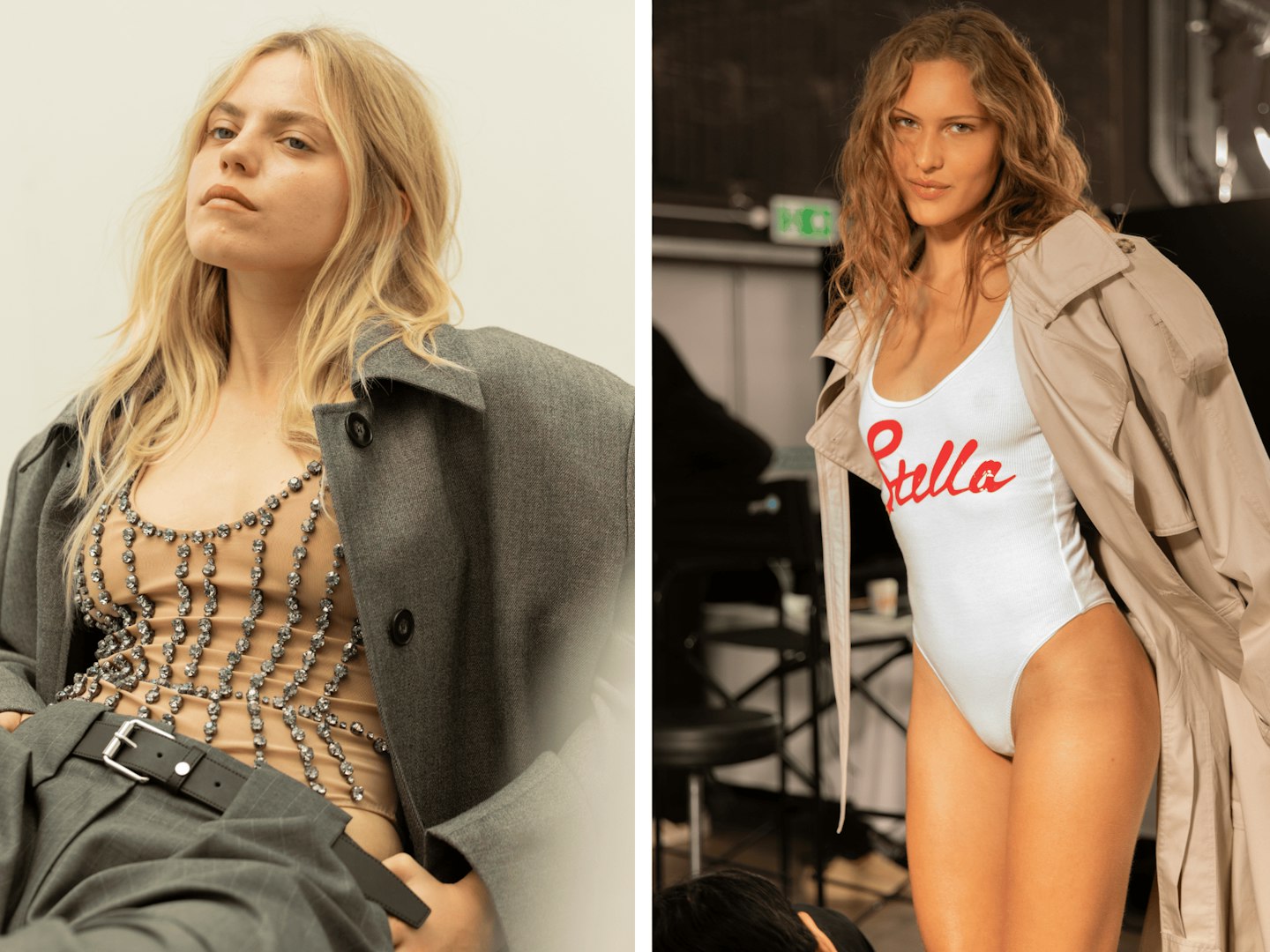
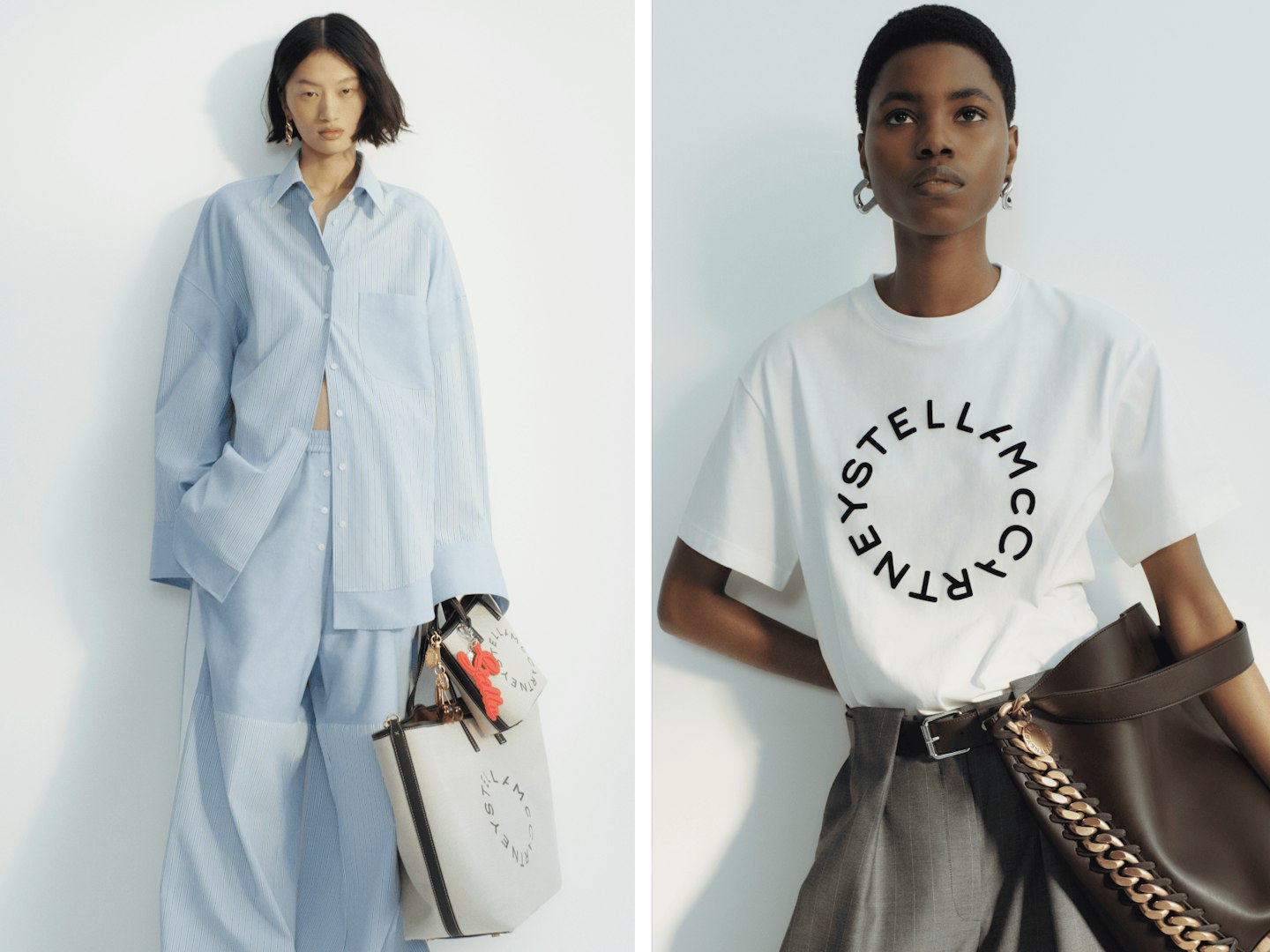
Right now, that gaze is fixed on Stella McCartney. H&M’s new collaboration marks a full-circle moment: McCartney was one of the first designers the brand worked with in 2005 and she is the first to be revisited by the brand. ‘Twenty years is a celebration in itself,’ says Johansson, H&M’s designer-whisperer, of the reunion.
When McCartney first collaborated, H&M was working with organic cotton for baby clothes, she explains. ‘We thought, if a high-end brand like Stella McCartney is working with sustainable fibres, so should we—we need to make a much bigger mark on the planet.’ Today, 89% of H&M’s materials are recycled or sustainably sourced, and the company runs on 96% renewable electricity—which, arguably, makes the collab—and there have been around 25 different designer collabs over the years—one of the most impactful.
It started with Karl Lagerfeld in 2004—the original aim, Johansson reminds me, was to choose wildly different designers that were as unpredictable as possible. ‘Nobody should be able to tell who we’re going to work with next,’ she says, adding there is always something to learn. Like the Roberto Cavalli collaboration in 2007, which her team braced for as potentially too maximalist, too emphatically un-Nordic—it sold out. ‘Everybody went crazy over it. It taught us something about our customers, that everybody loves a glamorous thing.’ Comme des Garçons, the following year, was another surprise hit. The lesson? Give people access to something out of reach and they will come.
However, that landscape is shifting fast. Now we have John Galliano collaborating with Zara, Jonathan Saunders at & Other Stories, Clare Waight Keller and JW Anderson at Uniqlo. The traffic between luxury and high street is no longer a one-way conversation; these days working on the high street is no consolation prize, it’s the destination.
Johansson watches it with interest rather than anxiety. ‘For designers the work is very much the same,’ she says. ‘You have to know your customer, wearability, and what happens to the price if you add something; it’s the same whichever end of the market.’ What’s so brilliant about Johansson—and partly why the H&M collaborations have been so successful—is that she thinks big.
The only designer she regrets not having worked with? The late Azzedine Alaïa, or, as she says, ‘Mr Alaïa’. And the collaboration she hasn’t yet quite managed to pull off? ‘Mrs Prada,’ she laughs. ‘I know she doesn’t want to do that.’ But just to be in the room, exchanging knowledge, ‘chitchatting’, would be the dream.
It’s worth remembering that H&M is a Swedish company, born in a city of light and waterways with an almost genetic instinct for clean, functional, forward-thinking design. And then there’s Johansson herself—strikingly un-minimalist for a Swede. The last time I saw her in the flesh she was wearing a cream silk negligee slip over a white T-shirt and grey tailored trousers, jewellery stacked as usual. ‘Garments can make you feel a certain way and act a certain way,’ says the creative director who grew up wearing clothes handmade by her mother, to match her own. ‘We were like mini-mes,’ she says, although it mortified her as a young teen who wanted to wear nothing but Levi’s.
She has stayed at H&M for over 30 years, through every seismic shift the industry has produced, first as a designer who cut her own patterns, to the creative force overseeing a brand that dresses the world. She stayed because there was always something new to grow into, and because she believed in the mission—affordable clothes that make people feel good—and the Swedish consensus culture meant that she was never making decisions alone. ‘Every decision is taken together.’
She is, then, one of the most influential women in fashion—in a field that promotes women to the top of its high street operations far more readily than into the creative directorships of its luxury houses. The imbalance is real and she knows it. ‘It’s still very rare at the higher end brands,’ she says carefully.
But why? ‘Maybe women just aren’t as interested as men in that kind of status—or other life priorities take over, like becoming a mother.’ So why does it work for women at the affordable end of the market? ‘Maybe women want to be closer to the customer; you like people to look good and feel good about themselves. I guess men also want that but maybe women feel that more?’ There is no easy answer, she agrees.
What she will say, without hesitation, is why fashion matters at all. ‘It’s a way to communicate. The most direct way of telling who you are, or who you want to be, or who you’re pretending to be for that day.’
This is Johansson all over—ever passionate, curious, always looking ahead. A whole year ahead of the rest of us, she’s working on spring 2027. ‘The thing is, you can never learn fashion because it is always moving forward. It constantly gives me energy.’
This story first appeared on GRAZIA UK.
READ MORE