
Uh-oh. There I was happily enjoying the John F Kennedy Jr and Carolyn Bessette biopic Love Story, guiltlessly ignoring complaints from the couple’s living family members that the show exploits their memories because – let’s face it – they’re both dead, when someone from the series who is still very much alive piped up.
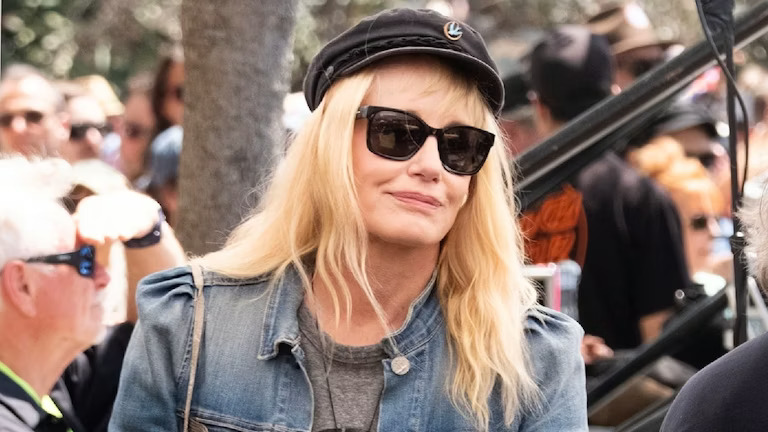
Actor Daryl Hannah, portrayed in early episodes on account of having dated JFK Jr before he and Bessette got together, recently wrote an op-ed for The New York Times condemning Love Story as ‘not even a remotely accurate representation of my life, my conduct or my relationship with John’ and denying (as she is depicted doing in the series) pressuring JFK Jr to marry her, doing cocaine off a Kennedy family heirloom, gatecrashing his mother Jackie Onassis’s private memorial and other misdeeds.
Despite a disclaimer at the start of each episode stating that elements of the show have been ‘dramatized or fictionalized for storytelling purposes’, Hannah correctly points out that most casual viewers will assume the series’ portrayal of her as a self-absorbed, fame-seeking nag is at least broadly accurate – I certainly did.
Her complaint begs the question: what are the ethical implications of depicting still living figures in TV dramas? Biopics used to be reserved for celebrities and historical figures who were long dead, inherently minimising the potential for offence (not to mention legal risk – you can’t libel the dead). But nowadays the turnaround time between real-life events and their on-screen dramatisation is often just a few years, which is how we’ve already had multiple miniseries about the former Prince Andrew’s infamous Newsnight interview (Scoop and A Very Royal Scandal), a dramatisation of fake heiress (but very real scammer) Anna Delvey’s rise and fall (Inventing Anna), as well as a flurry of shows depicting the origin stories of start-ups, such as WeWork, Uber and Bumble (WeCrashed, Super Pumped and Swiped respectively).
And of course, TV writers dramatising these events must necessarily embellish a few details to make for compelling viewing, compressing a timeline here, making up an argument there. As one of Love Story’s producers explained in an interview, ‘we’re rooting for John and Carolyn [so] Daryl Hannah occupies a
space where she’s an adversary to what you want narratively in the story’. Love Story needed a villain, so they created one – but not without real-life consequences. In her op-ed, Hannah wrote of having received threatening messages since the series began airing, a consequence that demonstrates the uncanny valley effect that comes with blurring the lines between fiction and fact, and expecting – or not caring if – audiences can discern between the two.
Still, our collective appetite for biopics about recent events means we’re probably going to see more of this genre in years to come. So where does one draw the ethical line in how far one ‘massages’ the truth when depicting real people? As far as Hollywood is concerned, I suspect the answer is simply ‘as far as we can go without being sued’.
This story first appeared on GRAZIA UK.
READ MORE