
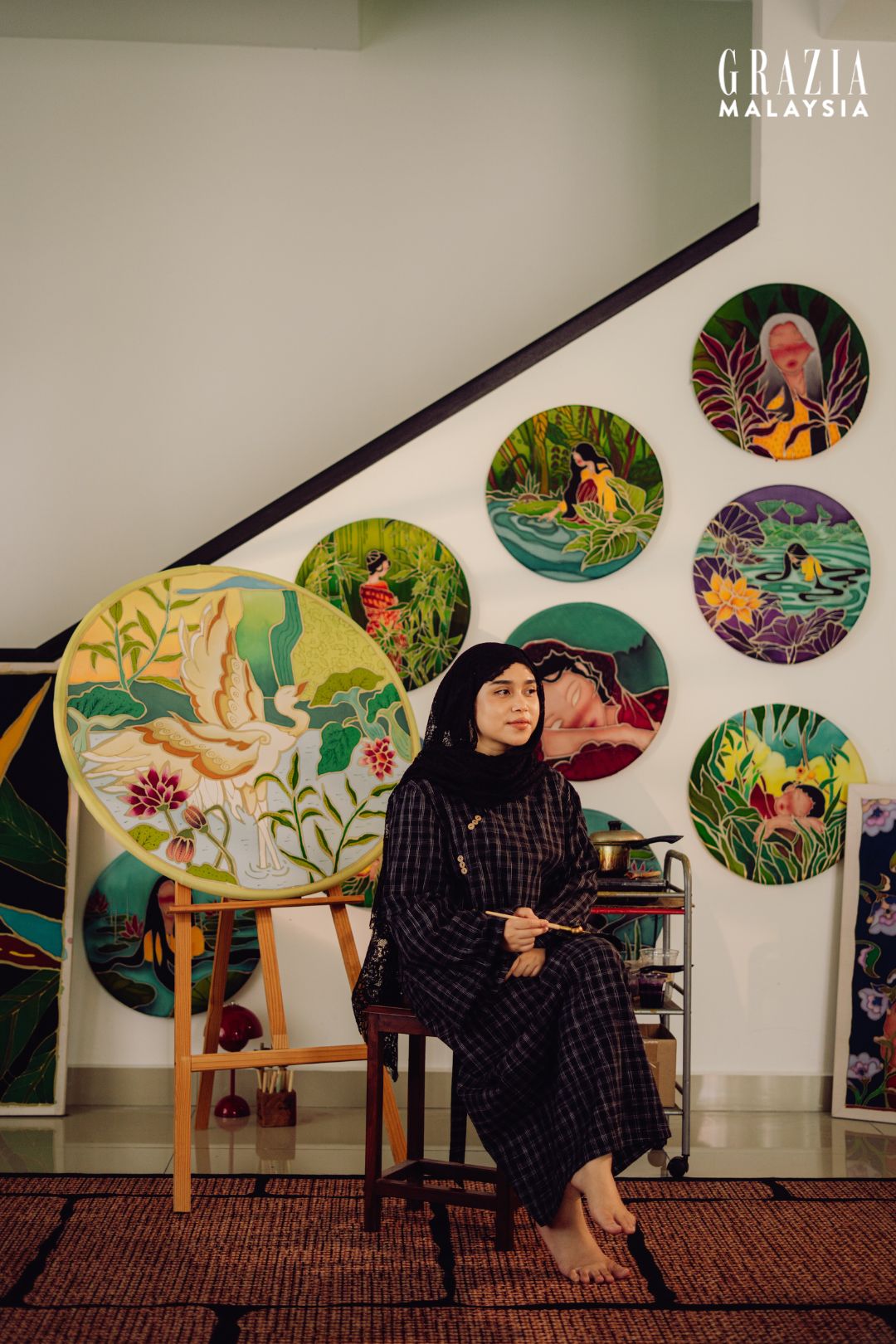
Farah Mohan always knew she wanted to do something related to the arts. Having studied architecture—but knowing she would not continue down that path—she moved forward with a clear sense of direction. “I knew after graduating I’d continue with something art-related,” she said. “I just didn’t know what it was yet.”
She didn’t linger on it for long. She worked through what she already had—her skills, her interests, and what might realistically sustain her. The answer came in parts, before settling into something more defined. Batik surfaced in that process. “You get these bubbles of ideas,” she began. “Then you put them together.” It made sense when she looked back. During her architecture studies, her work often inclined towards craft—something shaped by tradition and culture. “It’s really a calling.” Batik fit that instinct, even if she was starting without any technical grounding. “I didn’t have any skill,” she admitted. “Nothing at all.”
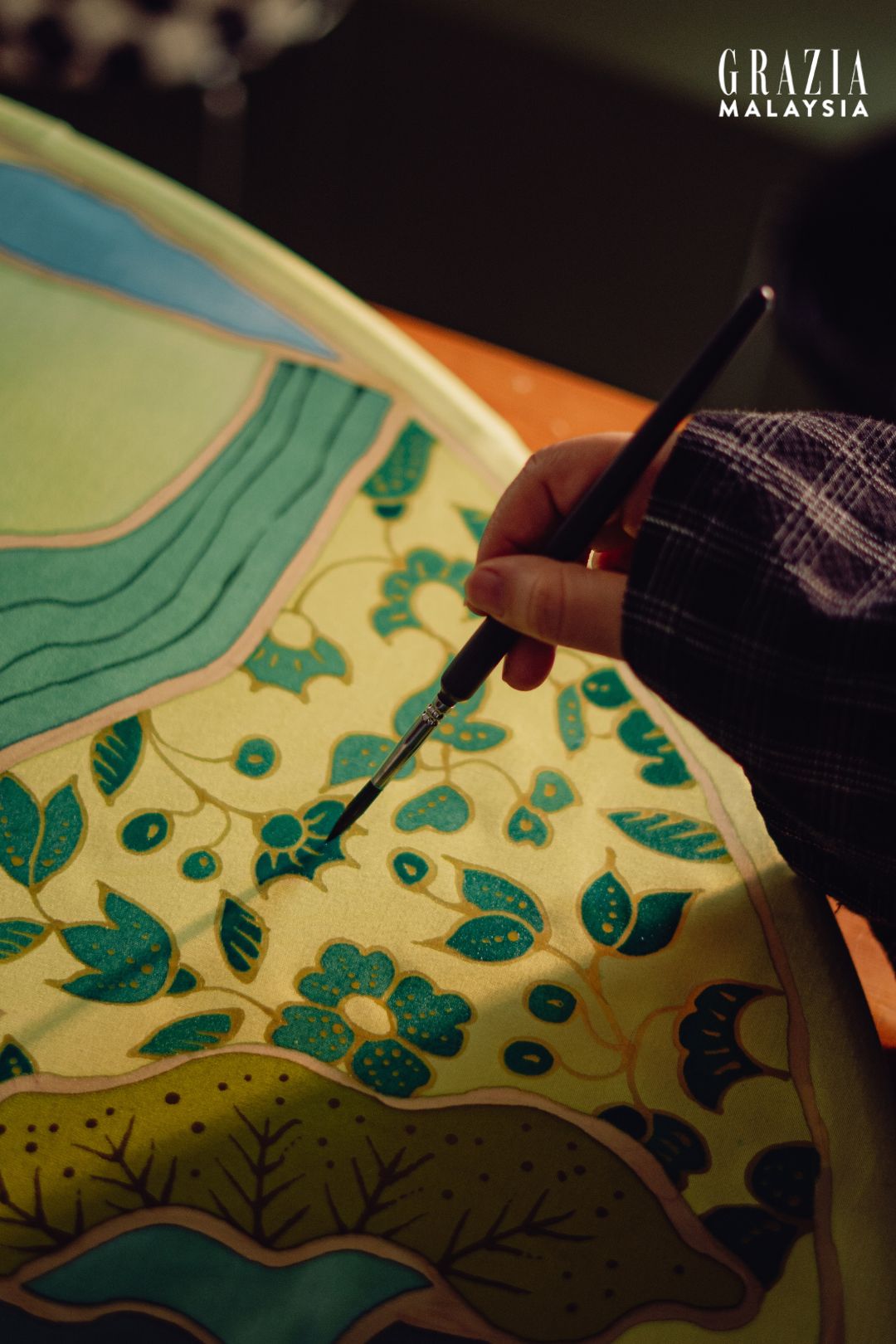
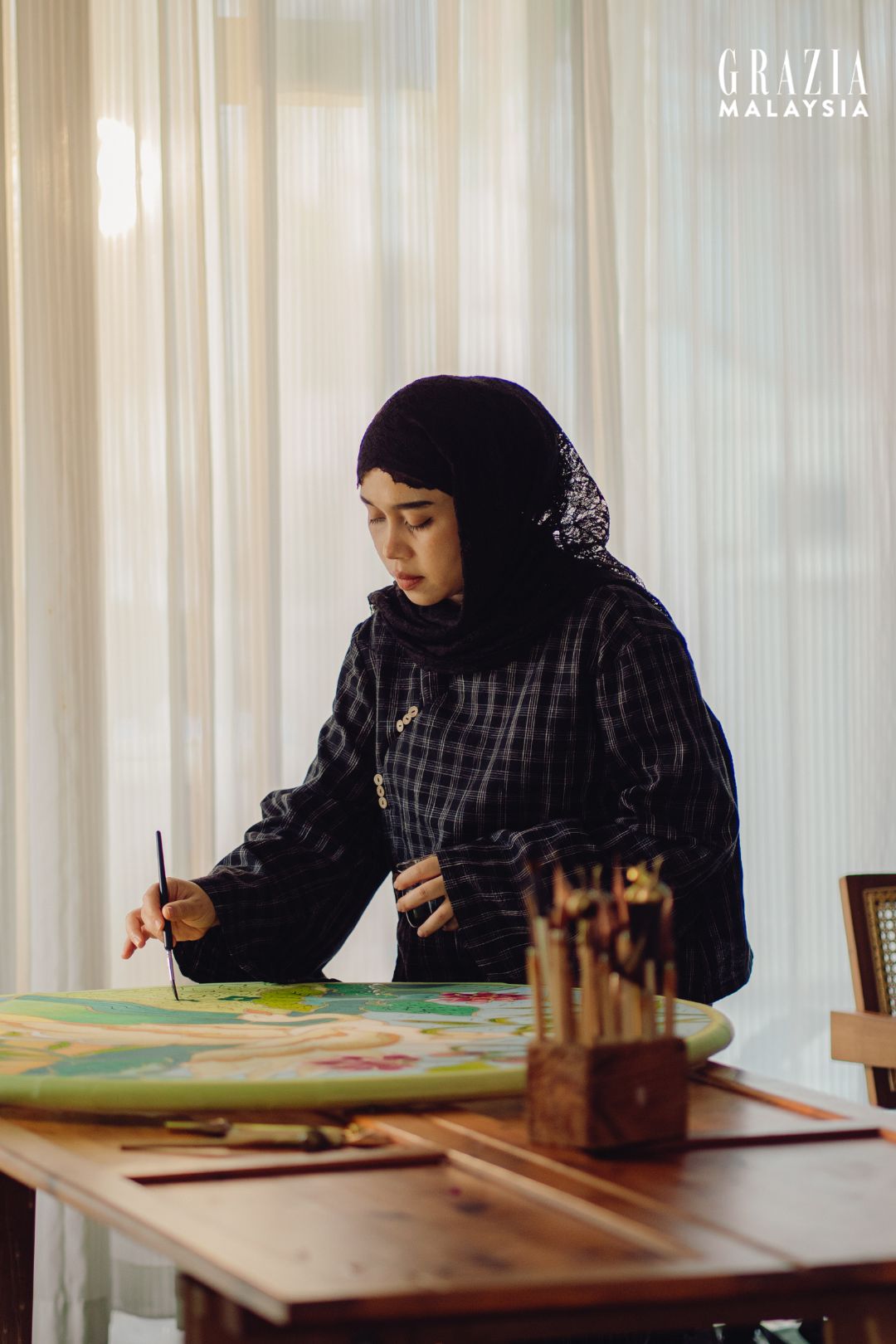
She began with design. Her early ideas were mapped out with precision, influenced by the way she had been trained to think. Translating those ideas into batik, though, required something else entirely. After about a year of working with batik artisans, she found her designs didn’t always come through as intended. “I thought, ‘you know what, I’m going to try to do it myself’. So I actually taught myself to do it.”
Learning batik was not immediate. Wax, canting, dyeing—each stage came with its own demands and progress came in uneven steps. “Every time I managed one process, the next one I messed up,” she said. One of her earliest attempts stays with her. She thought it would be simple—melt the wax, draw, then apply colour. Instead, the dye bled across the fabric, undoing the lines she had just made. It looked nothing like the work she’d seen how the masters do it. She learned it all came down to small details like wax temperature and timing.
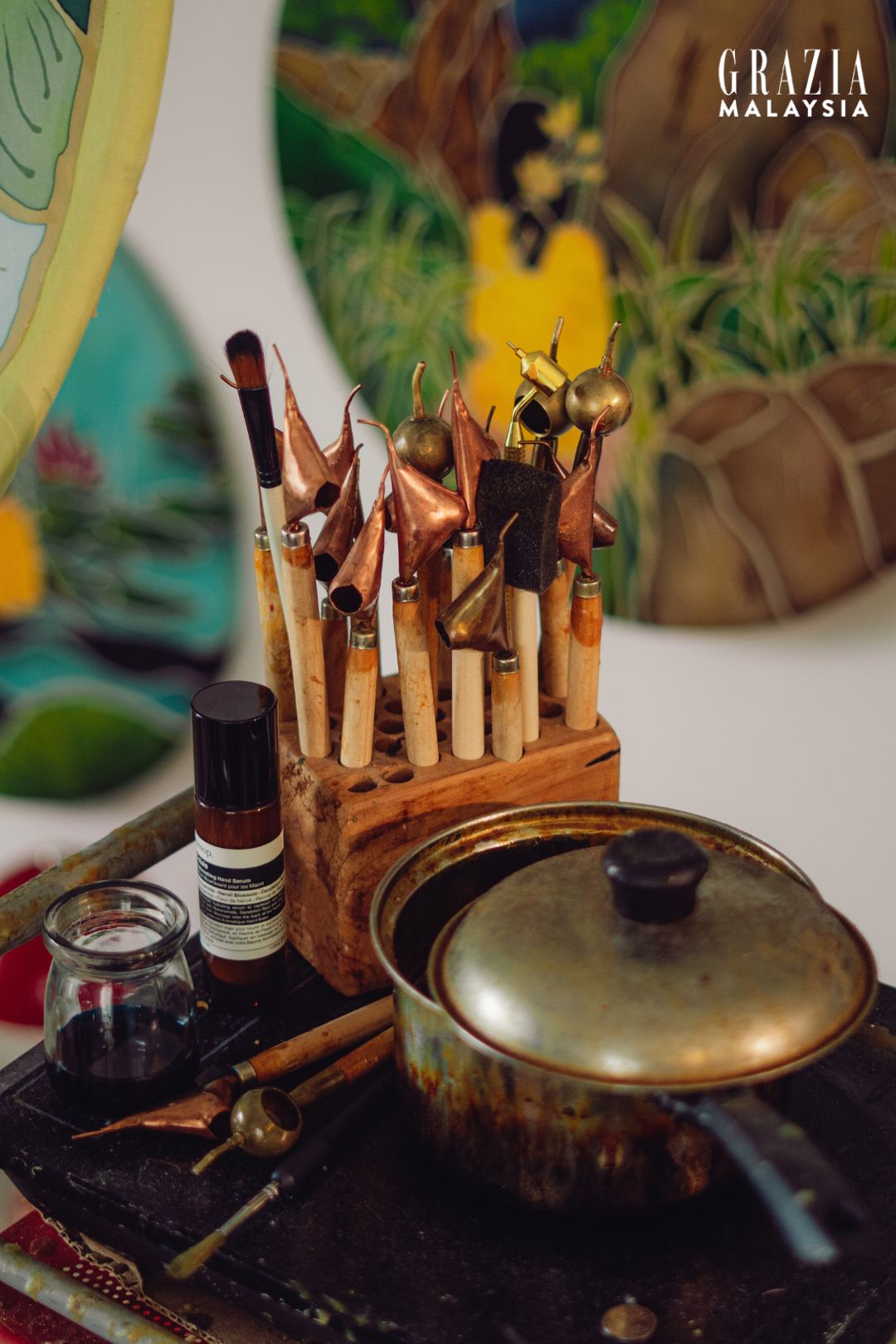
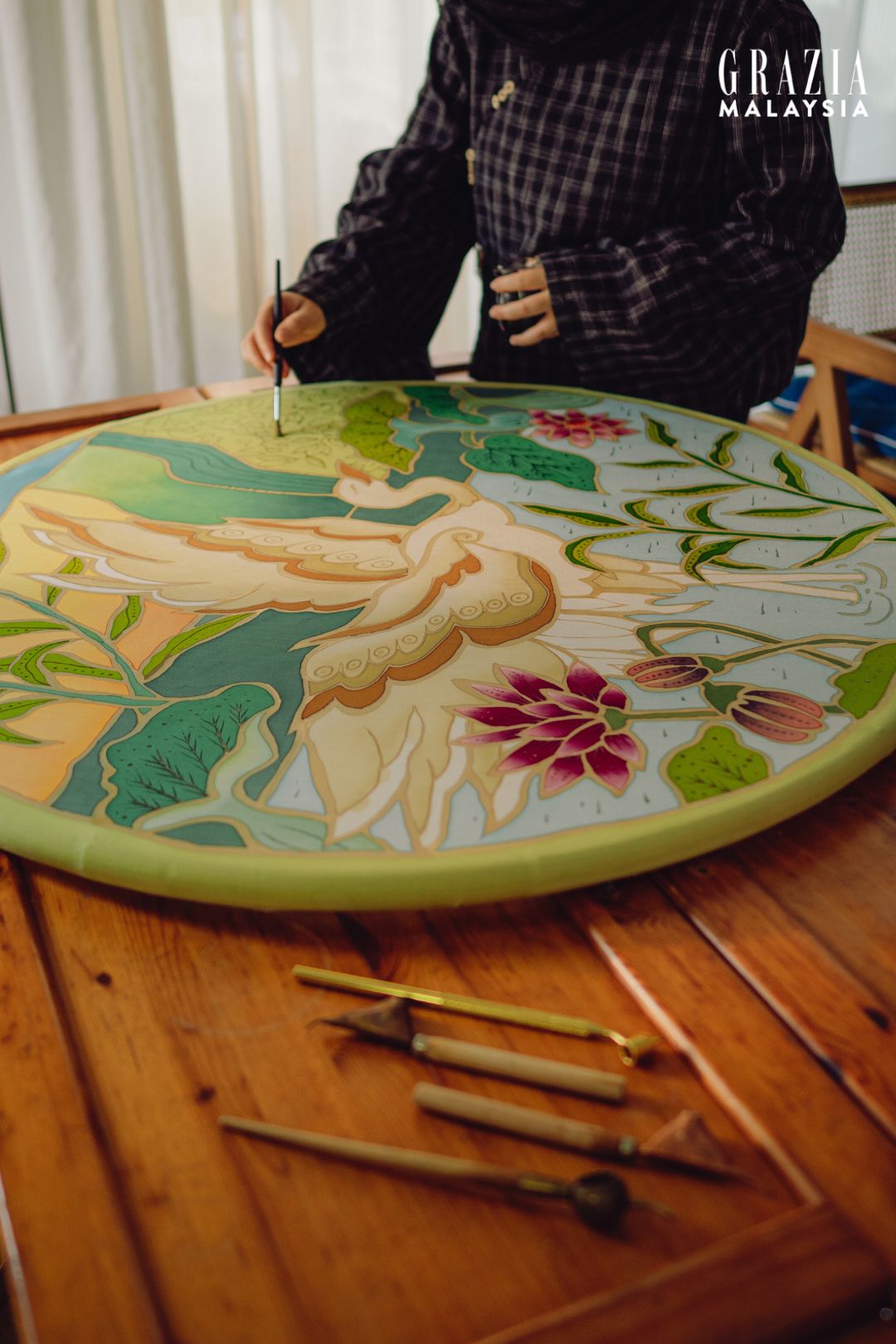
What drew her into batik first was colour. What kept her there was the way the process refused to stay fixed. “You can’t erase it,” she said. “You have to improvise.” At the beginning, she would set aside pieces that didn’t meet her expectations. Later, instead of fixing what came up, she began working with it.
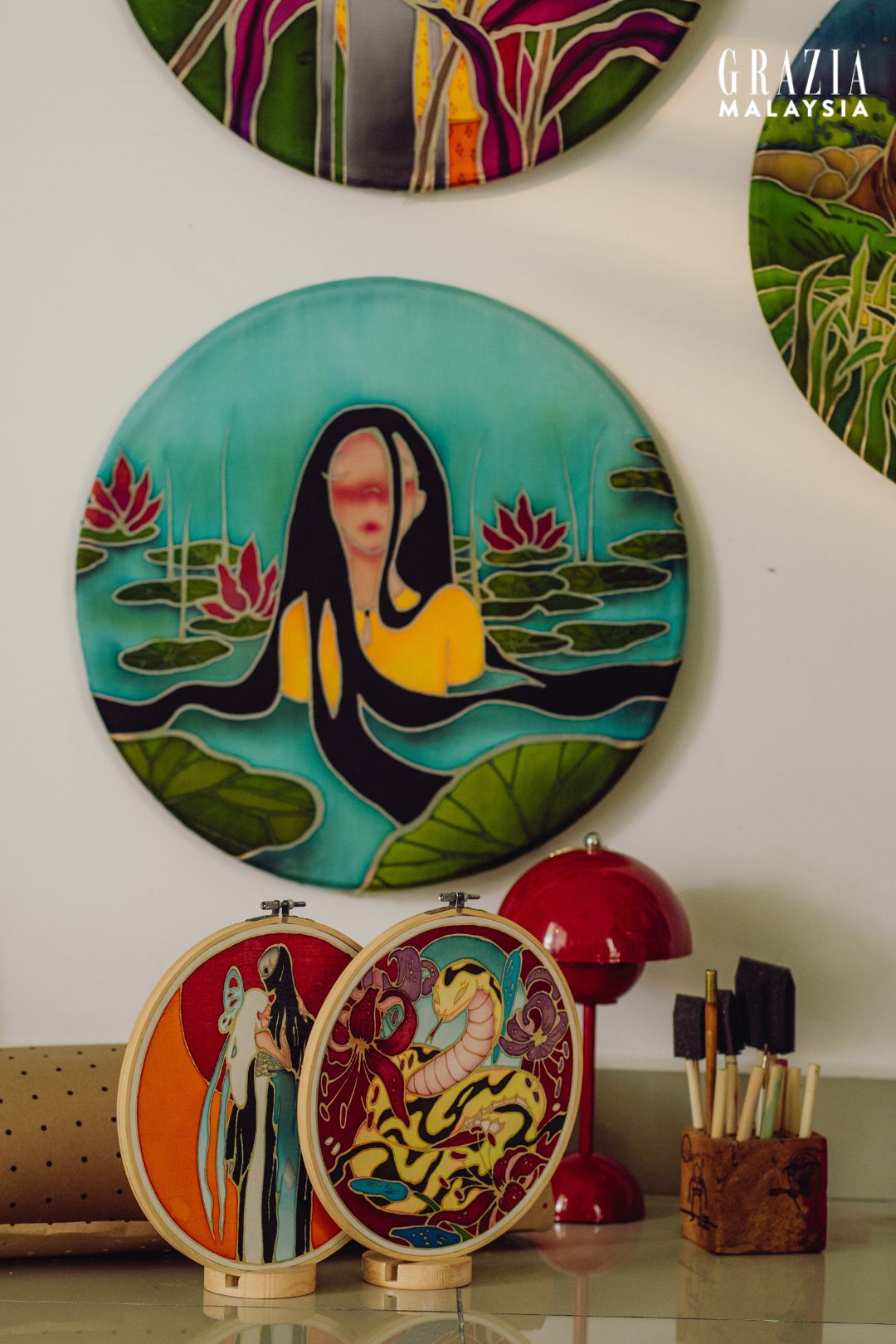
That approach now extends beyond fabric. For Farah, batik isn’t confined to clothing or tradition. One early turning point came with a commission for a batik lamp which was displayed at Kwai Chai Hong in Kuala Lumpur’s Chinatown. It was something she had never done before. There was no certainty it would work, but she moved through it step by step. When it came together, it changed how she saw the medium.
Since then, she has continued to test those boundaries—working on tiles, installations, printing, and collaborations that place batik in unexpected contexts. A recent project saw her adapting her designs onto tiled surfaces, working closely with others to understand how the material behaves at scale. It’s less about changing what batik is, and more about seeing where else it can go.
Working with different makers means stepping into unfamiliar systems and learning from them. “Everyone has their own specialties,” she acknowledged. “So it’s nice to learn from it.” Those exchanges feed back into her own practice, expanding what she knows and how she works. And teaching offers a different rhythm. Through workshops, she introduces others to batik, often guiding them through the same early frustrations she once faced. It’s a break from solitary studio work, and one she values. “I really like sharing,” she said.
Outside of that, she has turned to gardening—another process that resists control. Plants don’t always respond the way she expected. Some grow, others don’t. It requires patience and acceptance. “It’s a bit like trusting the process,” she noted.
Her time is more structured now. As a mother of two, her work fits into shorter windows, shaped around everything else. It has brought a different kind of focus, a need to prioritise and complete things within limited time. The process remains the same, but her pace has shifted. There are ideas she still wants to explore, materials she hasn’t worked with yet. “That’s the problem with me. I want to do a lot, but I don’t have the capacity yet,” she quipped. “I know, at some point, I’ll get there. I don’t see it as something I need to reach right now. It’s a long journey—my life journey.”
Producer: Sarah Chong
Assistant: Joseph Cheng
Photography: Innsyirah
Photo Editor: Farna Syhida
Video Director: Qila Qla
Videographer: Syabil Ng, Farna Syhida
Video Editor: Farna Syhida, Ezza Izzati
Camera Assistant: Nick Luffy
READ MORE