
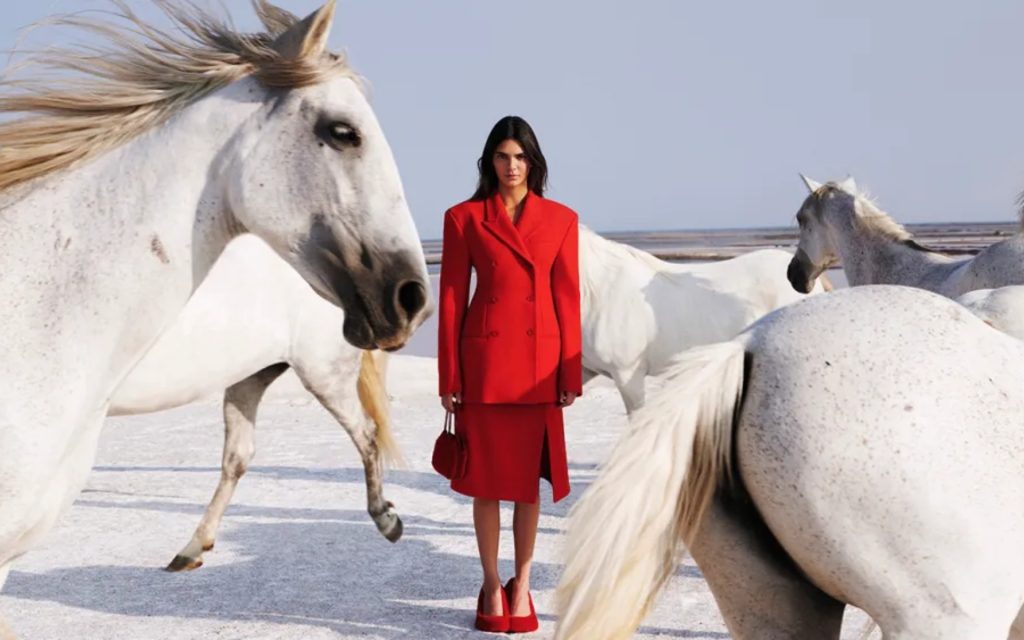
As we celebrate the Year of the Horse, seasonal fashion collections adorned with its motif trot onto the scene. But unlike any other zodiac animal, the horse shares a deep, enduring bond with fashion—particularly with luxury. In fact, many esteemed houses began not with handbags, but with leather crafted for the stable and saddle.
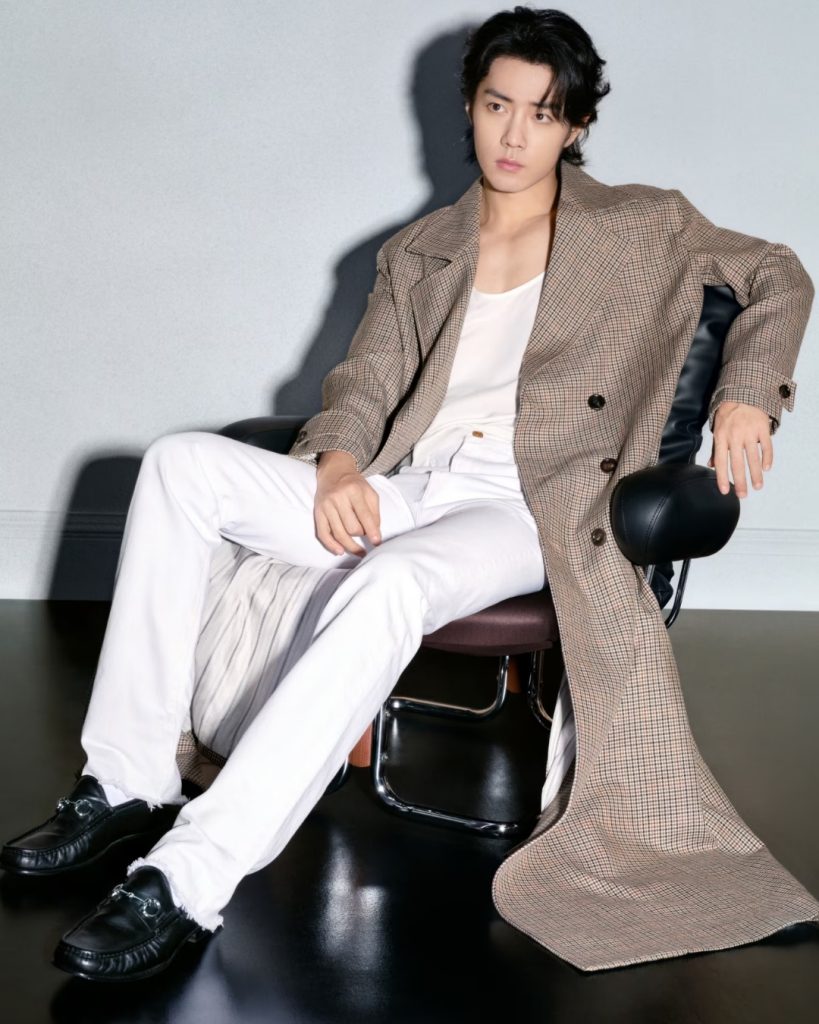
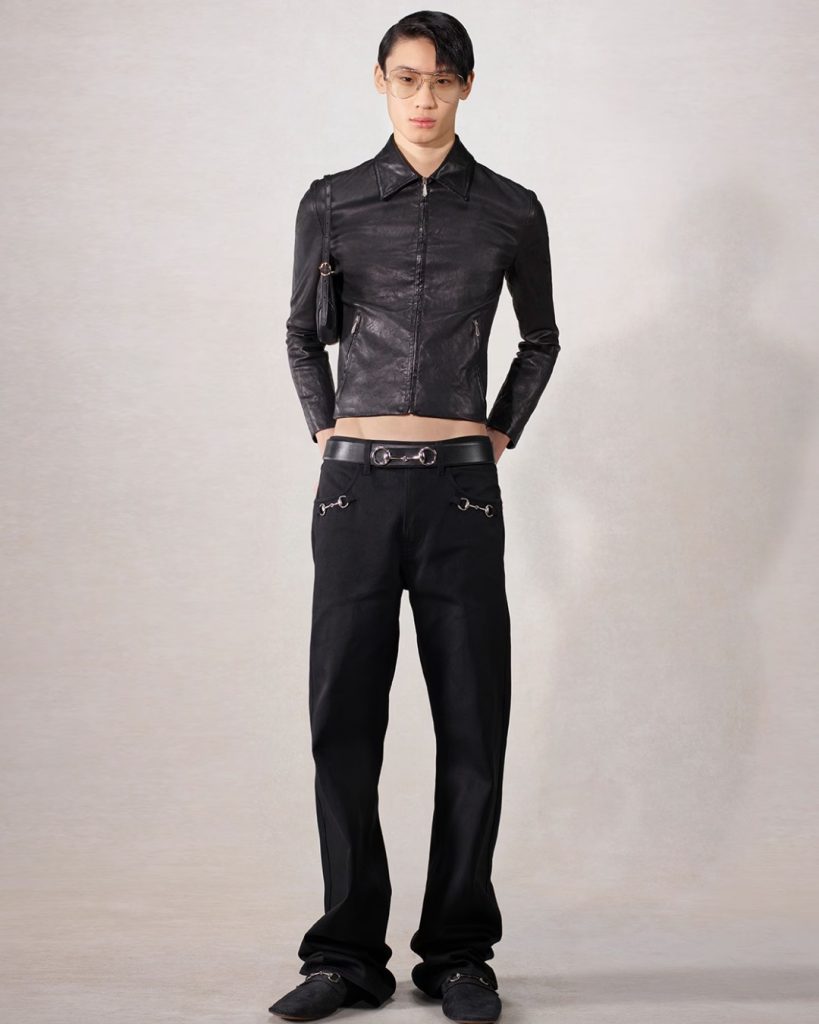
Photo Courtesy of Gucci
Hermès began as a saddlery in 1837 by harness-maker Thierry Hermès, serving European nobility. The craftsmanship demanded by a saddle—top-tier leather, precise stitching, durable hardware—became the brand’s immutable ethos, later birthing legendary pieces like the Birkin and Kelly. Similarly, Gucci’s signature horsebit hardware, inspired by elements of a horse’s bridle, first appeared on loafers in 1953. It has since become a timeless emblem, adorning everything from bags to the recent horsebit trousers by its new creative director, Demna.
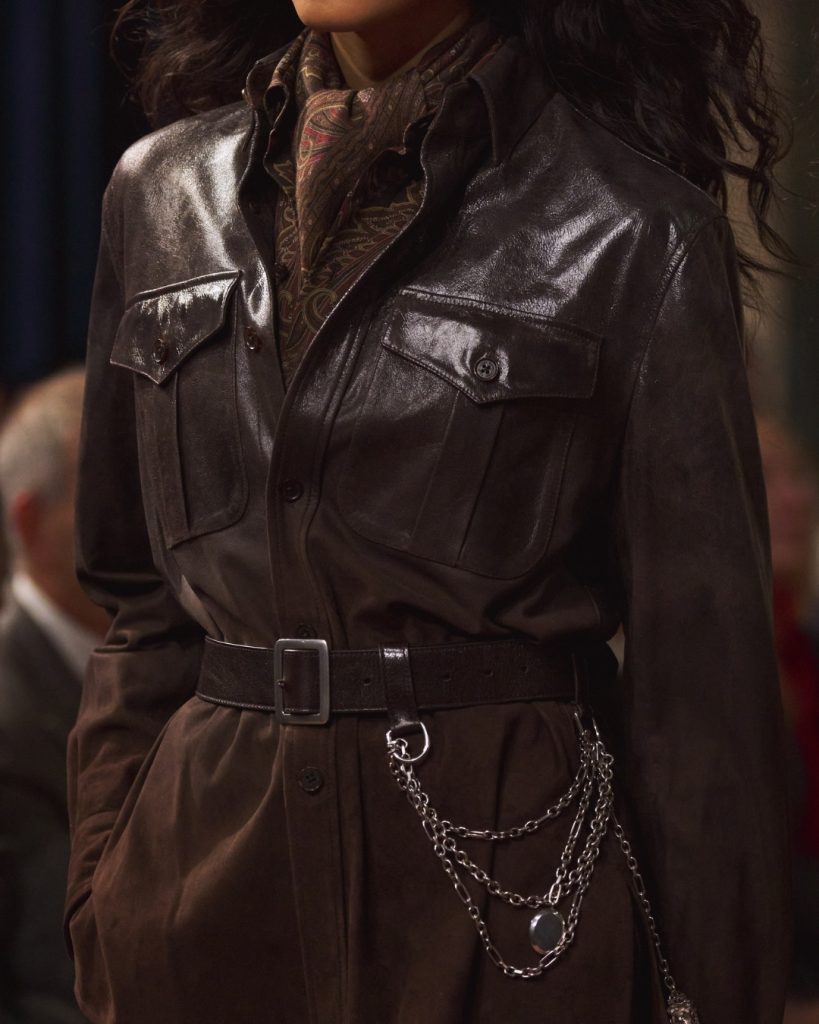
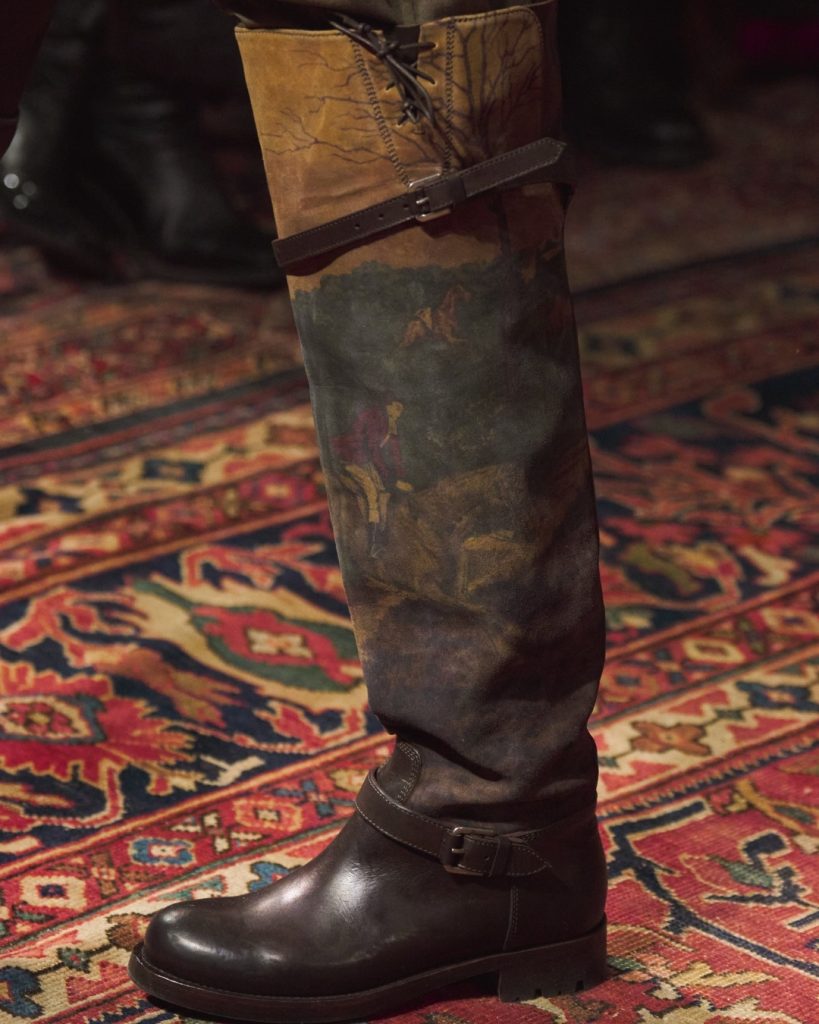
Elsewhere, brands harnessed the horse’s symbolic power through logos. Ralph Lauren’s polo player is arguably the most successful, growing beyond a simple emblem for a singular brand to become the “frontperson” of preppy style, sporty elegance and East Coast elitism. Longchamp, on the other hand, has used a leaping horse since 1948, connecting its travel-ready leather goods to a spirit of motion, while Burberry frequently employs equestrian imagery—the Rocking Horse bag introduced in Fall/Winter 2023 has become a signature of the fashion house—linking its British identity to the country’s hunting and riding traditions.
The Pop Culture Stampede
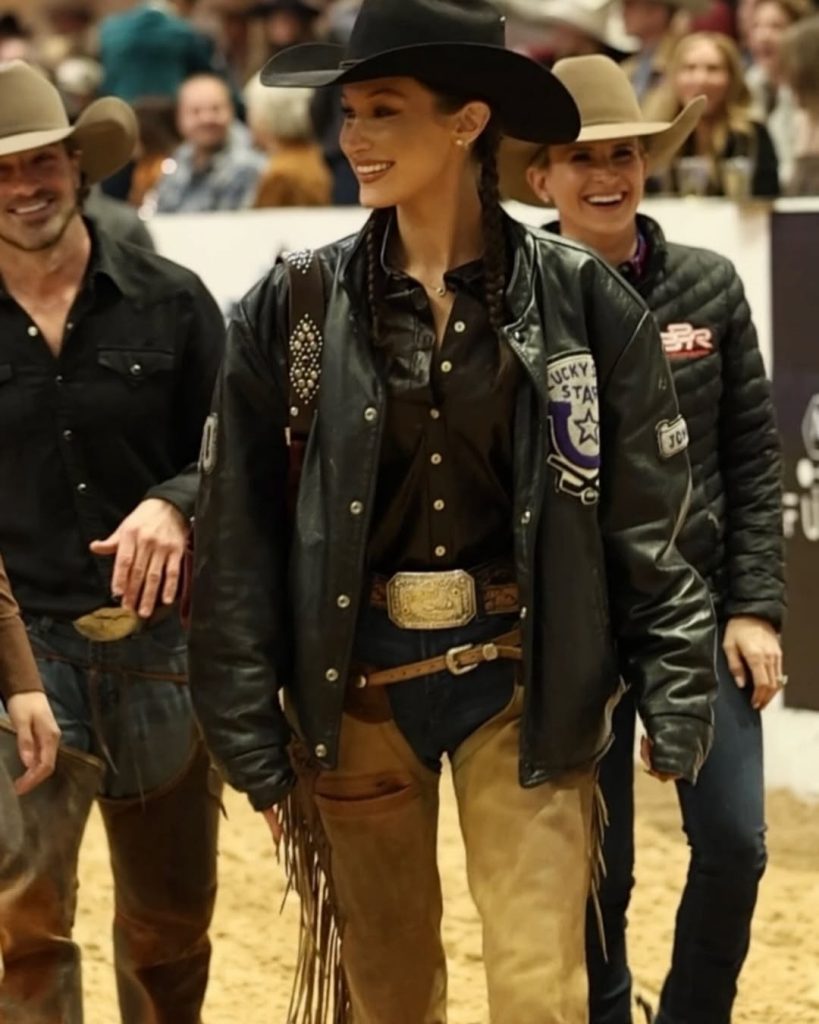
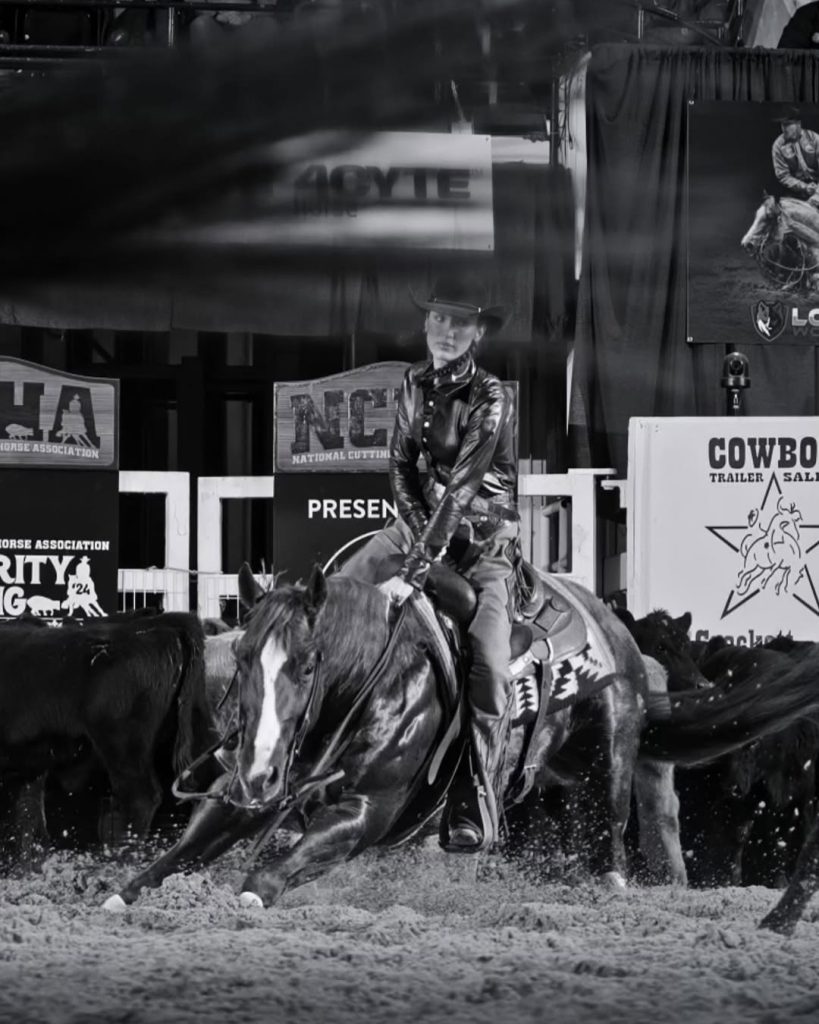
Photo Courtesy of @bellahadid
Today, as an antidote to a digitised world, younger generations are retreating to hands-on hobbies. Horseback riding is resurging in popularity, and with it, a romanticised vision of the rugged stable life. The modern “stable girl” lifestyle—led by figures like Bella Hadid—blurred the line between barnyard utility and high fashion. Worn-in cowboy boots, suede chaps, and sun-bleached rodeo tees add a layer of model-off-duty allure. Meanwhile, Beyoncé’s Cowboy Carter era has cemented this moment, transforming Stetson hats and fringed jackets into fashion statements that bring us back to the roots of unbridled country music.
This rebranding of the “horse girl”—from niche hobbyist to a symbol of quiet confidence and unvarnished charm—feels like the next chapter after stealth wealth: a preference for the authentically lived-in over the ever-so-polished grids on social media.
An Elegant Muse
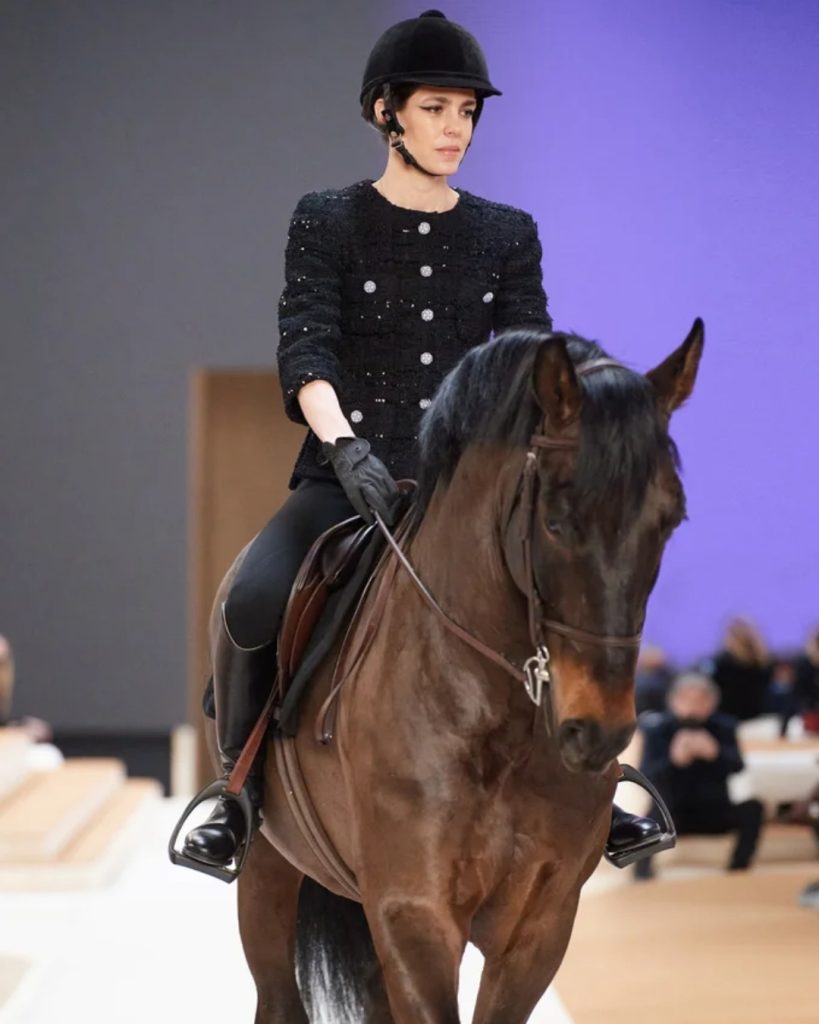
While often linked to untamed “yee-haw” imagery, the horse itself is a favoured model of elegance. Its form—sleek, powerful, and perfectly proportioned—aligns with fashion’s highest ideals. Its mane flows with a natural grace that haute couture seeks to emulate. Chanel famously opened its Spring/Summer 2022 Haute Couture show with Charlotte Casiraghi astride a horse, while Dior—creator of the iconic Saddle bag—began its Cruise 2019 show with the escaramuzas, side-saddle equestrians from Mexico.
Symbolically, the horse offers a rich narrative shorthand, instantly evoking heritage, wild freedom, and surreal escapism.
The Luxury Ledger
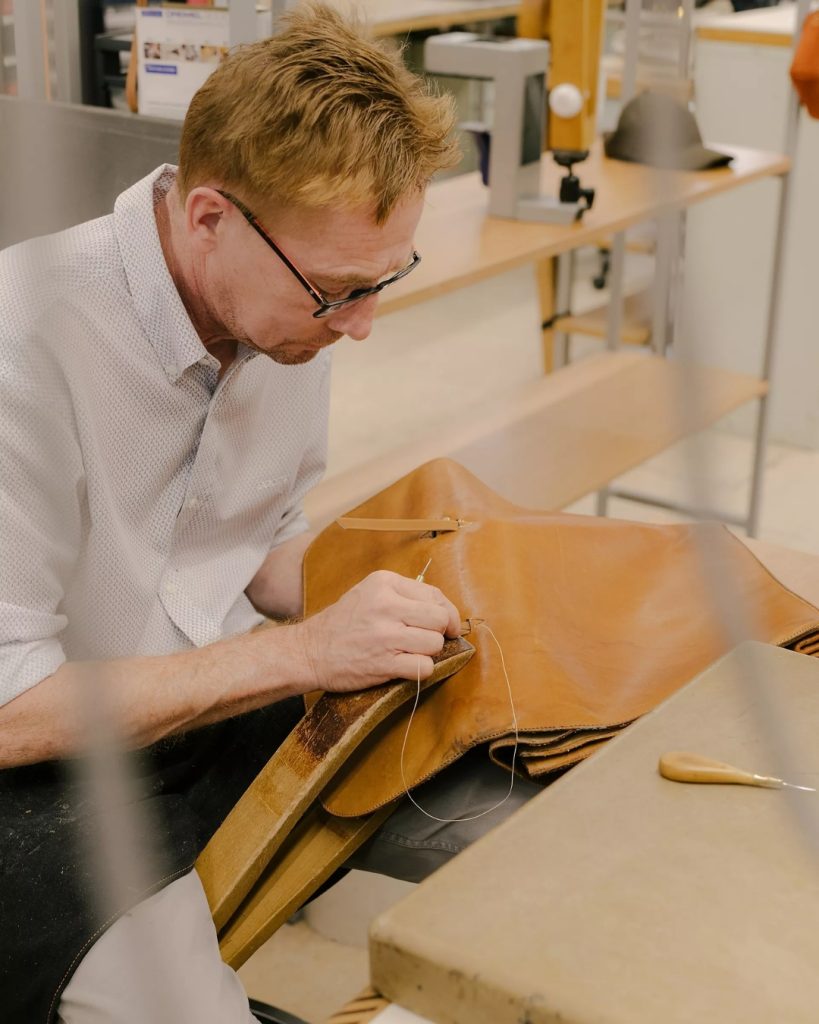
The path from equestrian specialist to luxury powerhouse is a well-trodden one. Equestrian gear demands the highest level of craftsmanship—a non-negotiable foundation that translates seamlessly to luxury accessories and ready-to-wear. The leap from perfecting a saddle to crafting a handbag is small. Furthermore, these brands began with a ledger of elite clientele; their products are imbued with exclusivity and status from day one.
Equestrianism also sells a potent fantasy: of vast estates, disciplined training, and a symbiotic relationship with a majestic animal. This narrative aligns perfectly with luxury’s goal to sell not just products, but an aspirational lifestyle. Horse, or equestrian sports, equipped fashion with a pre-existing medium that embodies tradition, power, and rarefied access, as both a source of inspiration and also revenue.
The Saddle of Elitism
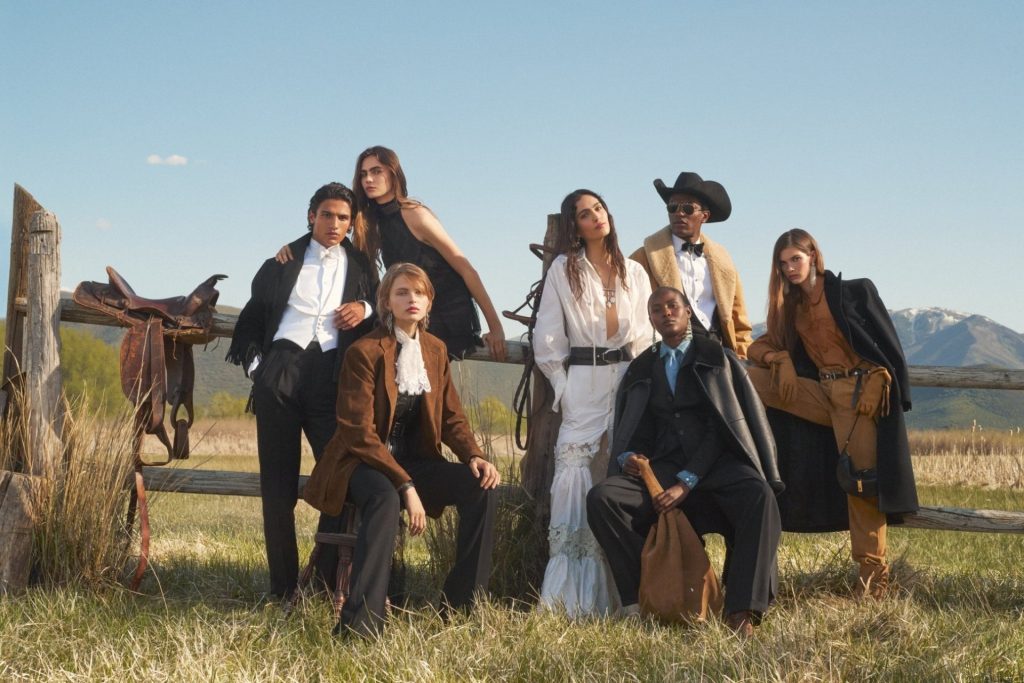
This touches on perhaps the central reason for the horse’s enduring fashion appeal: its inherent elitism. The connection is undeniable and often intentionally cultivated. The formal attire of dressage descends directly from 19th-century aristocratic wear, and the sport’s association with immense wealth—requiring land, stables, and constant care—creates a powerful social barrier.
Fashion leverages this shorthand. To wear a piece from this world is to tap into a centuries-old narrative of refined privilege and inherited taste. Yet, the modern “stable girl” trend also shows a democratisation of that symbol. It borrows the aura of authenticity and discipline, making it accessible through a pair of boots or a jacket, separating the style from the sport’s prohibitive cost.
In the end, the horse remains fashion’s most versatile muse because it carries a dual symbolism. It embodies both the ultimate in elite luxury and the raw, untamed spirit of freedom. It is this unique gallop between the stable and the wild that ensures its eternal place on the runway and in our yearning for escapism—one that fashion has always been tapping into.
READ MORE
Fashion Brands That Are Ready For The Lunar New Year 2026