
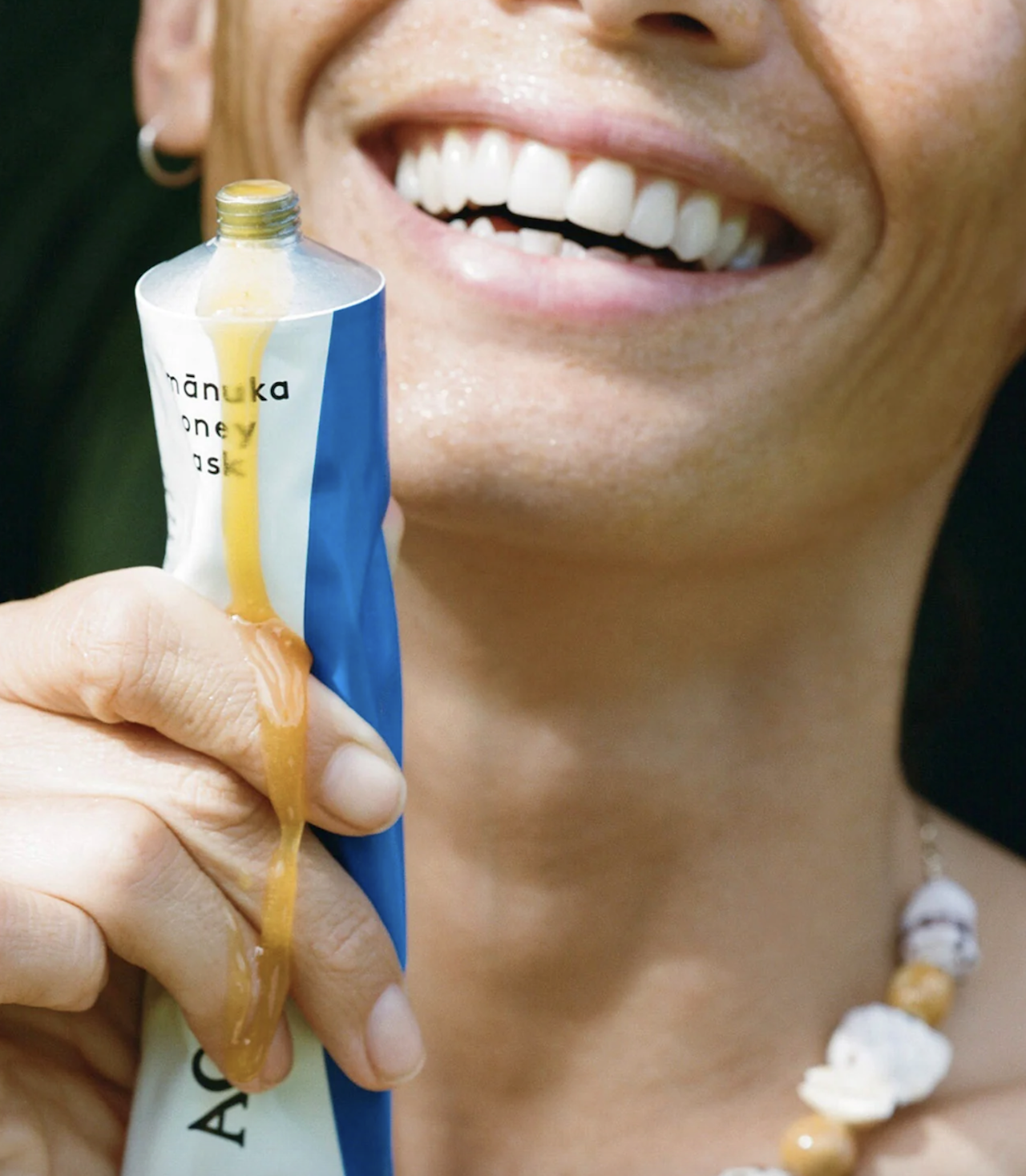
Is that sticky jar on your kitchen shelf the real MVP of your vanity, or just very cute sugar water?
Your For You Page is not imagining it. Raw manuka honey has quietly slipped from health‑food aisles into serums, scalp scrubs, and $60 moisturizers that promise baby skin and glassy hair. Somewhere between the dermatologists and the girlies in bathrobes, the narrative became: this one honey is special.
So in 2026, is raw manuka honey actually a secret beauty ingredient for good skin and hair — or just what happens when wellness marketing meets a beehive? Let us separate science from stickiness.
What Raw Manuka Honey Actually Is (and Why Beauty People Care)
Regular honey is a mix of nectars from lots of flowers. Manuka honey is monofloral, meaning bees feed mainly on the manuka shrub, a wild plant native to New Zealand and parts of Australia. That plant source gives manuka its trademark thick texture, deep gold color, and a very specific chemistry.
The headline molecule is methylglyoxal, or MGO, which gives manuka much stronger and more stable antibacterial activity than standard honey. That antimicrobial power is why medical‑grade manuka is used in wound dressings in hospitals.
Raw simply means the honey has not been pasteurized at high heat. Heating makes supermarket honey prettier and more pourable, but it can reduce some enzymes and beneficial compounds. For skin, most experts prefer raw or minimally processed manuka, as long as it is from a reputable source.
Those mysterious UMF and MGO numbers on the jar are potency scores. Broadly:
- UMF 5 to 10 / lower MGO: Fine for everyday culinary and basic cosmetic use
- UMF 10 to 15: Where people start reaching for manuka for breakouts and irritated skin
- UMF 15 and above: Often marketed for more intensive or medical‑adjacent use
For beauty, you do not need the top of the range unless your derm has a specific reason. You are putting a thin layer on your face, not treating a surgical wound.
What Raw Manuka Honey Really Does to Your Skin in 2026
Under the pretty branding, manuka is doing four main things on the skin.
1. It acts like a targeted antibacterial
All honeys produce a bit of hydrogen peroxide, which can slow down bacteria. Manuka goes further thanks to that high MGO content. Lab studies show it can inhibit several microbes that matter for skin, including the acne‑related Cutibacterium acnes.
For you, this translates to: manuka can be a smart supporting player for mild breakouts and angry, picked‑at spots. Think occasional spot treatment or a thin mask once or twice a week, not “I cured my cystic acne with honey” energy.
2. It calms inflammation (in a nerdy, legit way)
Recent research suggests manuka honey can influence the aryl hydrocarbon receptor, a pathway in skin cells that helps dial down certain inflammatory signals. Early work links this to potential benefits in conditions like eczema, psoriasis, or rosacea when used carefully and consistently.
Translation: if your skin barrier is cranky, manuka is more than just good vibes. It may genuinely help nudge inflammation in a calmer direction, especially when paired with a no‑drama routine.
3. It is a humectant and an emollient in one
Like all honeys, manuka is wildly good at attracting and holding water on the surface of skin, thanks to its sugar structure. It also has emollient properties, meaning it helps fill in the tiny gaps between dry skin cells so everything feels smoother and more flexible.
This double act is why honey has been in beauty formulas for thousands of years and why manuka keeps showing up in body butters, lip balms, and “24‑hour hydration” creams. Used on damp skin then sealed with a moisturizer, it can be a quiet star for dry, dehydrated, or mature complexions.
4. It brings antioxidant backup
Manuka is loaded with phenolic acids and flavonoids that mop up free radicals from UV light and pollution. We know those aggressors drive the most visible aging, from fine lines to dullness. No, honey is not a substitute for sunscreen, but it can be part of the antioxidant cast supporting your SPF and retinoid.
The newest clinical hint: a 2025 study on a serum that combined manuka honey with other bee ingredients reported improvements in fine lines, dark spots, and texture over several weeks. It was a cocktail, not pure honey, but it supports the idea that manuka plays well in sophisticated formulas.
So, Where Does it Actually Help — and Where is it Hype?
If you are acne‑prone
Used as a short contact mask or spot treatment, raw manuka can help calm redness and keep the surface of a breakout cleaner while it heals. Many people like it as a buffer around stronger actives.
Important reality check: it will not replace prescription treatments or benzoyl peroxide for moderate to severe acne. And because it is still a thick, occlusive sugar syrup, some people find it cloggy if they leave it on overnight. Start with 10 to 15 minutes, once or twice a week, and see how your skin behaves.
If your skin is sensitive, reactive, or eczema‑prone
Manuka’s mix of anti‑inflammatory and barrier‑supporting properties makes it an interesting option here. Some medical‑grade products use it on compromised skin, but those are carefully sterilized and formulated.
At home, keep it gentle: apply a thin layer of raw manuka to small, non‑broken areas for ten minutes, then rinse with lukewarm water. “Start slow and patch test,” dermatologists like to remind us. “Honey can still be a trigger.” If you have a history of severe eczema or allergies, check with your doctor first.
If dryness and early aging are the issue
Here is where manuka quietly shines. Regular use in masks or in a leave‑on cream can boost hydration, soften rough patches, and give that “why do I look like I slept eight hours” kind of glow. Pair it with ceramides and a gentle retinoid, and you have a very 2026, barrier‑first anti‑aging plan.
If you are chasing scar and pigment miracles
Honey’s role in wound healing and its mild enzymatic exfoliation mean it can support more even tone over time, especially for fresh post‑blemish marks. But be realistic: for sun spots, melasma, or deep acne scarring, you are still looking at acids, retinoids, lasers, or microneedling. Manuka is the supportive friend, not the whole treatment plan.
Manuka Honey for Hair and Scalp: Genius or Just Sticky?
Haircare is where the internet gets particularly experimental with manuka. Some of it makes sense. Some of it is just… breakfast on your head.
On the hair shaft
Because honey is a powerful humectant, it can help pull moisture into the hair cuticle, add slip, and boost shine. That is why you see it in hydrating shampoos and masks for dry or curly hair.
The trick is dilution. Mixing a teaspoon of raw manuka into your usual conditioner or a DIY mask with yogurt or aloe can give you extra softness without turning rinse‑out time into an arm workout. If your hair is very fine or easily weighed down, keep it from mid‑lengths to ends and rinse thoroughly.
On the scalp
Manuka’s antimicrobial and anti‑inflammatory profile has made it a buzzy ingredient for flaky, itchy scalps. Some early work suggests it may help balance microbes like Malassezia yeast, which are involved in dandruff and seborrheic dermatitis, while keeping the scalp hydrated.
The evidence here is much lighter than for wound care, so think of it as a gentle experiment, not a cure. A simple pre‑shampoo treatment: whisk one part manuka with one to two parts warm water or aloe, apply to your scalp in sections, leave on for 10 to 20 minutes, then shampoo well. If you have an active, diagnosed scalp condition, run it by your derm first.
How to Actually Use Raw Manuka Honey Without Wrecking Your Bathroom
- Patch test like a grown‑up. Dab a little diluted manuka on the side of your neck or inner arm for fifteen minutes, once a day for two days. Any intense itching, hives, or swelling is your sign to stop
- Keep it short and sweet. For face or scalp, ten to fifteen minutes is usually enough. You are not marinating a roast
- Apply to damp skin or hair. Humectants work best when there is already water to hold on to
- Use clean tools. No fingers in the jar. Scoop with a spoon or spatula to avoid contamination
- Respect your actives. On retinoid or acid nights, use manuka as a gentle mask earlier in the evening, or save it for off nights if your skin is easily overwhelmed
Do You Really Need Manuka, or Will Any Raw Honey Do?
If your goals are basic moisturization, a little glow, or a cute Sunday mask moment, a good quality raw honey can deliver very similar humectant and antioxidant benefits for a fraction of the price.
Where manuka may earn its markup is if you are targeting blemish‑prone, reactive, or very stressed skin and want that extra, well‑studied antimicrobial and anti‑inflammatory edge, or if you are a scalp‑care maximalist experimenting with flakiness.
The chic 2026 answer is not that manuka honey is a miracle. It is that, used thoughtfully, this very old ingredient can slot neatly into a very modern routine — supporting your retinoid, your sunscreen, your stylist, and your sanity, one slightly sticky self‑care night at a time.
This story first appeared on GRAZIA USA.
READ MORE