
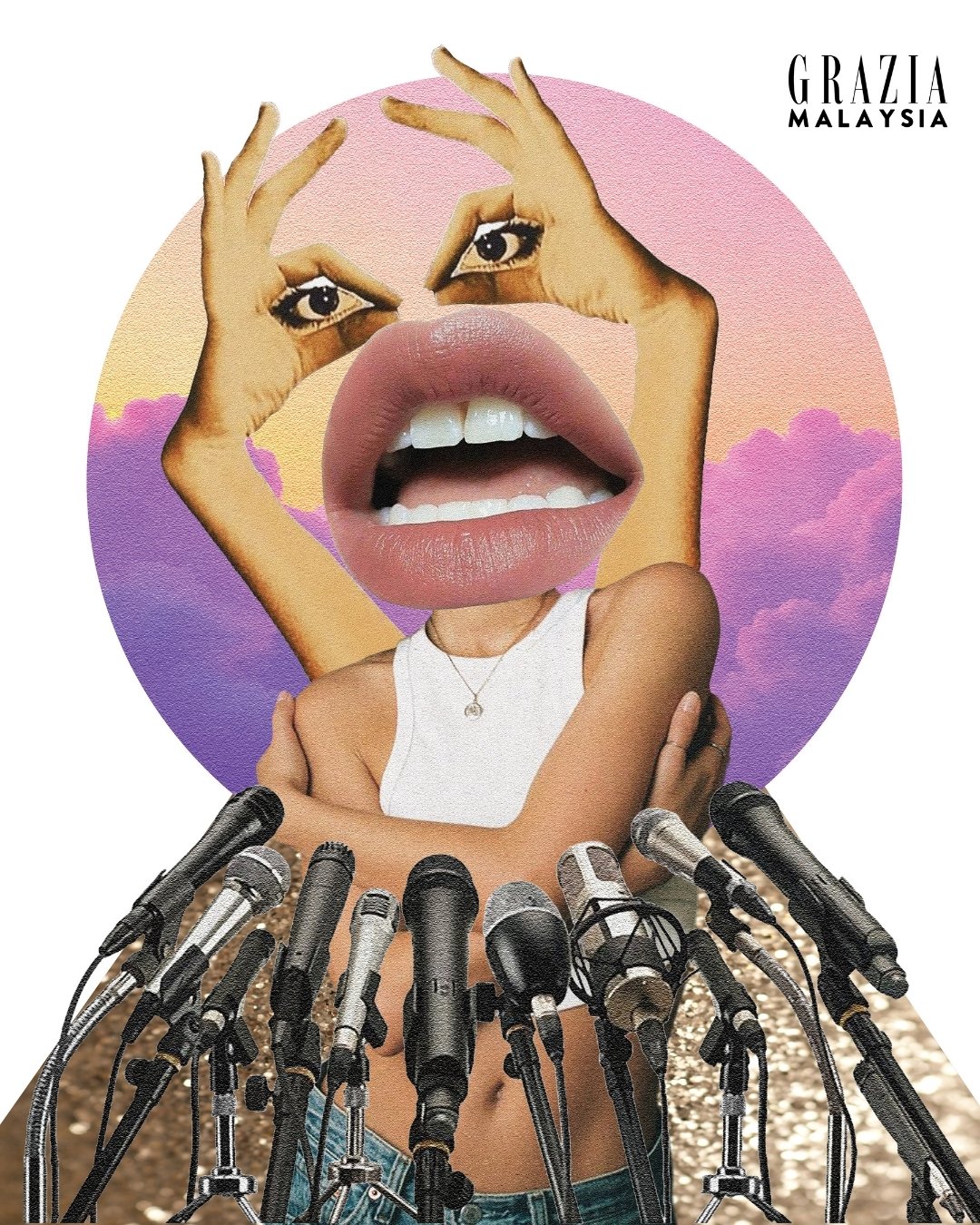
A peculiar misery sets in when I log on to TikTok and see yet another “It girl wardrobe” video, each with a different list of must-haves or needs to build a certain style. When everything is quite literally at our fingertips, style awakening is now perceived by many as an arrival—landing on the final answer so quickly that the process itself becomes borrowed. While the streets are saying that analogue is taking the throne as the new luxury, or as Vogue Business puts it, “Less Internet, More Intellect”, these signals point in one direction: the online world is saturated and overcrowded. It flattens the world—for better and for worse.
And as a response, the people cry, “Bring back exclusivity!” while some retreat to gatekeeping: the practice of curating, restricting, and controlling access to a subculture or piece of knowledge. As we swim in this unprecedented accessibility, ungatekeeping—a well-intentioned dismantling of elitist barriers to foster a more accessible and community-driven industry—backfires.
Every door is flung open, and every piece of dirty laundry is being aired. We are learning things once kept behind closed doors, accessible to only those of the right bloodline or, at least, the right qualifications on paper. The times have changed, and information rushes in like water through a burst dam. Consumers are smarter—or so we want to believe. There are infinite choices, which should be a boon, but the issue now is that committing to a style is pushed to the bottom of the list. With keys handed to us even before we are curious, style awakening is nothing but a landing pad, sitting out of one’s rite of passage.
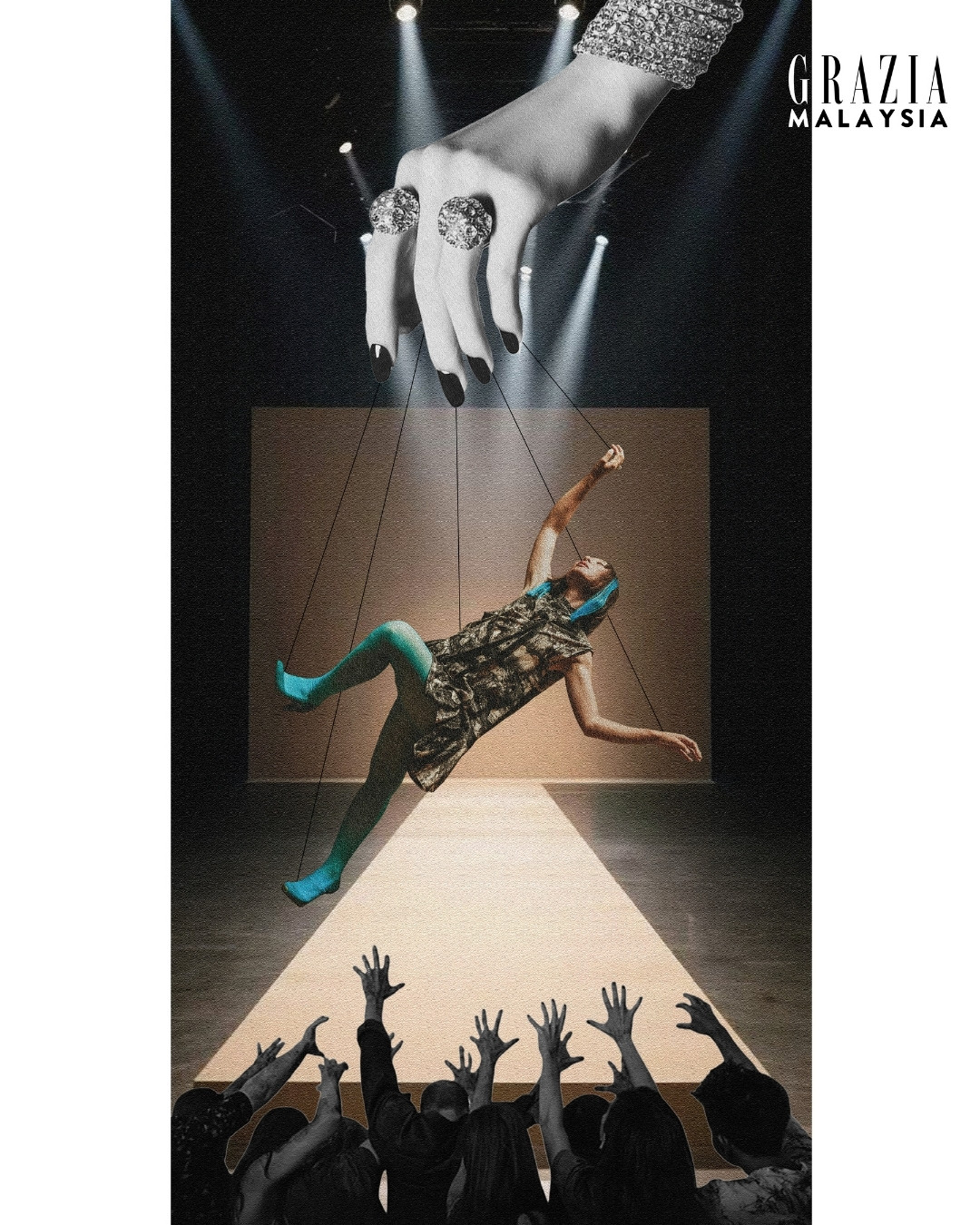
This brings to mind Kierkegaard: “Thus possibility seems greater and greater to the self; more and more becomes possible because nothing becomes actual. In the end, it seems as though everything was possible, but that is the very moment that the self is swallowed up in the abyss.”
When every answer is an answer, nothing becomes actual. Instead of building something of our own—a style, in this context—we wait and stall, picking up one aesthetic after another, often served like a sandwich on the go; one foot in, the other ready to leave if it no longer fits the algorithms and engagements. We call it blessed with choices; Kierkegaard would call us strays.
Shortcut Key
Years ago, on a two-hour flight, I sat next to a well-dressed woman. The conversation began with compliments about her ensemble—everything was either a hand-me-down or thrifted. She didn’t share her social media handles—she preferred to stay offline—but instead, the flea markets she frequented. We talked about her favourite books and films, characters who inspired her wardrobe, and music that influenced her style evolution. It dawned on me that this two-hour conversation was a glimpse into someone’s style awakening—not through the grids of someone’s Instagram feed, but through experiences with warmth.
In retrospect, our mothers’ wardrobes, too, were built over time, and that is why we are emotionally attached to them and enjoy rummaging through their garments. Gatekeeping slows the trend cycle—leading to an appreciation of craftsmanship, and discovery is earned by tumbling over many outfits one wishes to erase forever. This is a luxury that this era, where time is measured by screen time, keeps at the back of our minds; it now takes a different form, through hashtags, labels, or trends with tongue-in-cheek names that will die out next season. There’s nothing exceptionally wrong with utilising these shortcuts—to develop a style or simply to dress oneself—but how much of this contributes to the awakening rather than being a template repackaged and camouflaged as one?
This is not an argument against shortcuts, but rather, against how they are mistaken for the destination. Tapping on an affiliate link to get clothes at a discount, fine. The problem is when the link replaces our curiosity entirely— when we stop asking why this piece, where it came from, what it says about our lives. No, this is not for those whose every hour is accounted for—a matter as trivial as this may not be a priority for many—but for those who have the luxury and intention to build one, yet confuse the links with a self-awakening. Adding more to the cart will not answer your “I have nothing to wear” concern, but building your style will.
There are, of course, people who simply do not want depth, at least not through fashion. They are perfectly satisfied with hopping on trends, copying what they see, and treating dressing like a fun pastime rather than an identity formation—not everyone needs a style awakening. Some people dabble in fashion because they want to look presentable or to simply participate in a shared cultural moment without extensive labour. This, then, is consumption, not self-discovery. The language of “awakening” has been dolled up as a sentiment to sell more. Walk up, ask for a link, and receive an answer that guarantees the same outcome as everyone else. Knockoffs appear within hours. Cookie-cutter labels take the opportunity, entering with another “brand-building” story fuelled by online engagement—or bots. Brands weaponise this as hunger marketing, and the loop of overconsumption—or self-expression, if you say so—spins on. When the freedom ungatekeeping grants us becomes a sitting duck that hastens the cultivation of style and depreciates the effort of those who strive to preserve the artisan and the craftspeople: how much of our experience, then, is actually ours?
An interview that has stayed with me was a conversation with Motofumi “Poggy” Kogi, a tastemaker who has been in the industry long enough to have a style named after him. “I’ve always loved the kind of chemistry that comes from experimenting with new combinations,” he explained. “So I’ve made plenty—I still mess up sometimes even now. But I think it’s those ‘failures’ that actually gave me a chance to explore. That’s why I encourage people not to be afraid of mistakes.”
This is precisely why an overinformed online environment hinders this process—it snatches our opportunity and willingness to make mistakes, to be creative, to break some rules, or simply to experience experiences as they are. Though not everyone has the liberty to stand out in a crowd or to be misunderstood, style now comes with a rigid manual—handy for some, unnecessary for most. Replicating someone’s style is not a novelty, but without context it will just be that copypasta meme, “What’s really crazy is you wouldn’t even want this if u ain’t see me post it u get what i’m saying.”
Free Entry
The essence of gatekeeping lies in who the keeper is. Before algorithms, there were editors, buyers, and socialites with backstage passes. Diana Vreeland decided what was in vogue—and on Vogue; Isabella Blow plucked Philip Treacy and Alexander McQueen from obscurity. The glamorous industry makes it easy to romanticise the old guards, but we are not sweeping inconvenient truths under the rug—these gatekeepers were often capricious, nepotistic, and out of touch. This is caste dressed as curation, discrimination disguised as taste. The velvet rope kept out the unserious, yes, but also the brilliant who lacked the right introduction.
Gatekeeping was written by the privileged, but ironically, that same exclusion brought in diversified countercultures: punk, hip-hop, and Harajuku street style. They emerged from acts and behaviours born of need—or desperation—to change and challenge the status quo, coexisted with or even became more prominent than those led by the majority. These are not aesthetics that can be summed up in a bite-sized video but history mapped by those who were denied a seat and built their own tables. In a way, this friction urged the marginalised to lay their own stones through fashion, so much so that it became a belief for many: it’s welcoming, but the threshold was never low. To be a part, one has to dress like one, act like one and live like one.
Then the keys changed hands. The gate opened for free passes, and the community became diluted. A fashion runway report no longer needs to be penned by a fashion writer with field experience; it can be a caption made on the go. A front-row ticket is unnecessary when the full show is live-streamed. The sphere becomes more welcoming than ever; everyone rushes to the table, devouring that cake and bumping off curators and critics—why would we need one when everyone is now one? But to whom do we listen? Will this selective consumption, then, kill or birth a self-awakening?
Truth is, things never just happen organically online; the “for you” is never “from you”. Your algorithm is capitalism’s pitch for democracy, an illusion of available options, of chances and possibilities. In practice, ungatekeeping forces a multitude of cultures to be consolidated into a single form, decontextualised, and commodified as a “starter pack” easy to digest and share. Being media literate—which takes time and introspection to shape—is the last standing guard, but this is a practice the endless consumption of ungatekeeping cannot vouch for, especially when a video finishes before a thought can be formed.
In the social media environment, we are left with two options: you either have a human equipped with certain knowledge and understanding of cultural sentiments be the gatekeeper or a sequence of mathematical instructions designed not to cultivate a culture but to accomplish tasks at the door.
Keep It Open
There is, of course, a middle ground between the extremes. In 2026, we need neither gatekeepers nor ungatekeeping, yet also both. The task is not to reinstall the old watchers and walls that keep everyone out, nor to abandon all friction.
Ungatekeeping, done right and deliberately, is a structural reshuffling that this industry—which relies on cultures and art—needs. It can serve as a guided access that leads to a reference point—a long-forgotten craftsmanship, an underappreciated group of talents, or a brand lost to time. It preserves the journey while removing the artificial barriers of birth or connections, not one that oversimplifies. What has failed with the current ungatekeeping practice is that it has become a drop service, a transaction without context, education or interpretation, but mere convenience. In a way, it’s become just another method of distribution that fuels overconsumption, erosion of individuality, creativity, and also authenticity.
In an ideal world, there would be a space that is organised, edited, and not an algorithmic echo chamber filled with elitism or ethnocentrism. In reality, holding everyone by their collar to instil mindfulness while consuming content online—fashion, in this case—with the attention economy intact is like handing someone a bucket on a sinking ship. The scene became overwhelmed because it came with unaccompanied access. Hence, gatekeepers serve more like watchdogs instead of being the only person calling the shots.
Swinging from “exclusion by pedigree” to “inclusion by algorithm”, neither teaches us how to see. Closing the gate will not solve the problem, and we do not need to regress to a time when education and transparency are limited to selected people. It is to learn how to walk through them without being swept away on our way to self-discovery. A new literacy needs to be formed to cultivate the ability to navigate an abundance of choices without being overwhelmed. This will require consumers to reclaim slowness, mistakes, and the unfashionable labour of trying and failing. It means distinguishing between access (keep that open), attunement—which cannot be linked, but must be lived—and discernment. The algorithm can continue to show you a thousand bags, but it cannot tell you which one you need to wear to be you.
This story first appeared in the GRAZIA Malaysia June/July 2026 print issue.
READ MORE
From the Runway to the Race Day: Why Fitness Is Becoming Luxury’s Next Billion-Dollar Obsession
In Good Hands: Fashion Is Finally Turning To Crafts
Girls Will Be Girls: Is the Workplace Dress Code Ready for Girlhood?