
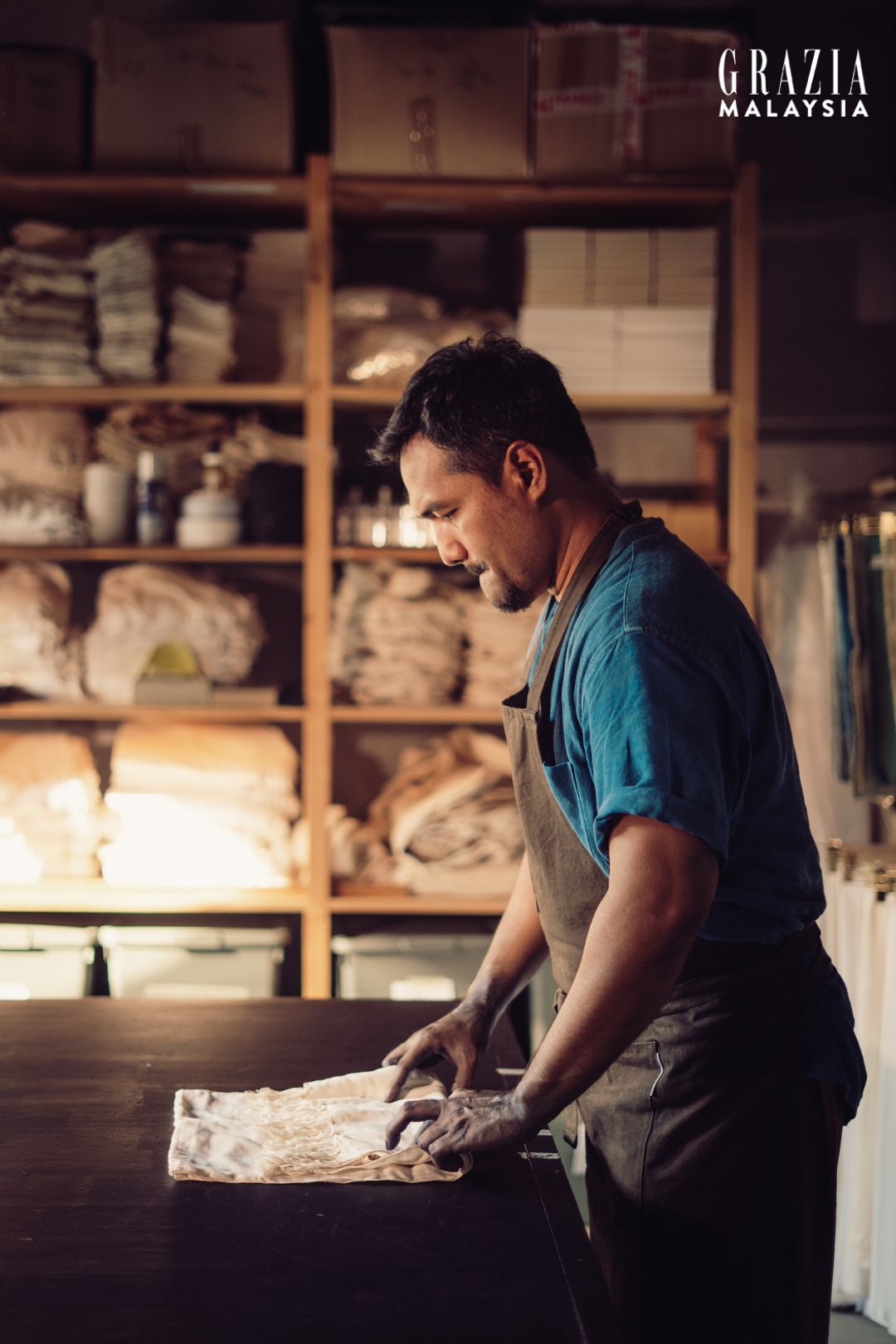
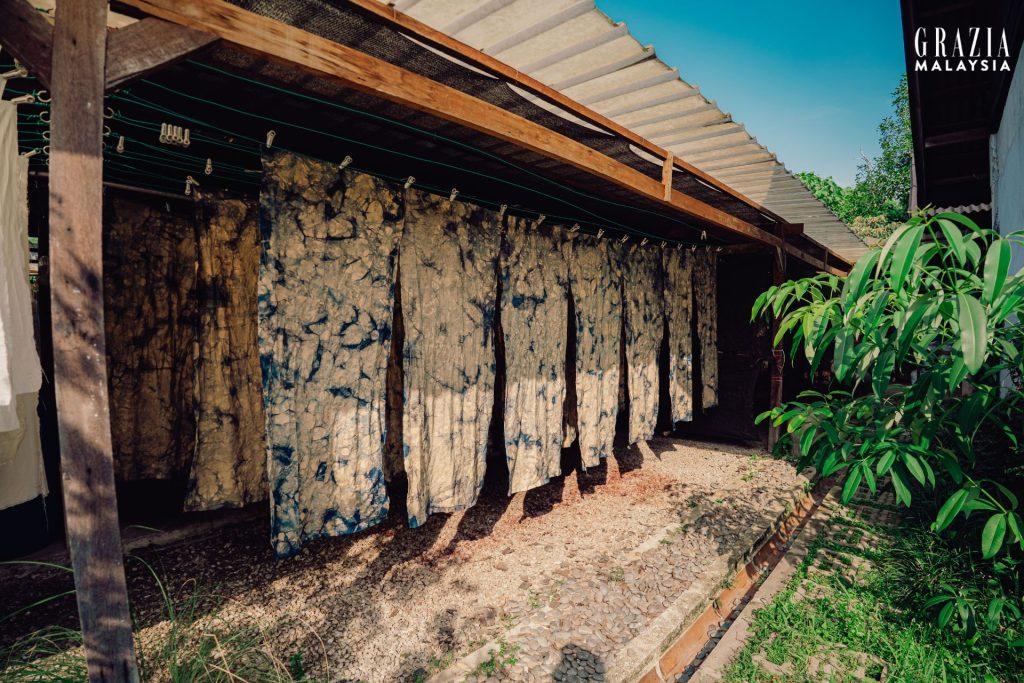
The idea of the studio arrived differently at Muni, the textile atelier founded by Muni Osman—it’s a shaded sanctuary. Wooden posts frame the surrounding foliage rather than enclose it. Natural light falls through the sills, gliding over the linen, and the low hum of the ceiling fan moves diligently over rows of indigo cloth left to air-dry, swaying rhythmically against the verdant green.
The artist discovered natural dye a decade ago, on a business trip to Bali. It’s a time when wabi-sabi was not as appreciated as it is today. The career pivot from architecture to nurturing pigments took place, as Muni shared in our previous conversation three years ago, for GRAZIA Malaysia’s Thread Talk series online, “mainly for its sustainable value and the uniqueness [of the craft]”. There is a cadence to Muni’s work that demands an active surrender to time, to nature and to his crafts. Like all artisans, he calls it “trusting the process”, a mantra that hangs in the humid air as tangibly as the indigos adorning his space. “With natural dyes, there are too many things that you cannot control,” he said. To a certain extent, yes, the craftsperson has a say in what to produce. But the rest lies heavily in accepting the results.
Walking into the space itself revealed a corner of the man. “Muni is a reflection of Muni Osman,” he spelled. From the process to the brand image—everything that makes a brand, a brand, in his words, is “my own progress as a creative person”. That progress was seeded long before his first dye bath, in the luggage of his father, a traveller who returned home with objects of other lands. He spoke of a carved bowl from Africa, a pumpkin-shaped vessel with intricate patterns etched into its skin, which he still cherishes. “It made me really curious about the person doing this piece, the artisan and the passion they have,” he said. That questioning found its purest expression in the indigo traces between folds and drape of linen—a material he enjoys working with the most, a texture that complements natural dyes best. Unmatched, he enthused.
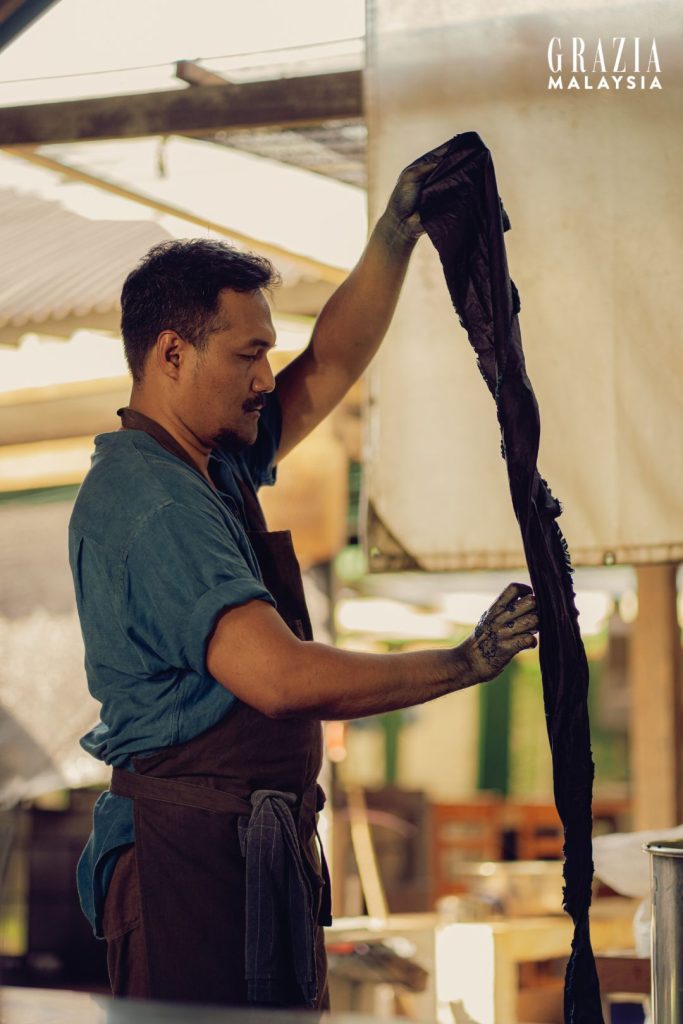
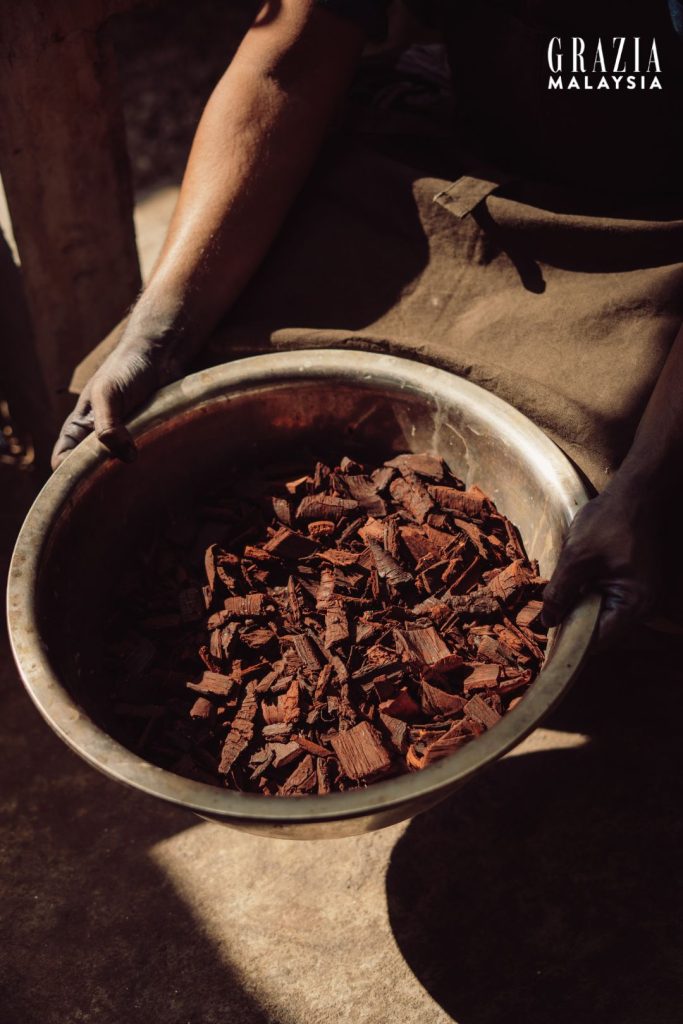
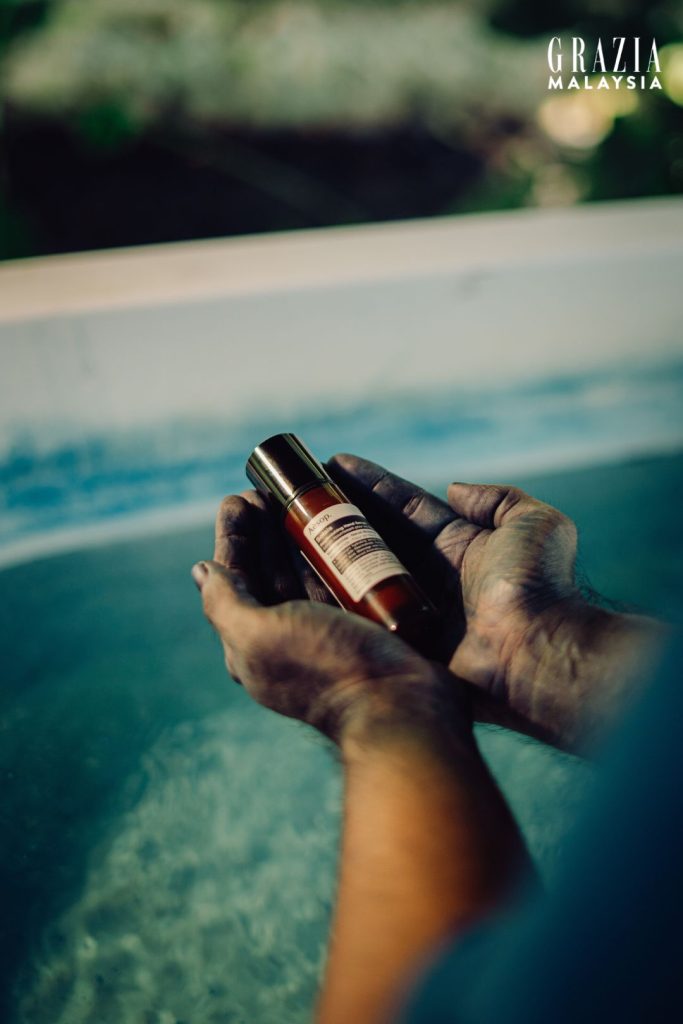
It is no wonder, then, that of all the processes—steeping of tea leaves, mordanting, and more—it was the indigo that held him in thrall even after years of dipping his hands in the blue bath. To him, the process is packed with the beauty of varied cultures, on top of all the surprises it entails. Fermentation is the highlight of this stage, relying on the fructose that represents each region—sake in Japan and tapai in Indonesia. It’s a craft that passes on not only skills but also distinct culture and practices that colour the character of different societies. For a long time, preserving a craft has been a thorn in the flesh, regardless of the community. The surge of one- off workshops, however, brought in some light. In Muni’s words, it is a seed to nurture more lifelong craftspeople. He remembered his own dalliance with Ebru marbling in Turkey years ago, never imagining it would lead here. “I think a one- off workshop can have a positive impact as well,” he offered. “It’s the initial seed of inspiration.”
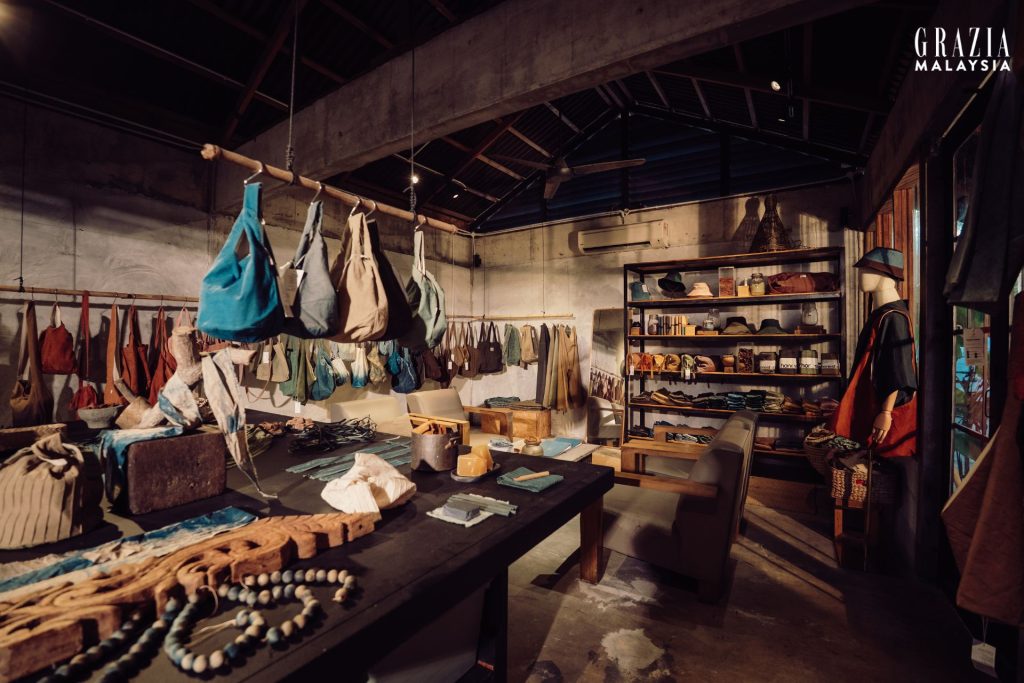
This devotion to slow making blossomed in a world of fast greenwashing, and Muni has always been clear-eyed. Three years ago, he pointed out that corporations abused the language of sustainability without committing to the necessary restraints, and the issue remains unresolved. Adding to his earlier comment, he acknowledged that sustainability is something “large brands and corporations simply cannot do”, as the commitment requires an end to mass production, which defeats the pillars of these businesses. In contrast, Muni’s path forward is quieter, relying less on commercial support and more on word of mouth. “I think that’s how Muni grows. We didn’t invest much in marketing, but the content we put on social media is great. And we became very strategic in our partnership,” he mused, sharing that the team is currently working on a project for a boutique hotel in Penang. “It’s a new dye plant, a new technique, and a new colour for us,” he said, with flickers of excitement for this new shade of green extracted from mulberries.
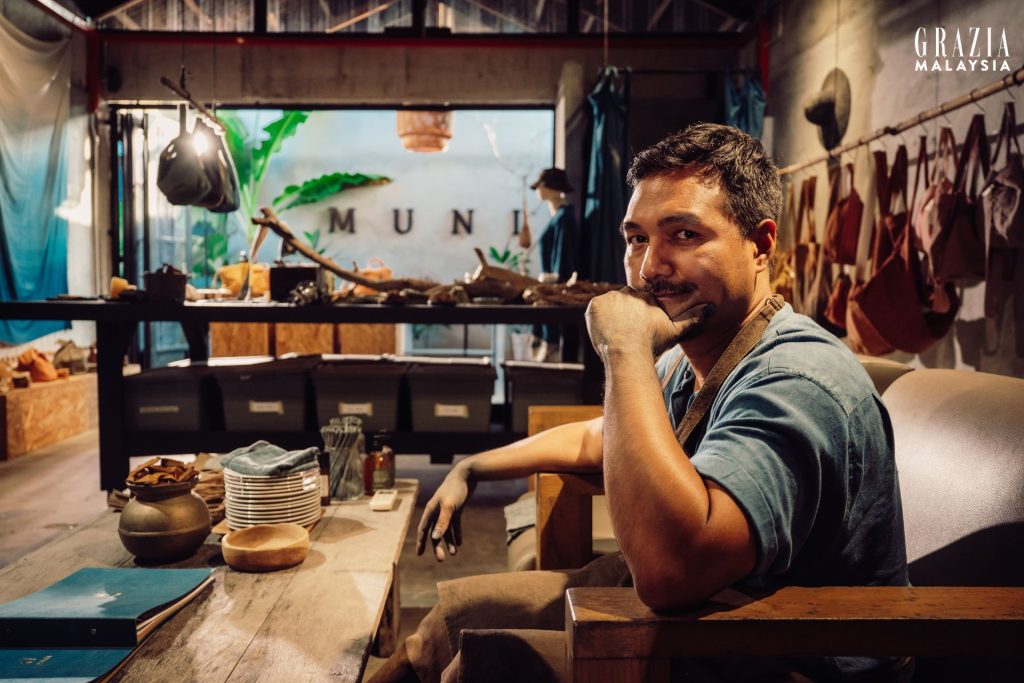
Unlike a fashion designer who is committed to a churn-and-burn cycle, a textile dyer who brings colours from the earth to life has more room to explore. “We have the freedom to create our own clothing, but we can also explore fabrics as an art installation, working with interior designers, architects, or varied media,” he proposed, “I think I love that.” Here, with good friends and good food, the labour itself becomes the respite. “Doing the craft itself is part of self-care,” he concluded.
Producer: Sarah Chong
Assistant: Joseph Cheng
Photography: Innsyirah
Photo Editor: Farna Syhida
Video Director: Qila Qla
Videographer: Syabil Ng, Farna Syhida
Video Editor: Farna Syhida, Ezza Izzati
Camera Assistant: Nick Luffy
READ MORE
How Hannah Bhatt Found Purpose Through Clay and Community
Milan Design Week 2026: Where Craft is the Star of the Show
Pop Goes The Artist: 9 Local Graphic Designers to Add To Your Radar